 lop News
Seven hundred and forty-eight dollars. That is the extra tax refund the typical American household is expected to collect this year under the One Big Beautiful Bill Act, according to the Tax Foundation. Seven hundred and forty dollars. That is how much more the same household will spend on gasoline in 2026, according to economists at the Stanford Institute for Economic Policy Research.
Eight dollars separates the gift from the grift.
The Pump Giveth, the Pump Taketh Away
President Trump’s domestic agenda was supposed to deliver a tangible win this filing season — fatter refunds from eliminated taxes on tips and overtime, a boosted standard deduction, and a higher SALT cap. The White House celebrated in January what it called the “largest tax refund season in U.S. history.” IRS data through mid-March shows average refunds running $3,676, up 11% year-on-year. IRS CEO Frank Bisignano told Congress that taxpayers claiming the new deductions were seeing increases averaging $775, expected to reach $1,000 by season’s end.
Then came Operation Epic Fury. Since the U.S.-Israeli military operation against Iran began on February 28, the effective closure of the Strait of Hormuz has choked off more than 20% of the world’s oil supply. Brent crude has climbed above $112 a barrel — up over 40% in three weeks. The national average gasoline price hit $3.91 per gallon as of this week, a jump of 93 cents from the day before the war started, according to AAA data.
Patrick De Haan, head of petroleum analysis at GasBuddy, estimates that American drivers have collectively pumped nearly $4.5 billion more into their tanks since February 28. “This is money that is not being funneled into the rest of the economy because Americans are leaving it behind at the pump,” he told CNN.
Oxford Economics analysts calculated that if gas averages $3.60 per gallon for the year, consumers will spend $60 billion more on fuel in 2026 — “almost exactly offsetting the boost from refunds,” according to a client note cited by Fortune. A separate analysis from Pantheon Macroeconomics found that steeper fuel costs are reducing households’ real incomes by an estimated $15 billion per month, dwarfing the $10 billion combined boost from larger refunds between February and April.
Four Weeks of Red
The damage is not confined to the pump. Wall Street just posted its fourth consecutive week of losses — the longest such streak for the S&P 500 in a year and for the Dow in three years. The S&P 500 and Nasdaq each closed Friday at their lowest levels since September, erasing six months of gains. The Russell 2000 slipped into correction territory, down 10.3% from its January peak. The VIX, Wall Street’s fear gauge, surged 11% on Friday alone.
Brent crude settled at $112.19 on Friday, its highest closing price since July 2022. Treasury yields jumped too, with the 10-year hitting 4.39% — its highest since July — as investors repriced inflation expectations.
“Investors initially thought that the Iran war would be short,” José Torres, senior economist at Interactive Brokers, said in a note. “But as aggressions intensify amid no light at the end of the tunnel, the pain on Wall Street continues.”
The K Gets Sharper
The cruelest arithmetic falls on those least able to absorb it. The bottom 80% of earners spend close to 4% of their budgets on gasoline — nearly twice the share of wealthier households, according to Oxford Economics. Mark Zandi, chief economist at Moody’s, put it bluntly: “Higher gasoline prices act like a regressive tax, as lower-income households devote a higher share of their budget to energy.”
These are the same households that depend most on tax refunds to cover expenses. A Bank of America survey found 36% of respondents plan to use refunds to pay off debt. One Oklahoma administrative assistant told CNN she is cutting groceries and selling personal items to cover the extra $15 a week she now spends on gas — while saving her refund to pay property taxes.
Meanwhile, the OBBBA’s headline deductions for overtime, SALT, and tips skew toward middle- and upper-income earners, “deepening the bifurcation of the consumer that we’ve seen over the past several years,” Oxford analysts wrote.
No Quick Fix
The administration is not ignoring the problem. The White House temporarily suspended the Jones Act on Wednesday to allow foreign-flagged ships on domestic routes, hoping to ease supply bottlenecks. The Center for American Progress estimated the move would lower gas prices by three cents per gallon. Vice President JD Vance is scheduled to meet with oil executives. “We know they’re up, and we know that people are hurting because of it,” Vance said at an event in Michigan.
But even an immediate ceasefire would not bring quick relief. The Stanford analysis accounts for the “rockets and feathers” principle — prices shoot up fast and drift down slowly. Goldman Sachs analysts suggest oil could remain above $100 a barrel through 2027 if supply disruptions persist. The Energy Information Administration projects gas will average $3.34 this year.
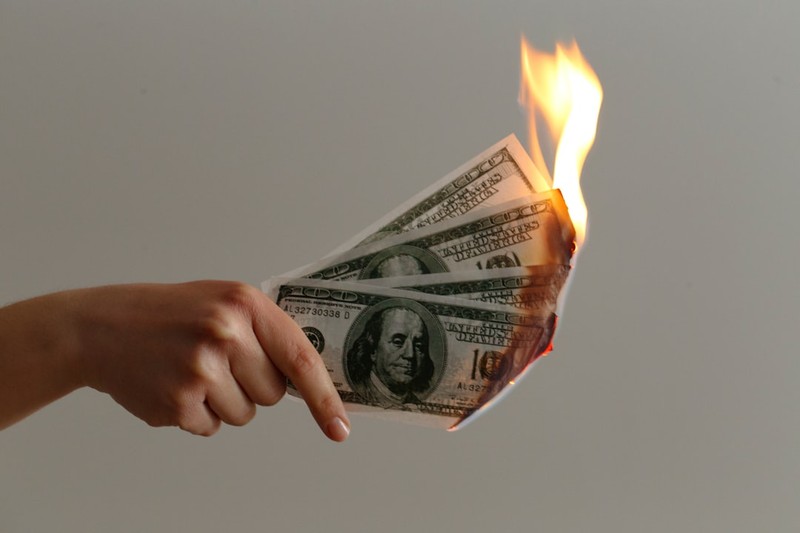
The tax refund checks are real. So is the war. The tragedy for American households is that one hand of this administration is writing checks while the other is setting fire to the mailbox.
Sources
- Your tax refund is likely bigger this year. But Trump’s war with Iran could take a bite out of it — CNN
- ‘Almost exactly offsetting the boost’: Higher gasoline prices this year could wipe out tax refunds from Trump’s One Big Beautiful Bill Act — Fortune
- Iran war, oil price surge worsen K-shaped economy, say economists — CNBC
- Stocks, bonds and gold slump while Iran war rages — CNN
- Surging U.S. gas prices could erase bigger tax refunds, analysis finds — CBS News
- Asia hit with fastest rise in crude prices as Middle East supply shrinks — Nikkei Asia