 lop News
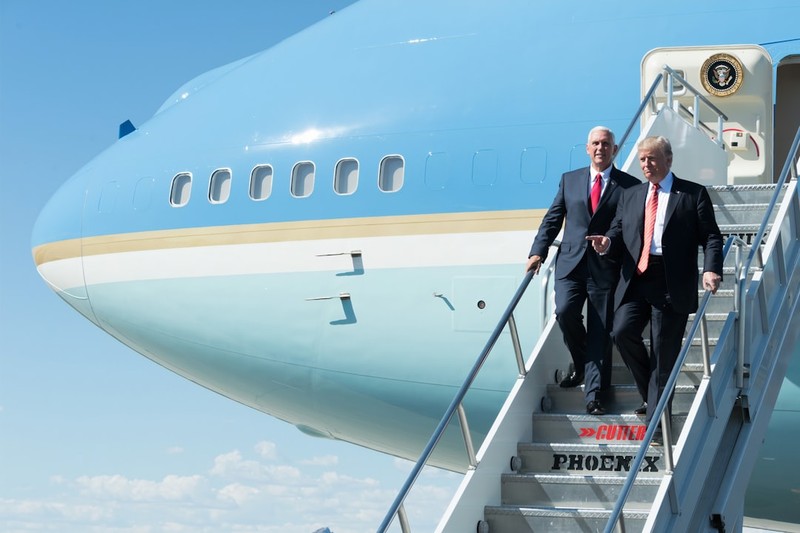
More than 3,700 stock trades in 90 days. Forty transactions per day, every day, from January through March. Nvidia, Microsoft, Boeing, Amazon, Meta, Costco — the president’s portfolio swept through some of the largest companies on earth, landing in a 113-page filing at the US Office of Government Ethics on Thursday. It reads less like a personal portfolio statement than a quarterly report from a quantitative trading desk.
Federal disclosure rules require only broad valuation bands, not exact figures, so the precise total is unknowable. The range is staggering: somewhere between $220 million and $770 million in combined purchases and sales during a single quarter.
“This is an insane amount of trades,” Matthew Tuttle, CEO of Tuttle Capital Management, told Bloomberg. He said the activity resembled “a hedge fund with massive algo trades” rather than a personal account. Eric Diton, president of The Wealth Alliance, said he was “baffled” — in more than 40 years on Wall Street, he called it an unusual amount of trading by any standards.
A Portfolio That Shadows Policy
Trump bought at least $1 million each in Nvidia, Oracle, Microsoft, Boeing, and Costco. He also traded eBay, Abbott Laboratories, Uber, AT&T, and Dollar Tree. His largest sales came on February 10, when he unloaded positions in Microsoft, Meta, and Amazon — each in amounts between $5 million and $25 million.
Several of these companies sit directly in the path of presidential decision-making. Trump’s administration authorized Nvidia chip sales to China, negotiated a deal to take a 10% stake in Intel for nearly $9 billion, and helped Boeing secure a commitment from Chinese airlines for 200 aircraft. The president pulled Nvidia CEO Jensen Huang into a Beijing delegation alongside executives from Boeing, Citigroup, and Tesla.
He bought a stake in Warner Bros. worth at least $30,000 and one in Paramount Skydance worth at least $15,000, both in March. He executed 19 transactions involving Netflix during the same quarter. All three companies were locked in a battle over a Warner Bros. acquisition requiring antitrust scrutiny from Trump’s own regulators.
His son-in-law Jared Kushner, meanwhile, manages billions in investments for Qatar, Saudi Arabia, and the United Arab Emirates while serving as a volunteer presidential envoy on Middle East policy, including the war in Iran.
The Norms That Used to Exist
Since Watergate, US presidents voluntarily used blind trusts, divested assets, or parked holdings in Treasury bonds. The practice was political hygiene, not legal mandate — presidents are exempt from the conflict-of-interest statutes that bind members of Congress and other officials.
Trump abandoned that convention. His assets are managed by his sons and, according to a Trump Organization spokesperson, traded by third-party financial institutions through automated processes. The president and his family receive no advance notice and provide no input, the spokesperson said. White House spokesman David Ingle said Trump “only acts in the best interests of the American public” and that “There are no conflicts of interest.”
In a January interview with the New York Times, Trump explained his reasoning plainly: “I found out that nobody cared.”
Buying the Dip
Trump filed his disclosures late on both reports. The statutory penalty: $200 per violation. He paid.
According to analysis reported by Euronews, Trump bought heavily during the March market selloff triggered by the outbreak of the Iran war. The S&P 500 dropped more than 8% before rallying roughly 19% to record highs. Assuming positions have been held, he is reportedly sitting on gains of 20% or more across most holdings — and over 100% on AMD, Intel, Bloom Energy, and Marvell Technology, among others.
Adam Sarhan, founder of 50 Park Investments, captured the question the disclosure raises but cannot answer: “What I really want to know is at the end of all those trades was the account positive or negative?”
A bipartisan push in Congress to ban stock trading by officials has gained traction. The Restore Trust in Congress Act has drawn more than 120 co-sponsors in the House, and a companion Senate bill would apply the same restrictions to senators. A separate bill, the ETHICS Act, would extend a trading ban to the president and vice president. Neither has become law. The disagreement is not over whether the system invites abuse. It is over whether the person with the most power to move markets should face any constraint at all.
Sources
- Trump’s More Than 3,700 Trades Astonish Wall Street Insiders — Bloomberg News (via FA-MAG)
- Trump discloses stock market investments that fuel concerns about conflict of interest — El País
- Stock trade disclosure reveals Trump made massive gains on Big Tech bets — Euronews (via MSN)
Discussion (10)