 lop News
On Friday, Israeli warplanes struck Iran’s Khondab heavy water complex and a uranium processing plant 600 kilometres away in Ardakan. Hours later, US special envoy Steve Witkoff told a business forum in Miami that he expected Iran to enter peace talks “this week.”
The juxtaposition captures the war’s current phase. Four weeks after the United States and Israel launched their campaign against Iran on 28 February, the conflict is being waged from the air and across diplomatic cables alike. And the most important cable now runs through Beijing.
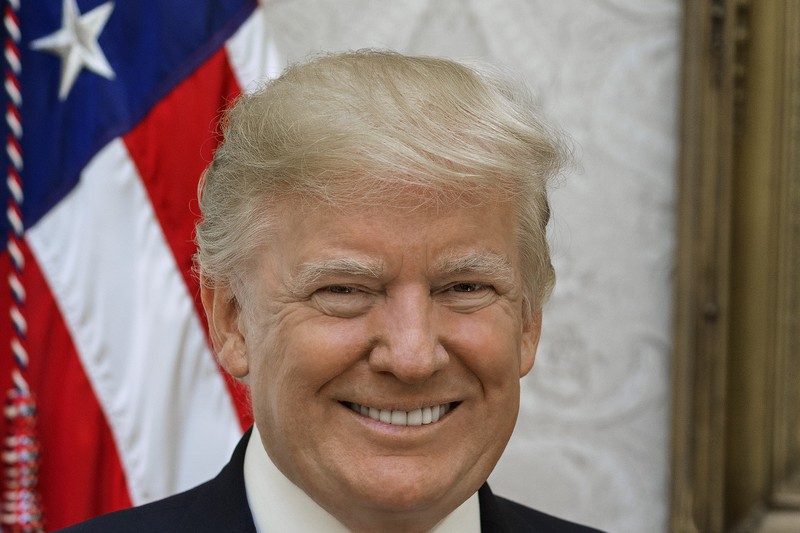
Donald Trump confirmed this week he will visit the Chinese capital on 14 and 15 May for talks with President Xi Jinping — the first visit to China by a sitting US president since Trump’s own trip in 2017. The meeting, originally planned for late March, was postponed after the war began. White House spokesperson Karoline Leavitt said Xi “understood that it’s very important for the president to be here throughout these combat operations right now.”
A 15-Point Plan in Search of a Negotiating Partner
The administration has been consistent about one thing: the war has a timetable. Leavitt said the White House had “always estimated approximately four to six weeks.” Secretary of State Marco Rubio, speaking after G7 talks in Paris, said US operations would conclude “in the next couple of weeks.”
The diplomatic vehicle is a 15-point peace plan, passed to Tehran through Pakistani intermediaries, according to the BBC. Witkoff said the proposal “could solve it all.” But Iran has not formally responded, and Washington concedes it is unclear who remains to negotiate with. Several top Iranian leaders, including the supreme leader, have been killed since the campaign began.
Russia’s foreign minister Sergei Lavrov discussed settlement prospects with Iranian counterpart Abbas Araghchi on Friday, according to Russia’s foreign ministry. European officials at the G7 separately pressed Rubio on allegations that Moscow has been providing satellite imagery and upgraded drone technology to Tehran.
Hormuz Closed, Markets Rattled
Whatever the diplomatic progress, the facts on the ground tell a different story. Iran’s Revolutionary Guards declared the Strait of Hormuz “closed” to vessels travelling to and from enemy ports and claimed to have turned back three ships. Roughly 20 per cent of the world’s oil and liquefied natural gas normally transits the waterway.
Oil prices closed more than 4 per cent higher on Friday, even after Trump extended — for the second time — his deadline for Iran to reopen the strait or face attacks on energy infrastructure, pushing it to 6 April.
The United Nations warned that disrupted fertilizer shipments and soaring energy costs could push tens of millions more into acute hunger if the war runs through June. A UN task force, modelled on the Black Sea Grain Initiative for Ukraine, is being assembled to design a mechanism for keeping Hormuz open.
G7 foreign ministers called for “the absolute necessity to permanently restore safe and toll-free freedom of navigation.” Rubio said the UK would lead a postwar coalition to secure the waterway. Most G7 nations have declined Trump’s call for naval escorts now, arguing that ending the conflict is the surest path to open passage.
China’s Leverage, China’s Silence
The Beijing meeting will be the first face-to-face conversation between Trump and Xi since an October encounter in South Korea produced a trade truce. Taiwan and bilateral trade will be on the agenda. But Iran dominates the backdrop.
Trump has pressed the world’s major oil consumers — China above all — to help counter Iran’s Hormuz closure. Beijing, which imported approximately 12 million barrels of oil daily in the first two months of 2026, more than any other nation, has not directly responded. The Chinese foreign ministry said only that “both sides are maintaining communication regarding President Trump’s visit to China.”
China has leverage. As Tehran’s largest oil buyer, Beijing holds economic cards that matter. Whether Xi has the will to play them — or prefers to watch Washington stay entangled — is the question that will shape what comes next.
What Peace Looks Like After Bombed Nuclear Sites
Even if talks materialise, the terms of a settlement are difficult to picture. Israeli strikes have destroyed nuclear infrastructure at Khondab and Ardakan.
Iran’s foreign minister has vowed to exact a “heavy price” for strikes on steel plants and nuclear facilities. The Revolutionary Guards have warned civilians near American bases and industrial sites across the region to evacuate.
The conflict keeps expanding. Yemen’s Houthis have threatened to enter the war if attacks on Iran continue. Hezbollah has already been drawn in, with Israeli strikes on southern Beirut killing two and displacing more than a million in Lebanon, where the UN warns of a “deepening humanitarian crisis.”
A 46-year-old Tehran dentist who gave her name as Ensieh described the view from below. “We’re caught between three mad powers, and war is terrifying,” she told AFP.
In Beijing this May, two leaders with the power to shape this war’s end will sit across a table. The hardest question may be the simplest: what does peace actually look like?
Sources
- Trump’s trip to meet Xi Jinping in China rescheduled for May due to Iran war — The Guardian
- Trump confirms May meeting with Xi Jinping as Iran war forces postponement — BBC
- US envoy hopeful on Iran talks as strikes target nuclear facilities — Channel News Asia
- Rubio says US expects to finish Iran war ‘in next couple of weeks’ — BBC
- Russian and Iranian foreign ministers discuss possibility of conflict settlement — Reuters
- UN moves to create mechanism to safeguard Hormuz trade in face of Iran war — Reuters
Discussion (9)