 lop News
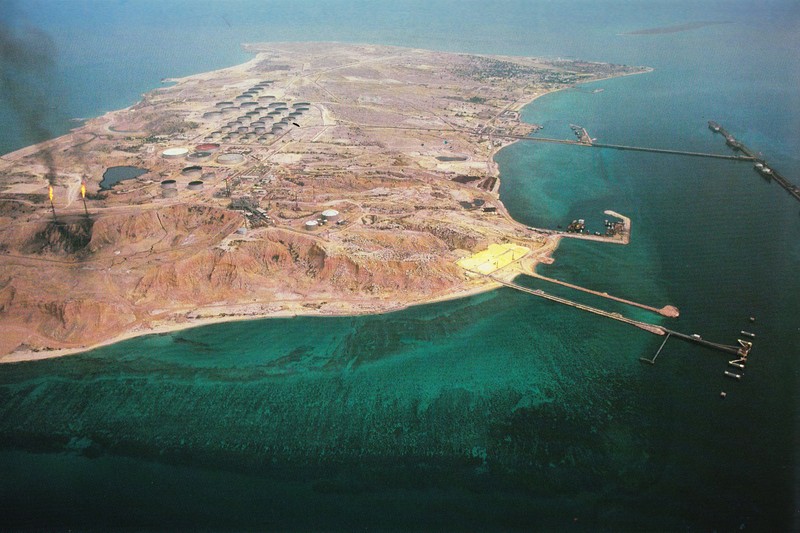
Ninety per cent of Iran’s oil exports flow through a single island. Twenty square kilometres of concrete, pipeline and loading terminal, sitting 15 miles off the Iranian coast in the northern Gulf. Donald Trump has threatened to obliterate the lot of it — and much of Iran’s civilian infrastructure besides.
In a post on Truth Social early Monday, the US president warned that if a deal to end the month-long war with Iran is not reached “shortly,” and if the Strait of Hormuz is not “immediately ‘Open for Business,’” American forces would respond by “blowing up and completely obliterating all of their Electric Generating Plants, Oil Wells and Kharg Island (and possibly all desalinization plants!).” The casual punctuation — an exclamation mark beside a threat to destroy drinking water systems — was perhaps the least alarming thing about the statement.
The island that keeps Iran’s economy running
Kharg Island has served as Iran’s primary oil export terminal for decades. Its deepwater ports can accommodate Very Large Crude Carriers capable of holding roughly two million barrels each — a rarity along Iran’s shallow coastline. According to one analyst cited by Time, net oil export revenue from the island was worth approximately $53 billion in 2025, accounting for about 11 per cent of Iran’s GDP, though Time noted it could not independently verify those figures.
The island is no stranger to attack. During the Iran-Iraq war of the 1980s, Iraqi aircraft bombed it repeatedly. On 13 March this year, the US struck what it said were 90 military targets on the island — but deliberately spared the oil infrastructure. “Just one simple word and the pipes will be gone too,” Trump told a press conference on 16 March. On Monday, that word appeared to have been spoken.
From military pressure to economic annihilation
The significance of Monday’s threat lies not just in its scope but in what it represents: a shift from pressure on Iran’s military capacity to the potential destruction of its economic lifeblood. Threatening power plants and desalination facilities alongside oil infrastructure broadens the target set from strategic assets to the foundations of civilian life.
Amnesty International’s senior director for research, Erika Guevara-Rosas, said that attacking civilian infrastructure such as power plants “could amount to a war crime,” noting that such facilities are essential for “meeting the basic needs and livelihoods of tens of millions of civilians.” UN Secretary-General António Guterres had previously stated there were “reasonable grounds to think” that attacks either on Iran or from Iran on energy infrastructure “might constitute a war crime.”
White House press secretary Karoline Leavitt told reporters that US forces “will always act within confines of the law,” before adding that the military “has capabilities beyond their wildest imagination and the president is not afraid to use them.”
Markets register the shock
Brent crude rose to approximately $115 per barrel on Monday, according to Time — up from roughly $72 before the war began on 28 February. The Guardian reported that prices rose to almost $117, close to the March peak of $119.50. The commodity is now on track for its largest monthly gain on record: 54 per cent since the start of March, surpassing the previous record of 46 per cent set in September 1990 after Saddam Hussein invaded Kuwait.
US gasoline prices have reached a national average of $3.99 per gallon, up roughly $1 since the war began. Federal Reserve chair Jerome Powell warned that a series of supply disruptions could lead the public to “start expecting higher inflation over time.”
The S&P 500 fell 0.4 per cent on Monday, deepening its losses to 9.1 per cent below its record high.
Iran’s retaliation calculus
Iran has not been passive. Tehran has effectively closed the Strait of Hormuz — through which roughly a fifth of global oil production normally flows — and has attacked ships attempting to transit the waterway. On Monday, Iranian strikes hit a critical water and electrical plant in Kuwait, according to the Associated Press, and an oil refinery in Israel, according to the Guardian. Saudi Arabia and the UAE both intercepted Iranian missiles.
Parliamentary speaker Mohammad Bagher Ghalibaf warned that Iranian forces would “rain down fire” on any invading US forces and dismissed diplomatic talks as cover for American troop deployments. “We’re dealing with different people than anybody’s dealt with before,” Trump insisted, claiming the war had already achieved “regime change.”
There is a fundamental problem with this assertion. Iranian officials have repeatedly denied that negotiations are underway. Foreign ministry spokesperson Esmail Baghaei acknowledged that intermediaries — including the foreign ministers of Pakistan, Egypt, Saudi Arabia and Turkey — had delivered a 15-point proposal to Tehran, but said US demands were “excessive, unrealistic and irrational.” Ghalibaf, whom Trump claimed to be negotiating with, said the US was promoting “desires as news while threatening our nation at the same time.”
The military picture — and the risks
The Pentagon has deployed nearly 5,000 Marines and roughly 2,000 paratroopers from the 82nd Airborne Division to the region. The BBC reported that a seizure of Kharg would likely involve a night-time airborne drop followed by an amphibious Marine landing using Osprey tilt-rotor aircraft and hovercraft.
It would be risky. US ships would first need to transit the Strait of Hormuz — currently under Iranian control — then sail the length of the Gulf past hidden drone and missile sites. Any landing force would face mines, swarms of drones, and the problem of holding exposed ground under bombardment from the Iranian mainland.
The BBC drew a parallel with Ukraine’s Snake Island, which Russia seized in 2022 only to be driven off by constant Ukrainian fire. Maziyar Ghiabi of the University of Exeter’s Centre for Persian and Iranian Studies warned that a ground operation would push the conflict toward “a point of no return,” risking a full regional war.
A war with no clear exit
The conflict is now in its 31st day. The death toll stands at more than 1,900 in Iran, over 1,200 in Lebanon, 19 in Israel, and 13 US military personnel killed, according to the Associated Press. Millions have been displaced. Three UN peacekeepers have been killed in southern Lebanon in less than 24 hours. Israel’s ground invasion there continues to expand.
Leavitt said Trump expected a deal within 10 days. “We’re on day 30 today. You do the math.”
Egypt’s president, Abdel Fattah al-Sisi, offered a blunter calculation. “Please, help us to stop the war,” he said at a press conference in Cairo. “You are capable of it.” Spain has closed its airspace to US military aircraft involved in the conflict. UK prime minister Keir Starmer reiterated: “This is not our war and we are not going to get dragged into it.”
Trump, meanwhile, has floated asking Arab Gulf states to help pay for the war — the same states now scrambling to broker peace and absorbing Iranian missile strikes on their own infrastructure. The gap between what Washington calls negotiations and what Tehran recognises as diplomacy remains, by all available evidence, enormous.
Leavitt put the deadline at roughly 10 days. The island has been bombed before. It has never faced what Trump is now promising.
Sources
- Trump threatens to obliterate Iran’s oil wells, Kharg island if no deal — Channel News Asia
- How the US could try to seize Iran’s Kharg Island — BBC News
- Trump threatens to ‘obliterate’ Iran’s energy grid if ceasefire not reached ‘shortly’ — The Guardian
- Here’s What Trump Has Said About Seizing Iran’s Key Oil Hub Kharg Island — Time
- Live updates: Trump says US is negotiating with Iran’s parliamentary speaker, who denies talks — Associated Press
- Trump threatens ‘completely obliterating’ Iranian infrastructure as possible escalation looms — Politico
Discussion (14)