 lop News
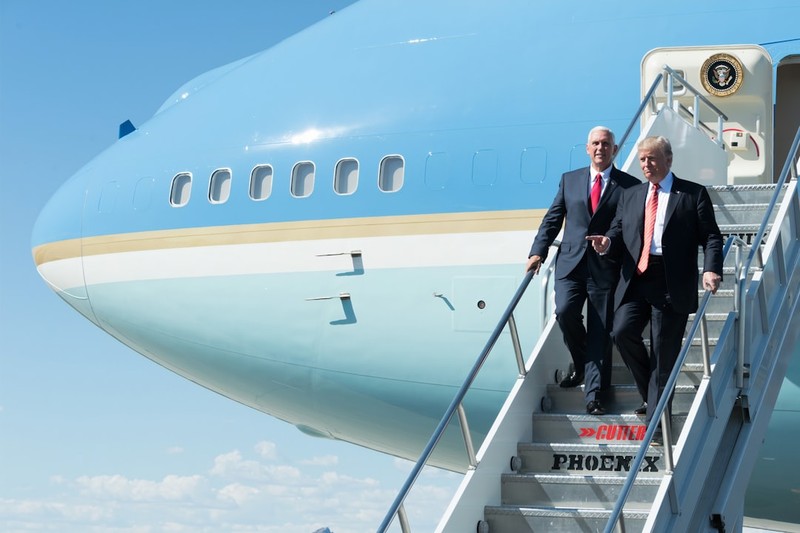
Ibogaine sits in the federal government’s most restrictive drug category — Schedule I, alongside heroin — defined as having no accepted medical use and a high potential for abuse. On Saturday, President Donald Trump signed an executive order to fast-track it.
A decade ago, this scene would have been unthinkable: a conservative president flanked by a podcaster, a former Navy SEAL, and Health Secretary Robert F. Kennedy Jr. — a longtime critic of federal health agencies — using executive power to accelerate access to psychedelics.
The order directs the FDA to issue National Priority Vouchers for psychedelics that have received Breakthrough Therapy designations, shrinking review timelines from months to weeks. It instructs the FDA and DEA to create a patient-access pathway under the Right to Try Act, commits $50 million through ARPA-H to match state research investments, and tasks the Attorney General with initiating rescheduling reviews after Phase 3 trials.
The policy is real. The politics are the story — and the politics are strange.
Conservatives, Veterans, and a Schedule I Drug
This coalition doesn’t resemble any drug-reform movement in American history. Former Texas Governor Rick Perry — who once called himself a “right-wing anti-drug governor” — has become ibogaine’s most visible champion, co-founding Americans for Ibogaine and lobbying on Joe Rogan’s podcast. Former Navy SEAL Marcus Luttrell, whose memoir inspired the film Lone Survivor, told Trump at the signing that ibogaine “absolutely changed my life for the better.”
The connective tissue is veteran suicide. More than 6,000 veterans die by suicide each year — a rate more than double the non-veteran adult population, according to administration data. For this coalition, psychedelics are not a culture-war cause but a last resort for conditions that existing treatments have failed to address.
That framing has given Republican lawmakers political cover. As Katharine Neill Harris, a drug policy fellow at Rice University’s Baker Institute, told the Texas Tribune last year, the Texas ibogaine bill “doesn’t grant public access to ibogaine, and there’s nothing in the bill that could really be construed as soft on drugs.”
Ibogaine: The Drug at the Center
Derived from a West African shrub used in Bwiti religious ceremonies, ibogaine is the order’s most provocative inclusion. A 2024 Stanford University study of 30 veterans treated with ibogaine in Mexico found improvements in PTSD, depression, and anxiety — results that galvanized Perry’s advocacy and helped drive Texas to invest $50 million in a research consortium in 2025.
But the study enrolled no placebo group, a basic requirement for rigorous clinical research. And ibogaine’s safety profile is genuinely concerning. The National Institutes of Health funded ibogaine research in the 1990s before terminating it over “cardiovascular toxicity.” The Multidisciplinary Association for Psychedelic Studies has linked the compound to more than 30 deaths in medical literature. Clinics in Mexico that administer ibogaine routinely monitor patients’ heart readings and keep emergency equipment on hand.
“It’s been incredibly difficult to study ibogaine in the U.S. because of its known cardiotoxicity,” said Frederick Barrett, director of the Johns Hopkins Center for Psychedelic and Consciousness Research. “If the executive order can pave the way for doing objective, scientific research with this compound, it would help us understand whether it is truly a better psychedelic therapy than others.”
What It Means for the FDA
FDA Commissioner Marty Makary said the agency will issue National Priority Vouchers for three psychedelics next week — the first time the FDA has extended this fast-track mechanism to the category. The vouchers allow certain drugs to be approved quickly “if they are in line with our national priorities.”
That phrase is doing a lot of work. “National priorities” is a political category, not a clinical one. Kennedy’s role as Health Secretary amplifies the concern: a man who built his public career on the claim that federal health agencies are captured by industry now oversees the agency deciding whether these drugs are safe enough to approve. The question isn’t whether psychedelics deserve faster review — many researchers believe they do. It’s whether the review will remain grounded in evidence when the White House has already declared the outcome a priority.
The practical impact is limited for now. The order does not grant public access to ibogaine or any other psychedelic. Tom Feegel of Beond Ibogaine, which operates a clinic in Cancun, said the change means ibogaine shifts “from being fringe and underground to being federally acknowledged” — but insurance won’t cover it, and it remains unapproved care.
Texas, for all its investment, is likely at least six years from FDA approval of ibogaine clinical trials, according to Bryan Hubbard, executive director of the American Ibogaine Initiative. The science, in other words, is not keeping pace with the politics.
That may be the point. The order’s signal to researchers, state governments, and the pharmaceutical industry is that this administration wants psychedelics approved. Whether that signal accelerates good science or simply accelerates approval is the distinction that will determine whether this policy helps the veterans it was designed for — or merely helps the politicians who championed it.
Sources
- Fact Sheet: President Donald J. Trump is Accelerating Medical Treatments for Serious Mental Illness — The White House
- Trump signs order to speed review of psychedelics, including the controversial drug ibogaine — Associated Press
- With Rick Perry’s backing and $50 million from the state, Texas set to become global leader in psychedelic research — Texas Tribune
Discussion (9)