 lop News
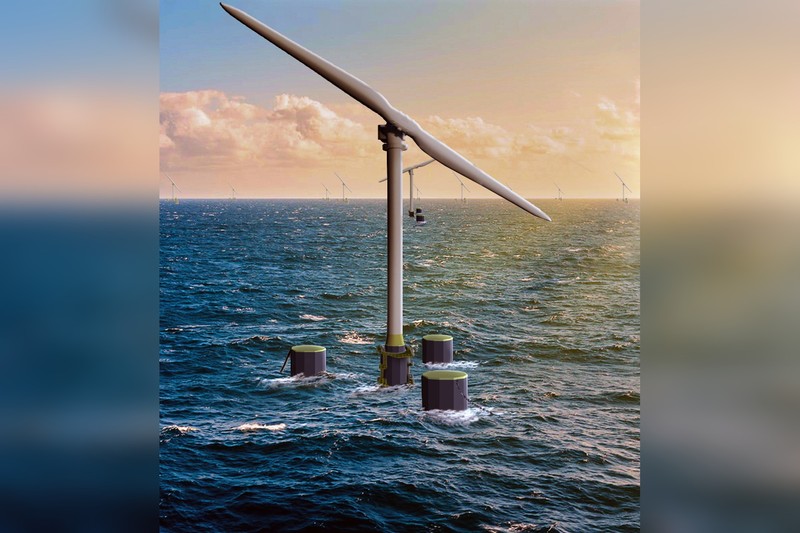
Nearly $885 million in taxpayer money will be handed to offshore wind developers on one condition: stop building wind farms and invest in oil and gas instead.
The US Department of the Interior announced the agreements on Monday, targeting two projects — Bluepoint Wind and Golden State Wind. Bluepoint’s leaseholders stand to receive up to $765 million; Golden State’s, up to $120 million. Both companies have agreed to voluntarily terminate their offshore wind leases.
The catch is embedded in the fine print. Before collecting any reimbursement, developers must first invest a comparable sum in qualifying US conventional energy projects — specifically oil, gas, or liquefied natural gas infrastructure, according to The Register. The government is not simply buying out clean energy contracts. It is redirecting capital toward fossil fuels at public expense.
This is the second round of such agreements. Last month, the Interior Department reached a similar deal with French energy giant TotalEnergies, reimbursing approximately $1 billion to surrender wind farm leases in Carolina Long Bay and the New York Bight area. The running total for paying companies to abandon offshore wind now approaches $2 billion.
A Legal Workaround
The reimbursement strategy appears to have emerged as a fallback after President Trump’s executive order halting new federal approvals for wind projects was struck down in federal court. A coalition of state attorneys general had challenged the order, which was subsequently struck down in federal court.
Rather than test the courts again, the administration is simply paying leaseholders to walk away. In a remarkable coincidence, both sets of developers have since decided not to pursue any new offshore wind developments in the United States.
Interior Secretary Doug Burgum framed the agreements as a correction to market distortions. “The companies that bid for these offshore wind leases were basically sold a product in 2022 that was only viable when propped up by massive taxpayer subsidies,” he said in a prepared statement. “Now that hardworking Americans are no longer footing the bill for expensive, unreliable, intermittent energy projects, companies are once again investing in affordable, reliable, secure energy infrastructure.”
The Subsidy Arithmetic
The argument that wind energy is uniquely dependent on public support sits uneasily alongside the available figures. Fossil fuel producers receive approximately $34.8 billion per year in federal support through tax breaks, royalty policies, and other subsidies, according to estimates cited by The Register — decades after the industry could reasonably be called “emerging.”
The global picture is starker still. The International Monetary Fund found that fossil fuel subsidies exceeded $7 trillion in 2022, equivalent to 7.1 percent of global GDP, according to data reported by The Register. By comparison, G20 governments provided roughly $168 billion in public financial support for renewable power in 2023, according to the International Institute for Sustainable Development.
On cost, wind and solar have been winning for years. Investment bank Lazard’s annual analysis of electricity generation costs found that unsubsidized wind and solar are the lowest-cost energy sources in the US and have been for at least a decade. That conclusion has drawn particular interest from datacenter operators scrambling for cheap power, who have been keen to keep renewables in their energy mix.
The Wrong Direction
The policy shift comes at an awkward moment. The conflict with Iran has pushed oil prices upward, underscoring the vulnerability of economies that remain heavily dependent on fossil fuel markets. While the European Union and China have accelerated investment in domestic renewable capacity as a hedge against supply shocks, the United States is moving the other way — paying companies to dismantle the very infrastructure that would diversify its energy mix.
The administration frames all of this as part of President Trump’s “Energy Dominance Agenda,” which aims to leverage domestic oil and gas reserves to reduce consumer costs. Whether doubling down on fossil fuels during a price crisis driven by fossil fuel geopolitics constitutes sound strategy is a question the administration has not addressed.
What the numbers show is unambiguous: companies are being paid generously — approaching $2 billion across two deals — to trade clean energy infrastructure for fossil fuel investment, at taxpayer expense, during a period of rising energy costs. The US offshore wind industry, still young, has now lost significant momentum in the span of two months. Rebuilding it under the current policy environment appears unlikely.
Discussion (10)