 lop News
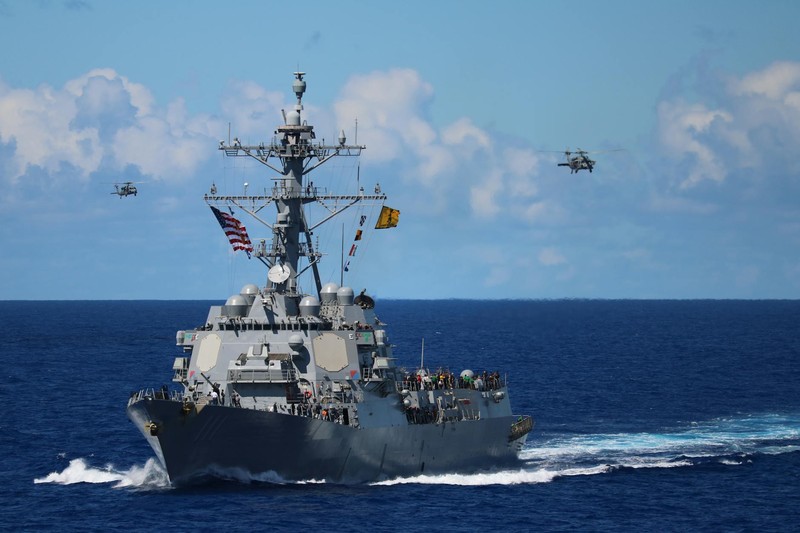
The Strait of Hormuz is quiet again — at least for now. President Donald Trump paused the US military operation to escort stranded commercial vessels through the chokepoint on Tuesday evening, less than 48 hours after it began, citing “great progress” toward a deal with Iran.
The decision, announced on Truth Social, is the first tangible de-escalation since the confrontation over the strait began. It came at the request of Pakistan, which has been serving as a mediator, and “other countries” Trump did not name. The US naval blockade of Iranian ports remains in place.
Whether the pause represents genuine momentum toward peace or a tactical regrouping ahead of next week’s planned summit with Chinese President Xi Jinping is the question now hanging over two continents.
One Day In, Already Out
“Project Freedom,” the US operation to guide an estimated 1,550 commercial vessels carrying 22,500 mariners out of the Persian Gulf, launched Monday. By the end of its first and only active day, just two US-flagged merchant ships had transited the strait. Maersk confirmed one of its vessels exited safely with American military assistance. Hapag-Lloyd, one of the world’s largest container shipping firms, said its risk assessment “remains unchanged” and that transits were “for the moment not possible for our ships.”
The waterway is just 21 miles wide at its narrowest point. Iran can reach all of it with cruise missiles, drones, fast attack craft, and mines.
“We have mutually agreed that, while the blockade will remain in full force and effect, Project Freedom … will be paused for a short period of time to see whether or not the Agreement can be finalised and signed,” Trump wrote.
The White House did not respond to requests for further detail on what progress in negotiations had been made. Secretary of State Marco Rubio told reporters earlier Tuesday that the US had completed its offensive operations against Iran — dubbed “Operation Epic Fury” — and that the clashes in Hormuz were a separate, defensive matter.
“This is not an offensive operation; this is a defensive operation,” Rubio said. “And what that means is very simple - there’s no shooting unless we’re shot at first.”
The Diplomatic Gap
The disconnect between public posturing and private maneuvering has been widening for weeks. Trump has alternately called the Iran conflict “a little skirmish” and claimed the US has “total control,” while privately authorizing Pakistani-mediated talks with Tehran that have produced only one round of direct negotiations since the war began on February 28.
Iran’s parliament speaker and chief negotiator, Mohammad Bagher Qalibaf, struck a combative tone even as those channels stayed open. “We know full well that the continuation of the status quo is intolerable for America; while we have not even begun yet,” he wrote on X. Iran’s Revolutionary Guard warned of a “firm response” to any ship deviating from its own approved route through the strait.
Iran has been running a parallel transit system: vessels vetted by the Revolutionary Guard, sometimes requiring payment, can pass through Iranian-controlled waters in the northern strait. The US-approved route runs through Omani territorial waters to the south.
Iranian President Masoud Pezeshkian said Tehran remains open to dialogue but rejected US “maximum pressure” demands as “impossible,” according to France 24.
China, Xi, and the Personal Diplomat
At a White House fitness event Tuesday, Trump batted away any suggestion that China was pushing back against the American role in the Iran war.
“We haven’t been challenged by China. They don’t challenge us,” Trump told reporters, adding that Xi “wouldn’t do that — I don’t think he’d do that because of me.”
He noted that China receives roughly 60 percent of its oil through Hormuz and suggested Beijing could simply reroute its ships to American ports. “Send your ships to Texas. It’s not that much further,” Trump said, according to the South China Morning Post. “Send your ships to Louisiana. Send your ships to Alaska.”
The comments come days before Trump’s planned summit with Xi in Beijing — a meeting where Iran, energy security, and the Hormuz blockade will be central. China’s dependence on Gulf oil gives it an enormous stake in the outcome, but Trump’s framing reduced a complex geopolitical entanglement to a matter of personal rapport.
Iranian Foreign Minister Abbas Araghchi is expected to visit China on Wednesday. Rubio expressed hope that Beijing would press Tehran to release its chokehold on the strait.
The Military Reality on the Ground
The pause does not mean the guns have fallen silent. The UAE, a key US ally, said it intercepted Iranian drones and missiles for a second consecutive day on Tuesday. The previous day, Emirati air defenses engaged 15 missiles and four drones; one struck a key oil facility, wounding three Indian nationals. Iran “categorically denied” carrying out any attacks.
General Dan Caine, chairman of the Joint Chiefs of Staff, said more than 100 US military aircraft were patrolling the skies over the strait. He confirmed that Iran had fired at commercial vessels nine times, seized two container ships, and attacked US forces 10 times since the April 8 ceasefire. Those actions had not reached the threshold of “major combat operations” — “at this point.”
Defense Secretary Pete Hegseth insisted the ceasefire was still holding. “This is a separate and distinct project,” he said of the Hormuz operation.
The assessment from outside the administration was less sanguine. Grant Rumley, a Middle East expert who served as a White House adviser between 2018 and 2021, told the BBC that securing passage for all stranded ships would be “very, very hard” and would likely require a more kinetic military option. “I think that the general consensus is that a resumption of hostilities is a question of when,” he said. “Not if.”
Nitya Labh, a fellow at London’s Chatham House, told the BBC the US operation was “extremely risky” and suggested Washington was signaling it was “not willing to negotiate over the terms of reopening the Strait.”
What Comes Next
The war, now in its third month, has sent fuel prices skyrocketing and rattled the global economy. European and US stocks advanced Tuesday on news of the pause, but Asian equities remained under pressure.
EU chief Ursula von der Leyen warned that Gulf security has “direct consequences for Europe.” Germany’s Friedrich Merz, France’s Emmanuel Macron, and Britain’s Keir Starmer have all urged Iran to return to talks.
At least 10 sailors have died while stranded in the Gulf, according to Rubio. The humanitarian cost of the blockade and the economic cost of the war continue to climb in parallel.
The pause is framed as a grace period — a window for Pakistan and other mediators to close the gap between what Trump demands and what Tehran will accept. But Trump has simultaneously declared the military campaign a success, dismissed the concerns of the country most vulnerable to a prolonged blockade, and reduced the hardest diplomacy to personal chemistry. The strait is quieter tonight. Whether it stays that way depends on talks the public cannot see, between parties that disagree on what the fighting was about in the first place.
Sources
- Trump to pause US effort to guide vessels out of Strait of Hormuz to allow time for an Iran deal — Associated Press
- What we know about Trump’s ‘Project Freedom’ in Strait of Hormuz — BBC News
- Rubio says US military has completed offensive operations in Iran — France 24
- Trump says pausing Hormuz operation in push for Iran deal — Channel News Asia
Discussion (13)