 lop News
The US naval blockade on Iranian ports — the most consequential economic pressure point in a three-month war — is coming down. The ceasefire deal that was supposed to accompany it is not.
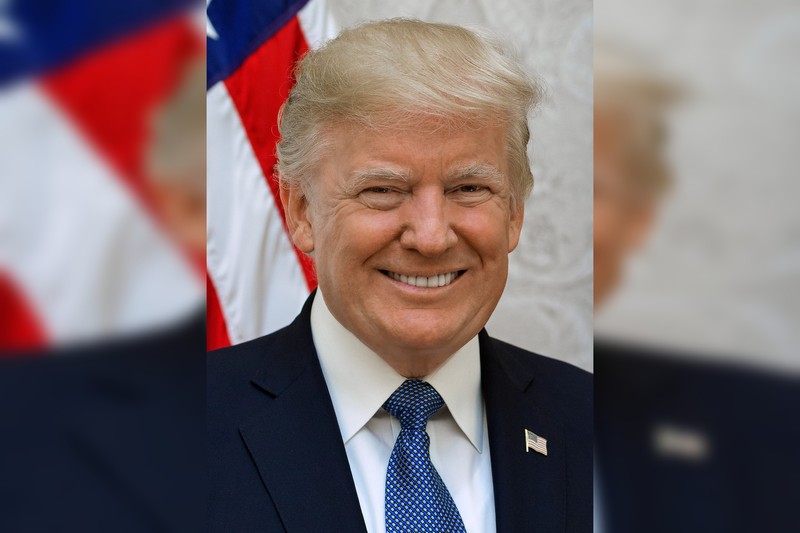
President Donald Trump emerged from a roughly two-hour Situation Room meeting with his national security team on Friday without deciding whether to approve the tentative agreement that US and Iranian negotiators had reportedly reached. A senior administration official said Trump would only sign a deal that “satisfies his red lines.”
The disconnect was stark. Hours before the meeting, Trump publicly announced the blockade lift and told ships caught in the Strait of Hormuz they could “start the process of heading home.” By day’s end, Iran’s Foreign Ministry spokesperson Esmaeil Baghaei was telling state broadcasters the memorandum “has not been finalized yet,” and Iran’s semi-official Fars News Agency called Trump’s public characterization of the deal “a mixture of truth and lies.”
Two sides, two versions of the deal
According to US officials cited by the Associated Press and CNN, the tentative agreement would extend the fragile ceasefire by 60 days, reopen the Strait of Hormuz to unrestricted commercial traffic, and open a negotiation window on Iran’s nuclear program. The US would gradually lift its blockade on Iranian ports and relax sanctions.
Trump laid out his terms on Truth Social: Iran must agree never to develop a nuclear weapon, reopen the strait with no tolls, remove all remaining naval mines, and allow the US to unearth and destroy roughly 441 kilograms of uranium enriched to 60 percent purity — a short technical step from weapons grade — currently buried under rubble from US strikes last year. “No money will be exchanged,” Trump wrote, “until further notice.”
Iran tells a different story. Fars reported that no clause in the memorandum requires toll-free passage or addresses uranium destruction. Instead, the deal demands an immediate $12 billion release of frozen Iranian assets. Baghaei said Tehran is “focused on the end of war” and not discussing nuclear details. Parliamentary speaker Mohammad Bagher Ghalibaf, Iran’s top negotiator, was blunter: “We secure concessions not through talks, but through missiles.”
The strait and the global price tag
The Strait of Hormuz, through which roughly a fifth of the world’s oil and gas typically flows, has been effectively closed since the US and Israel launched a surprise attack on February 28 that killed Iran’s supreme leader. Before the war, more than 100 vessels passed through daily. Recent traffic has dropped to roughly two dozen, with Iran’s new Persian Gulf Strait Authority charging tolls and the IRGC navy firing warning shots at vessels attempting unauthorized passage.
The closure has driven fuel and fertilizer prices sharply higher. The heads of the IEA, IMF, World Bank, and WTO warned this week of “substantial and highly asymmetric impacts on energy supplies, food security and economic activity,” forecasting further damage if the strait stays blocked through summer.
Oman caught in the crossfire
Oman, which sits on the strait’s southern shore and has long served as a mediator between Washington and Tehran, finds itself in an increasingly precarious spot. On Wednesday, Trump told reporters that if Oman entered any agreement with Iran to share control of the strait, the US would “have to blow them up.”
Analysts consider an actual strike highly unlikely. Stefan Lukas of Middle East Minds told Deutsche Welle that Oman’s value as a communication channel is too great to risk. Marcus Schneider of the Friedrich Ebert Foundation said the threats are viewed in the region as frustration from Washington rather than genuine military intent. Iran has pushed the idea of joint Iranian-Omani control of the strait, but Oman itself is skeptical — active participation would antagonize the other Gulf states.
Watching from Singapore
At the Shangri-La Dialogue in Singapore, where defense officials from across the Indo-Pacific are gathered this weekend, Secretary of Defense Pete Hegseth said the US remains “more than capable” of resuming the war and that any deal “would be a good deal.” It was a statement that managed to signal both confidence and ambiguity — much like the day’s events in Washington.
Iran has also linked any agreement to a ceasefire between Israel and Hezbollah in Lebanon, where Israeli forces have pushed past the Litani River beyond the lines established by April’s ceasefire. Military officials from both countries held what the Pentagon called “productive” talks in Washington on Friday, but fighting has only intensified.
The blockade lift, if it proceeds, is the first tangible de-escalation in a conflict that has killed Iran’s supreme leader, drawn in Lebanon and Israel, and throttled global energy markets. Whether it becomes the beginning of a resolution or a unilateral concession with no agreement to anchor it depends on what Trump decides next — and whether Tehran agrees he has decided anything at all.
Sources
- Trump ponders whether to move forward with Iran deal but hasn’t yet decided — Associated Press
- No decision made after Trump’s White House meeting on Iran negotiations — The Jerusalem Post
Discussion (8)