 lop News
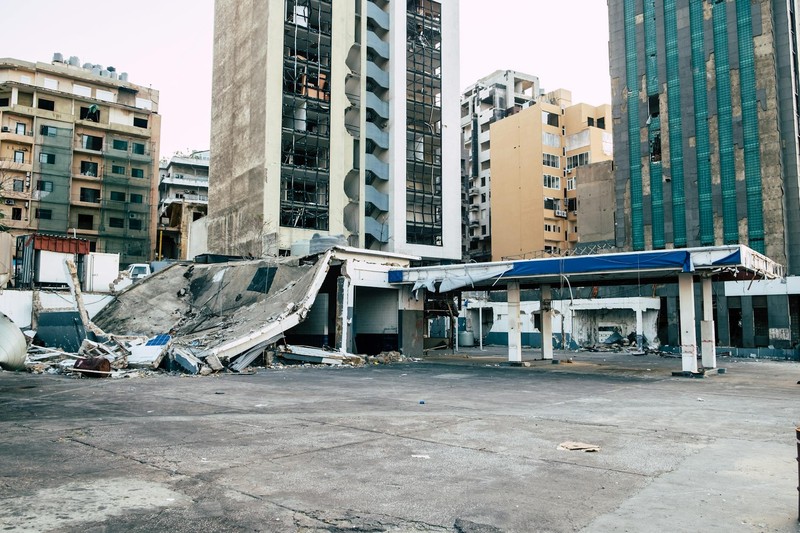
Minutes after Donald Trump declared that Israel and Hezbollah had agreed to stop fighting, Israel detected missile launches from Lebanon and warned civilians in its northern regions to take cover.
The US president posted on social media Monday afternoon that he had secured commitments from both sides after a call with Israeli Prime Minister Benjamin Netanyahu and communications with Hezbollah through intermediaries. Netanyahu confirmed the conversation — but described it less as mutual restraint than as a final warning.
The episode captures the central problem with this latest ceasefire declaration: announced with certainty, unverified by one of the two parties, and tested by events on the ground almost immediately.
What was actually agreed
According to a Lebanese Embassy statement, the specific deal is narrow: Israel would not strike Beirut’s southern suburbs, and Hezbollah would not attack northern Israel. The arrangement is intended to be expanded later to cover all of Lebanon.
Trump went considerably further. “There will be no troops going to Beirut,” he wrote, claiming forces already en route “have already been turned back.” He said Hezbollah had “agreed that all shooting will stop — That Israel will not attack them, and they will not attack Israel.”
Netanyahu’s office offered a starkly different account. The Israeli premier said he told Trump that Israel would strike Beirut if Hezbollah’s attacks continued, and that the military would “continue to operate as planned” in southern Lebanon. Defense Minister Israel Katz was blunter: “There will be no calm in Beirut” so long as Hezbollah keeps firing.
Hezbollah has issued no public statement confirming any agreement.
The strikes that came first
The de-escalation claim landed hours after Israel ordered strikes on Dahiyeh, the cluster of southern Beirut suburbs where Hezbollah enjoys wide support. Civilians fled in large numbers, jamming roads out of the area. Mohammed Farhat, a 23-year-old university student, fled Haret Hreik with his brother and parents, heading with his mother on a motorcycle to stay with relatives in another neighborhood. “We are worried. I am used to it but left for my parents,” he told AP.
Israeli airstrikes overnight on southern Lebanon killed six people, including a Syrian citizen near the city of Nabatiyeh, according to Lebanon’s National News Agency. A Monday afternoon strike on the port city of Tyre caused heavy damage to Jabal Amel Hospital; video released by the Health Ministry showed shaken women and children inside the facility, its windows blown out.
On the Israeli side, one soldier was killed in southern Lebanon by a Hezbollah drone attack. The Israeli military said it intercepted two projectiles launched from Lebanese territory.
A ceasefire that never quite held
If this arrangement sounds fragile, recent history explains why. A truce announced on April 17 has been violated repeatedly, with both sides justifying attacks as responses to the other’s breaches. Israel has broken the truce on an almost daily basis, according to Al Jazeera’s tally.
The current round of fighting — which escalated after Hezbollah entered the broader Iran-Israel war in early March — has killed more than 3,400 people in Lebanon and displaced over 1 million, according to the Lebanese Health Ministry. On the Israeli side, at least 26 soldiers and a defense contractor have been killed in or near southern Lebanon, according to Netanyahu’s office. Two civilians have also been killed in northern Israel.
Israel’s recent military push reached its deepest point into Lebanon in more than 25 years, with forces capturing the medieval Beaufort Castle just north of the Litani River on Sunday — the same fortress Israel used as a base during its two-decade occupation of the south.
Washington talks ahead
Israel-Lebanon negotiations are scheduled for Tuesday and Wednesday in Washington — the latest round in talks that began in April, marking the first direct contacts between the two countries in more than three decades. Lebanese negotiators hope to expand the scope of protected areas and eventually secure a comprehensive ceasefire.
Iran looms over every discussion. Iranian Foreign Minister Abbas Araghchi warned Monday that any ceasefire agreement must cover “all fronts, including Lebanon,” and that a violation on one front constitutes a violation on all of them — linking the Lebanon conflict directly to the broader Tehran-Washington negotiations and dramatically raising the cost of any breakdown.
Lebanese officials say they remain committed to the Washington talks, which President Joseph Aoun has called “safer” than war. But the distance between a social media post and a durable agreement remains considerable. Israel’s military is still operating in southern Lebanon. Hezbollah has not spoken publicly. And no verification mechanism for Monday’s supposed de-escalation has been announced by any party.
Discussion (8)