 lop News
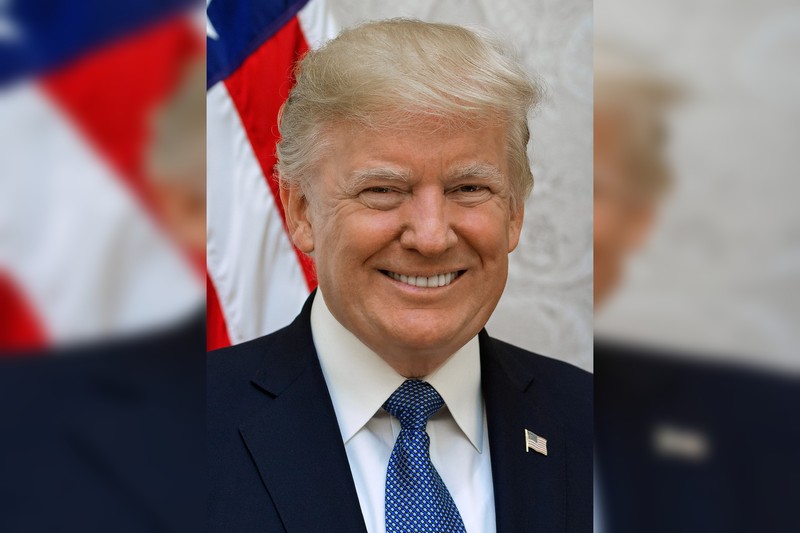
The one-page document appeared on the Justice Department website at 7:50 on a Tuesday morning, bearing a single signature and an extraordinary promise: the United States government is “forever barred and precluded” from examining Donald Trump’s past tax returns. Or his sons’. Or his company’s.
The addendum, signed Tuesday by Acting Attorney General Todd Blanche, expands a settlement reached the day before between the Trump family and the IRS over the leak of Trump’s tax returns during his first term. The original nine-page agreement, released Monday, created a $1.776 billion “Anti-Weaponization Fund” to compensate people who claim they were unfairly targeted by federal law enforcement. It made no mention of Trump’s tax audits.
The audit waiver appeared the following morning.
A sitting president settles with himself
The arrangement has drawn immediate criticism for what appears to be a glaring conflict of interest. Trump sued the IRS in January in his personal capacity, seeking $10 billion over the unauthorized disclosure of his tax information. He is also the president who oversees the IRS, the Justice Department, and the Treasury Department — the very agencies he was suing.
A federal judge in Florida last month questioned whether the lawsuit was even constitutional. Judge Kathleen M. Williams noted that although Trump claimed to be suing personally, he is “the sitting president and his named adversaries are entities whose decisions are subject to his direction.” She ordered both sides to explain how they were “sufficiently adverse to each other.”
They never answered. They settled instead.
Blanche, who signed the addendum granting the audit waiver, is Trump’s former personal defense attorney. The one-page document does not bear the signature of any IRS representative or Trump lawyer. The original settlement was signed by different officials: Associate Attorney General Stanley Woodward, IRS CEO Frank Bisignano, and Trump attorney Daniel Epstein.
The Justice Department did not respond to questions about why the audit waiver was released separately or why it was signed by a different official.
‘Unaware of a single precedent’
Former IRS commissioners from both Democratic and Republican administrations described the arrangement as without precedent.
Danny Werfel, who led the IRS from 2023 to 2025, said he was “unaware of a single precedent where the IRS has agreed in advance to permanently forgo examination of previously filed tax returns for a specific person or business.”
John Koskinen, IRS commissioner from 2013 to 2017, called it a “terrible precedent.” He said Trump has apparently been actively trading in the stock market and, since he knows a lot more about situations than the average investor, “he’s probably generated significant taxable earnings.” Declining to audit those returns, Koskinen said, is “the same as giving him an easy way to, in effect, receive money from the government.”
The Justice Department defended the waiver as routine. “As is customary in settlements, both sides have executed waivers of a variety of claims that were or could have been brought,” the department said in a statement, adding that the provision applies “only with respect to existing audits, not future” ones.
Trump is the first modern US president to decline to voluntarily release his tax returns, long claiming they were under IRS audit.
The broader pattern
The deal is the latest in a series of Justice Department settlements benefiting Trump and his allies. In March, the department settled with former national security adviser Michael Flynn, awarding him over $1 million after he sued over what he described as wrongful prosecution. In April, it settled a lawsuit with former campaign adviser Carter Page over flawed government surveillance.
The Anti-Weaponization Fund will be run by five members appointed by the attorney general — all removable at will by the president. It draws its $1.776 billion from the federal judgment fund, a perpetual appropriation used to settle litigation against the government. The fund must cease processing claims by December 1, 2028.
IRS officials had recommended fighting Trump’s lawsuit, the New York Times reported, but the agency settled anyway.
Blanche spent more than two hours testifying before a Senate Appropriations subcommittee on Tuesday. Democratic senator Chris Van Hollen of Maryland called the fund “an outrageous, unprecedented slush fund.” Blanche was not asked about the audit waiver during the hearing.
The underlying case concerned Charles Littlejohn, a former IRS contractor who leaked Trump’s tax returns to the New York Times and ProPublica. Littlejohn was sentenced to five years in prison in 2023. Trump received no monetary payment as part of the settlement — only a formal apology, and what now amounts to a permanent shield from examination of his past tax filings.
Sources
- Justice Department expands Trump settlement to cover his tax audits — Politico
- US justice department ‘forever’ bars IRS from auditing Trump’s past tax returns — The Guardian
- IRS will not pursue Trump for back taxes under settlement agreement — France 24
- Justice Department considers settling Trump’s $10 billion IRS leak lawsuit — CNN
- Justice Department Announces Anti-Weaponization Fund — US Department of Justice
Discussion (9)