 lop News
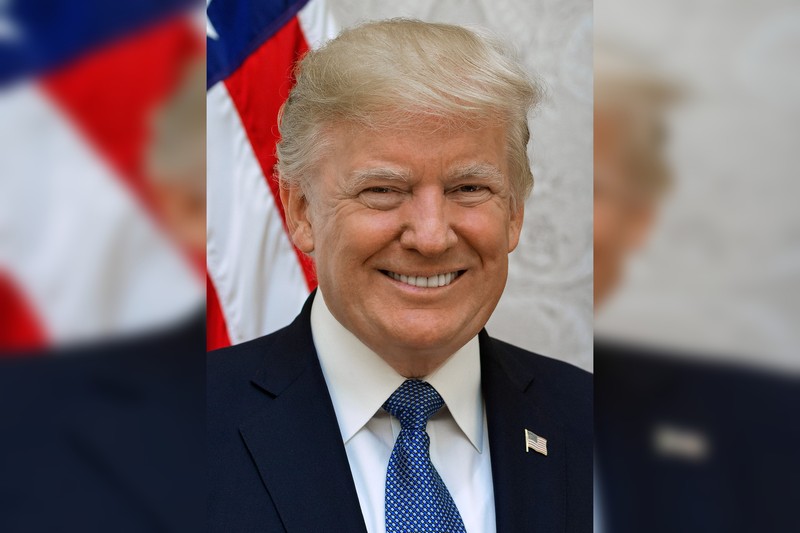
Late Monday evening, the Wall Street Journal reported that President Donald Trump had told aides he was willing to wind down the Iran war — even if the Strait of Hormuz stayed shut. Within hours, the numbers lurched. S&P 500 futures jumped 0.87%. Dow futures surged 432 points. Brent crude, which had touched $117 a barrel earlier that day, fell back below $113.
One report. No policy change. No ceasefire agreement. Billions of dollars in global assets repositioned overnight.
If a single leaked sentence about Trump’s private thinking can whipsaw oil prices and swing stock futures by nearly a full percentage point, the war’s economic grip on the global financial system is tighter than most analysts anticipated when US and Israeli missiles first struck Iran on February 28. The past 24 hours of trading were not a verdict on peace. They were a stress test — and the results are sobering.
A Month of Record-Breaking Numbers
Thirty-one days of conflict have produced data points that belong in textbooks. Brent crude has surged roughly 56% in March, the largest monthly gain on record, eclipsing the 46% spike in September 1990 when Saddam Hussein invaded Kuwait. The benchmark briefly touched $119.50 earlier this month — a level not seen since June 2022 — before settling into a volatile band between $112 and $117.
The pain cascades downstream. The US national average gasoline price crossed $4 a gallon on Monday for the first time in over three years, according to price-tracking service GasBuddy. In the UK, petrol hit 152p a litre, a 28-month high, while diesel reached 181.2p, according to the breakdown service RAC. European natural gas prices have climbed more than 70% since the war began.
“It’s also important for investors to understand that the volatility in equities is the price you pay for the higher longer-term returns,” Art Hogan, chief market strategist at B. Riley Wealth Management, told CNBC. The CBOE Volatility Index — Wall Street’s fear gauge — topped 30 during Monday’s session, and the S&P 500 slipped for its third consecutive day.
Forward-Looking Statements, Minimal Confirmation
Read the diplomatic traffic the way you’d read an earnings call and the pattern is familiar: plenty of forward-looking guidance, very little that’s audited.
Trump posted on Truth Social that “great progress has been made” in talks with “a new, and more reasonable, regime” to end military operations. He told reporters Tehran had agreed to “most of” a 15-point ceasefire proposal. The White House extended its deadline for Iran to reopen the Strait of Hormuz to April 6.
Iran’s public posture was less accommodating. Foreign Ministry spokesperson Esmaeil Baghaei called the US proposals “unrealistic, illogical and excessive.” White House press secretary Karoline Leavitt countered that what Tehran says publicly differs from what it tells US officials in private.
The same president signaling exit is simultaneously escalating. On Monday, Trump threatened to “blow up and completely obliterate” Iran’s electricity plants, oil wells, and the export hub of Kharg Island if no deal is reached. He has reportedly weighed sending ground forces to seize Kharg Island, which handles 90% of Iran’s crude exports. Thousands of soldiers from the Army’s 82nd Airborne Division have started arriving in the Middle East, two US officials told Reuters — reinforcements that would expand options to include a ground assault.
“The president’s appetite for a large-scale and extensive sort of saturation bombing of Iran is pretty low,” said Matt Gertken, chief geopolitical strategist at BCA Research. He described the threats as an attempt to “retract and conclude a deal” but warned that if there was no progress within two weeks, Trump would have to escalate and “target the core [Iranian] regime elements, and that will lead to higher collateral damage.”
The Chokepoint That Prices Everything
The Strait of Hormuz, a narrow waterway that normally carries about a fifth of global seaborne oil and liquefied natural gas, has been effectively closed since the war began. Shipping traffic has virtually ground to a halt.
On Tuesday, Iran demonstrated just how fragile the situation remains. The Al-Salmi, a fully loaded Kuwait-flagged crude tanker carrying roughly 2 million barrels — worth more than $200 million at current prices — was struck by an Iranian missile or drone in the anchorage area off Dubai’s port. Dubai authorities said the fire was brought under control with no injuries and no oil leak.
“The result is a more asymmetric game, with the US leaning toward exit and Iran still incentivized to impose cost,” said Ben Emons, chief investment officer at Fed Watch Advisors.
The European Union is not waiting for resolution. In a letter dated March 30, EU Energy Commissioner Dan Jorgensen told member states to prepare for “prolonged disruption” to energy markets, urging governments to defer non-emergency refinery maintenance and avoid measures that increase fuel consumption. While Europe imports most of its crude and gas from outside the Middle East, Jorgensen said Brussels is particularly concerned about short-term supplies of refined products such as jet fuel and diesel.
What the Stress Test Reveals
Federal Reserve Chair Jerome Powell framed the dilemma at Harvard on Monday: “There’s sort of downside risk to the labor market, which suggests keep rates low, but there’s upside risk to inflation, which suggests maybe don’t keep rates low. You’ve got tension between the two objectives.”
Ipek Ozkardeskaya, senior analyst at Swissquote, identified the threshold the market is watching: “There are bets that crude could rise to $150 and even to the $200 per barrel level if the war doesn’t end quickly. I believe that demand would be heavily hit if prices go that high. Above $120-130 per barrel, global recession odds would take the upper hand and tame upside pressure.”
The Trump administration has requested an additional $200 billion in war funding from Congress. The request faces stiff opposition. The White House has also said Trump is considering asking Arab nations to help foot the bill.
All of which sharpens the stress test into focus. The overnight market rally was real. So was the $5 swing in oil that preceded it. So was the tanker burning off Dubai. The lesson of the past 24 hours is not that peace is at hand. It is that the global economy has been wired into a conflict with no clear end — and every headline between now and April 6 is a trading event.
Sources
- Giant oil tanker off Dubai hit by Iranian strike after Trump’s latest threats — Reuters
- Oil price: WTI, Brent as traders assess Trump comments on Iran war — CNBC
- Brent crude hits $116 a barrel as Trump threatens to ‘blow up’ Iran’s energy infrastructure — The Guardian
- Stock futures rise as oil prices ease after report says Trump looking to end Iran war: Live updates — CNBC
- EU tells members to prepare for ‘prolonged disruption’ to energy markets from Iran war — Reuters
Discussion (13)