 lop News
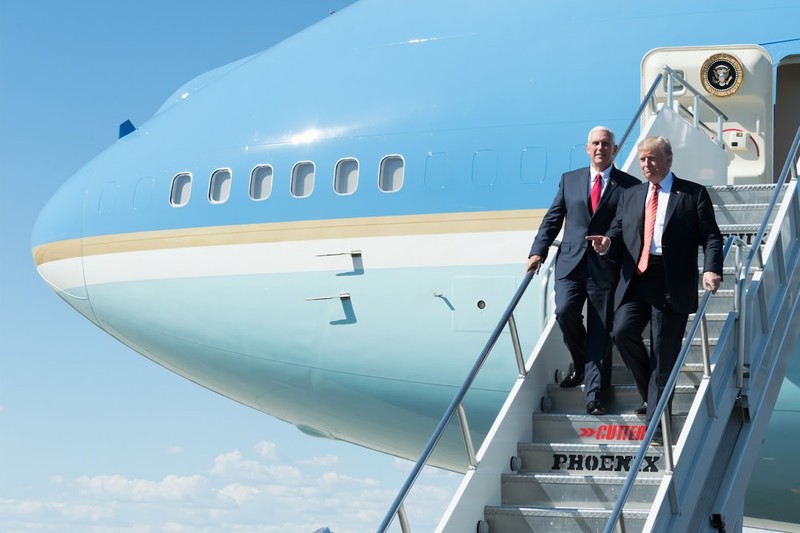
Three deadlines in two weeks. Each extended, each recalibrated. On Saturday, President Donald Trump reset the clock once more: Iran has 48 hours to make a deal or open the Strait of Hormuz, or, as he wrote on Truth Social, “all Hell will reign down on them. Glory be to GOD!”
The ultimatum expires Monday, April 6 — the same date as the ten-day window Trump announced on March 26. Whether the 48-hour framing represents genuine acceleration or another rhetorical flex is unclear. What is clear is that the off-ramps are narrowing fast.
The Deadline That Keeps Moving
Trump first gave Tehran a 48-hour ultimatum on March 21. He extended it days later, citing diplomatic progress. On March 26, he issued a ten-day deadline, demanding Iran reopen Hormuz to international traffic or face the “destruction” of its energy plants. On March 30, he sharpened the threat: the US would blow up and “completely obliterating all of their Electric Generating Plants, Oil Wells and Kharg Island (and possibly all desalinization plants!)” if no deal was reached by April 6.
Saturday’s post reprised that timeline with fresh urgency — and at a moment when the Pentagon’s claims of air supremacy are under direct challenge.
On Friday, Iran shot down a US F-15E Strike Eagle over its territory, the first confirmed downing of an American combat aircraft since the war began on February 28. One crew member was recovered; the other remains missing, according to US officials. Iran separately claimed it downed an A-10 Warthog near the Strait of Hormuz. US officials said the damaged A-10 managed to fly into Kuwaiti airspace, where the pilot ejected safely, according to RFE/RL.
Both sides are now in a frantic race for the missing F-15 crew member. Iranian state media has offered rewards for the pilot’s capture. Local officials in Kohgiluyeh and Boyer-Ahmad province said residents fired on US rescue helicopters with rifles, preventing them from landing, according to the Mehr news agency. Verified footage showed Iranian police shooting at a US helicopter in southwestern Iran.
Marina Miron, a defence researcher at King’s College London, told Al Jazeera that the downings undercut assertions from Trump and Pentagon chief Pete Hegseth that the US has established complete control over Iranian airspace. She described a “critical window of up to 72 hours where both sides are trying to get hold of the pilot for both military and political purposes.”
Trump has signaled the missing airman will not slow his timetable. Asked by NBC News on Friday whether the incident would affect negotiations, he reportedly replied: “No, not at all. No, it’s war.”
What ‘All Hell’ Actually Means
The targets Trump has named — power plants, oil wells, the Kharg Island export terminal, desalinization facilities — amount to the systematic destruction of Iran’s economic infrastructure. More than 100 international law experts published an open letter this week warning that strikes on civilian infrastructure violate the Geneva Convention and could constitute war crimes.
The campaign is already expanding. US-Israeli strikes on Saturday hit a petrochemical complex, a cement plant, and a trade terminal on the Iran-Iraq border. A projectile struck near Iran’s Bushehr nuclear power plant — the fourth such incident since the war began — killing a security guard and prompting Russia’s Rosatom to evacuate 198 workers from the facility.
IAEA director Rafael Grossi expressed “deep concern,” writing on X that nuclear plant sites “must never be attacked.” Iranian Foreign Minister Abbas Araghchi warned that continued strikes on Bushehr could trigger radioactive fallout that would “end life in GCC capitals, not Tehran,” noting the plant is far closer to Kuwait, Bahrain, and Qatar than to the Iranian capital.
Iran has retaliated across the region. Its Revolutionary Guards claimed they struck a commercial vessel in Bahrain’s Khalifa Bin Salman port. Shrapnel from intercepted drones injured four people in Bahrain, and debris struck two buildings in Dubai — including one housing the US cloud computing firm Oracle. Submunitions from Iranian cluster munitions landed near Israel’s Kirya military headquarters in Tel Aviv.
The Diplomatic Void
The stated US position is that diplomacy remains preferred. Iran says it remains open to talks. Neither side agrees on what talks would produce.
Iran rejected a 15-point US proposal delivered through Pakistani mediators, with Araghchi calling it “unreasonable.” Tehran insists any settlement must preserve Iranian “sovereignty” over the Strait of Hormuz — a condition Washington considers a non-starter. “What we care about,” Araghchi wrote on X Saturday, “are the terms of a conclusive and lasting END to the illegal war that is imposed on us.”
Pakistan says it will continue trying to mediate despite “obstacles.” But the rhetorical positions have only hardened. Republican Senator Lindsey Graham of South Carolina, after a phone call with Trump on Saturday, said he was “completely convinced” the president would use “overwhelming military force.” Iran’s parliament speaker, Mohammad Ghalibaf, mocked the administration: “The war they started has now been downgraded from ‘regime change’ to ‘Hey! Can anyone find our pilots?’”
What Happens Monday
Six weeks in, the conflict has killed more than 2,000 people in Iran, according to the Iranian Red Crescent, with Iran’s health ministry reporting at least 216 children among the dead. In Lebanon, Israel has struck more than 3,500 targets since March 2; the health ministry reports 1,422 dead, including 126 children. Thirteen US service members have been killed, according to US Central Command. Deaths have also been recorded in the UAE, Qatar, Kuwait, Iraq, the occupied West Bank, Oman, Bahrain, and Saudi Arabia.
The Strait of Hormuz remains effectively closed, with roughly 20 percent of global oil and gas transit choked off. US gas prices have climbed 37 percent since February 28, averaging $4.10 a gallon on Saturday, according to AAA data cited by CNN. India, desperate for fuel, confirmed this week that it has purchased Iranian oil for the first time in seven years — under a temporary US license designed to ease market pressure.
Iran has signalled willingness to allow vessels carrying “essential goods” through Hormuz, but has not defined what qualifies. That is not the full reopening Trump has demanded.
Trump has off-ramps if he chooses them: partial Hormuz openings, extended negotiations, a face-saving Iranian concession on shipping. But having stretched this deadline repeatedly, another extension would signal that “all Hell” was theater all along. The missing pilot could shift the calculus if captured — though Trump has already dismissed the incident’s relevance.
By Monday, the clock runs out — or gets reset again. Either way, the war continues.
Sources
- Trump says Iran has 48 hours to make deal as search for US pilot continues — Al Jazeera
- War with Iran: Trump renews threats over Strait of Hormuz, US searches for F-15 crew member — CNN
- Trump gives Iran 48 hours to make deal or face ‘Hell’ — Euractiv
- Trump Gives Tehran 48 Hours To Make Deal, Open Strait Or Face ‘Hell’ — Radio Free Europe/Radio Liberty
Discussion (14)