 lop News
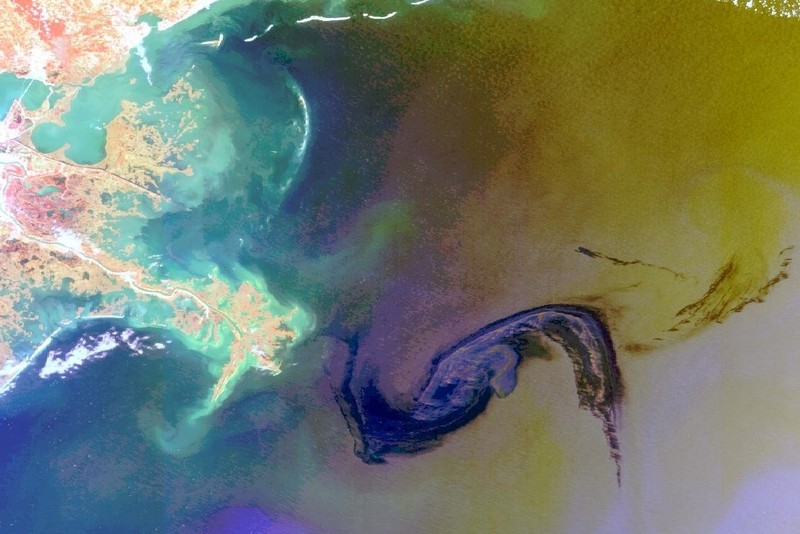
Fifty-one whales. That is the entire remaining population of Rice’s whales in the Gulf of Mexico — and on Tuesday, a rarely convened federal panel will meet to decide whether their survival is worth more than unrestricted offshore drilling.
The panel is formally called the Endangered Species Committee. Created by Congress in 1978 as a pressure valve for irreconcilable conflicts between conservation and overwhelming public need, it has overridden Endangered Species Act (ESA) protections exactly twice in nearly half a century. Its informal name — the “God Squad” — reflects the finality of its authority: a seven-member cabinet-level body that can literally choose which species survive and which are sacrificed.
Interior Secretary Doug Burgum announced the meeting last week without specifying which projects or species were at issue. The scope became clear only after the nonprofit Center for Biological Diversity sued to block the session. In court filings, the administration disclosed that Defense Secretary Pete Hegseth had requested exemptions for all federal oil and gas activities in the Gulf, citing national security.
A federal judge declined to halt the meeting on Friday.
A mechanism meant for genuine crises
The God Squad exists for extreme cases — a single dam, a specific highway, a project where no alternative exists. The law requires the panel to weigh the ecological cost of proceeding against the economic and security benefits, and to determine whether the benefits genuinely justify the extinction risk. It was never designed to pre-clear an entire industry across a body of water covering more than 600,000 square miles.
No administration has ever invoked national security to bypass the ESA. The move has no precedent in the law’s 53-year history.
Record production, under existing rules
The Gulf’s federal waters produced 1.9 million barrels of oil per day in 2025, according to Ars Technica — near all-time highs for US output. Those numbers were achieved with ESA protections in place. The current rules do not cap production or prohibit drilling. They require companies to take reasonable steps to minimize harm: seasonal restrictions on seismic surveys, speed limits for vessels transiting whale habitat, modified lighting to avoid disorienting nesting sea turtles.
The species at risk include multiple sea turtle populations and the Gulf’s Rice’s whale, classified by federal scientists as one of the most endangered marine mammals on Earth. Seismic blasting, vessel strikes, and chronic oil exposure are documented threats to a population that may already be too small to recover from a single catastrophic event.
The security argument under scrutiny
The administration’s case hinges on the claim that wartime energy demands justify removing environmental review from all Gulf operations. The details of that claim remain undisclosed — no specific conflict, supply shortfall, or operational constraint has been cited publicly.
Brett Hartl, government affairs director at the Center for Biological Diversity, called Hegseth’s intervention a “reckless power grab” and said the lawsuit was “just the first battle in a longer fight to protect the Gulf’s endangered whales and turtles.”
What makes the maneuver striking is its breadth. Past God Squad petitions targeted individual projects. This one asks the committee to exempt an entire industrial sector across an entire ecosystem — effectively rewriting the social contract between offshore energy and the marine environment without an act of Congress.
What happens next
Tuesday’s meeting opens a process, not a final decision. The committee must review scientific evidence, take public comment, and issue formal findings before granting any exemption. But the administration’s framing — a cabinet-level national security claim blanketing every rig and vessel in federal Gulf waters — signals the direction of travel.
If the God Squad approves a wholesale exemption, the Endangered Species Act will remain on the books. It will simply not apply where the oil is.
Discussion (9)