 lop News
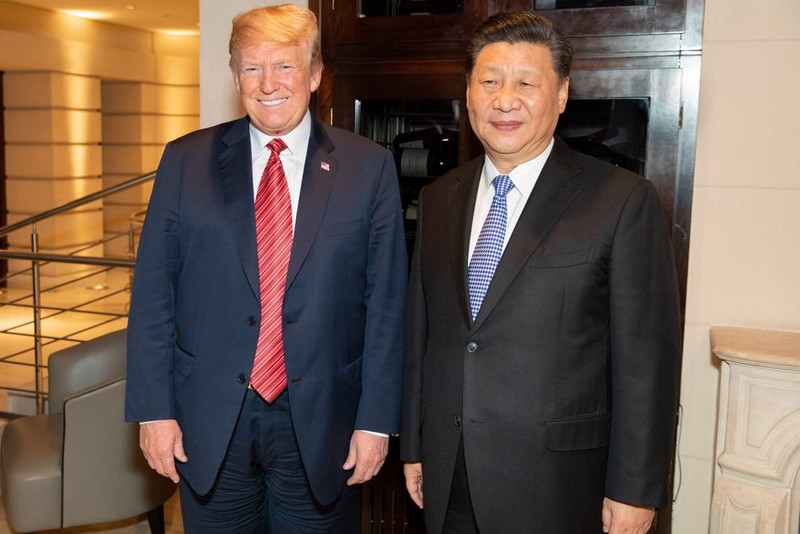
The most powerful country in the world walked into a room in Beijing and asked its chief geopolitical rival to solve a problem it could not solve itself.
That, stripped to its essence, is what happened at last month’s summit between Donald Trump and Xi Jinping. According to multiple sources familiar with the discussions, reported by the South China Morning Post, Trump personally urged the Chinese president to help end the war in Ukraine — pressing Xi to use Beijing’s influence over Moscow to bring Vladimir Putin back to the negotiating table with Volodymyr Zelensky.
The request was not passed through diplomats or whispered by aides. The American president made it himself, face to face, to the leader of the country Washington is simultaneously trying to contain on semiconductors, trade, and the South China Sea.
The surrealism is the story.
A confession wrapped in a summit
Trump made ending the Ukraine war a centrepiece of his foreign policy when he returned to the White House last year. He once claimed he could end it in 24 hours. The conflict is now in its fifth year.
Direct negotiations between Russia and Ukraine have largely collapsed since talks in Turkey in July 2025 ended without a ceasefire agreement. Trump has responded primarily by pressuring the victim — telling Zelensky in March to “get on the ball” — while the battlefield grinds on.
By turning to Xi, Trump made an implicit admission that his administration’s leverage over Putin has limits, and that he believes Beijing holds cards Washington does not. China is Russia’s most significant economic partner, has refrained from condemning the invasion at the United Nations, and has provided Moscow with diplomatic cover throughout the conflict. Whether Xi can actually move Putin is a separate question from whether Trump believes he can.
The summit request puts Beijing exactly where it wants to be: at the centre of great-power diplomacy, positioned as the indispensable broker in a conflict involving two nuclear-armed states. For a country that has spent years building its image as a responsible global stakeholder — contrasted, in its own telling, with a chaotic and unreliable Washington — Trump’s appeal is a diplomatic gift.
The battlefield and the bargaining table
The request comes at a complicated moment on the ground. Ukraine has made rare battlefield progress in recent months, regaining more territory than it had ceded in years. A senior Ukrainian commander told Reuters last week that the Russian army was exhausted and incapable of making breakthroughs.
But Russia has demonstrated that exhaustion does not mean restraint. Last month, Moscow launched a massive strike on Ukraine, deploying 600 drones and 90 missiles, including the nuclear-capable Oreshnik hypersonic ballistic missile, while vowing further attacks on Kyiv.
The contradiction defines the war: a Russian military too depleted to advance but still capable of devastating punishment on Ukrainian cities. Neither side has translated battlefield dynamics into leverage at the negotiating table. Hence the stalemate, and hence Trump’s turn to Beijing.
The costs of outsourcing
Asking China to mediate an end to a European war carries strategic costs that are hard to overstate. The same administration restricting semiconductor exports to China, imposing tariffs on Chinese goods, and bolstering military alliances across the Indo-Pacific is now asking Beijing to manage the resolution of the largest land war in Europe since 1945.
The message to Kyiv and to European capitals watching nervously is that Washington sees Beijing as a more effective interlocutor with Moscow than it can be itself.
The summit also touched on Beijing’s rare earth export controls, according to people familiar with the talks — another friction point underscoring the dynamic. Washington depends on Chinese supply chains it is simultaneously trying to sever. Trump arrived in Beijing needing cooperation on both minerals and war, and left with little public indication that Xi committed to anything specific.
What Beijing gains
China has not confirmed the account. But the strategic benefits of the position are clear regardless of what Xi promised behind closed doors.
Every time Washington asks Beijing to solve a problem it cannot solve itself, it reinforces China’s preferred narrative: that the 21st century’s central relationship runs between Washington and Beijing, and that the balance within it is shifting. Trump’s request does not make that shift real. It makes it visible, and in diplomacy, visibility carries its own weight.
No peace deal has materialized. Putin shows no public signs of flexibility. Zelensky faces the impossible calculus of a leader told to negotiate while his cities are under bombardment. The war will end eventually, through exhaustion or diplomacy or both. When it does, who gets credit for ending it will matter nearly as much as the terms.
Trump has now made clear where he thinks the answer lies. That may be the most consequential thing about the summit — not what was agreed, but what was conceded.
Sources
- Trump ‘personally called for China’s help’ to end Ukraine war in summit with Xi — South China Morning Post
Discussion (9)