 lop News
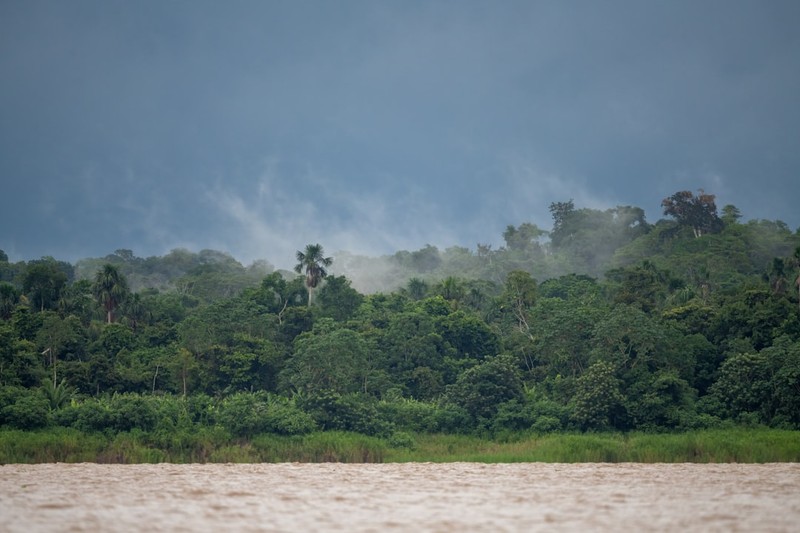
Eleven football fields a minute. That is the rate at which the world’s tropical primary rainforests vanished in 2025 — and that counts as an improvement.
New satellite data from the University of Maryland’s GLAD laboratory, published on the World Resources Institute’s Global Forest Watch platform, shows tropical primary forest loss fell 36% in 2025 from the record highs of 2024. Non-fire forest loss dropped 23%, reaching its lowest level in a decade.
The tropics still lost 4.3 million hectares of primary forest — an area roughly the size of Denmark. That figure is 46% higher than a decade ago, and roughly 70% above what’s needed to meet the 2030 goal of halting and reversing deforestation, a pledge made by more than 140 countries at the Glasgow climate summit.
“A drop of this scale in a single year is encouraging — it shows what decisive government action can achieve,” said Elizabeth Goldman, co-director of Global Forest Watch at WRI. “But part of the decline reflects a lull after an extreme fire year.”
Brazil drives the numbers
Much of the global improvement came from a single country. Brazil, home to the world’s largest rainforest, cut non-fire primary forest loss by 41% compared to 2024, reaching its lowest level on record. The decline aligns with official Brazilian monitoring data and reflects stronger enforcement since President Luiz Inácio Lula da Silva returned to office in 2023 — including the relaunch of the federal anti-deforestation plan and increased penalties for environmental crimes.
At 0.5% of its remaining primary forest, Brazil’s proportional loss rate is now lower than several smaller tropical nations. The country still accounts for the largest absolute area of loss due to its sheer size, at 1.63 million hectares.
Indonesia and Colombia also contributed to the global decline. Indonesia maintained relatively low deforestation rates through a permanent moratorium on new clearing permits in primary forests and peatlands. Colombia saw forest loss fall 17%, its second-lowest year since 2016.
Fires and the climate feedback loop
The improvement carries an asterisk. Fires accounted for 42% of the 25.5 million hectares of tree cover lost worldwide in 2025 — an area slightly larger than the United Kingdom. Canada alone lost 5.3 million hectares to wildfires, its second-worst fire year on record.
Climate change is intensifying fire seasons globally, creating a feedback loop: hotter, drier conditions make forests more flammable, and burning forests release stored carbon, accelerating warming. Much of the 2025 improvement may simply reflect a return to more normal conditions after 2024’s extreme fires, rather than structural change.
“Climate change and land clearing have shortened the fuse on global forest fires,” said Matthew Hansen, a professor at the University of Maryland and director of the GLAD lab. “They are turning seasonal disturbances into a near-permanent state of emergency.”
Where loss kept climbing
Not every country shared in the improvement. Bolivia recorded its second-highest level of primary forest loss on record — 620,630 hectares — surpassing the Democratic Republic of the Congo despite having 60% less forest. The increase was driven by expanding cattle ranching, crop production, and increasingly severe fires, often set by humans.
In the DRC, total primary forest loss dipped 5%, but non-fire loss hit a record high, driven by small-scale shifting cultivation, fuelwood harvesting, and mining. Teodyl Nkuintchua, Congo Basin strategy lead at WRI Africa, said forest loss is rising even in community-managed areas, suggesting that community concessions have not received enough support to function as viable economic alternatives.
Several smaller nations — including Madagascar, Nicaragua, Laos, and Honduras — are losing remaining forests at an average rate of about 1.3% annually, with Madagascar and Nicaragua each exceeding 2.5%. Madagascar lost nearly 2% of its remaining primary forest in a single year.
A fragile window
With El Niño likely to develop in mid-2026, the conditions that drove 2024’s record losses could return. Researchers warn that policy gains in Brazil, Indonesia, and Colombia are real but reversible.
“A good year is a good year, but you need good years consistently if you’re going to conserve tropical rainforests,” Hansen said.
Whether that consistency materializes may depend on whether new financial mechanisms — including the Tropical Forest Forever Facility, launched by Brazil at COP30 — can channel enough money to make standing forests more valuable than cleared ones. For now, the football fields keep falling. Just slightly slower.
Discussion (10)