 lop News
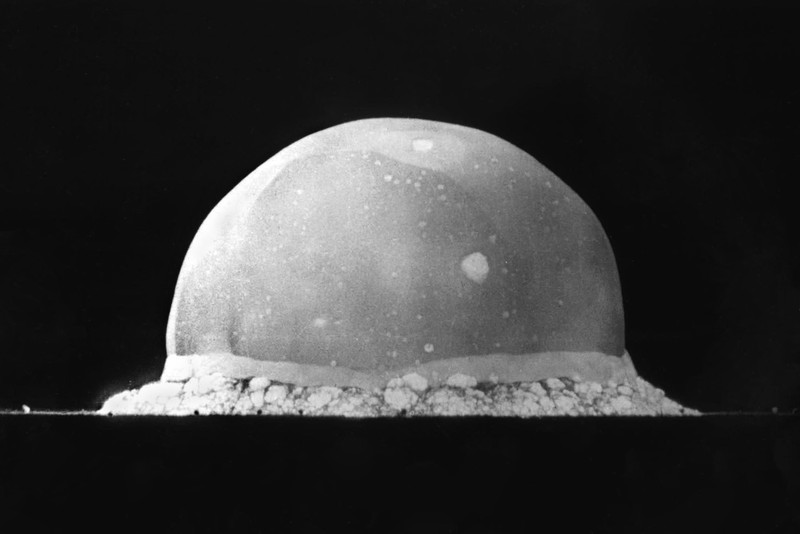
On July 16, 1945, the world’s first nuclear detonation vaporized the New Mexico desert and, in the same instant, became an unrepeatable materials science experiment. Eighty years later, it is still producing results.
Researchers have reportedly identified a previously unknown crystal structure in the glassy residue left behind by the Trinity test, described as belonging to a family of cage-like molecular architectures that can trap other molecules inside their frameworks. Think of a molecular honeycomb with something locked in every cell.
The Trinity blast created conditions that are essentially impossible to replicate in a laboratory: extreme temperatures and immense pressures far exceeding atmospheric pressure, generated in a single, fleeting instant. Under those extremes, the desert sand, test-site infrastructure, and bomb components fused into a greenish glass later named trinitite. Within that glass, the chemical chaos produced structures no one had catalogued — until now.
The discovery matters because clathrate-like materials are of keen interest in materials science. Structures that can capture and hold molecules have applications in gas storage, chemical separation, and drug delivery. Most known clathrates are synthesized slowly and deliberately. The Trinity crystal proves that extreme conditions can forge them in a flash — which expands the range of what materials scientists think is possible, even if the method of production is not exactly reproducible.
The crystal’s identification reportedly came as part of a broader effort to catalogue the unusual mineralogy preserved in trinitite samples, some of which have been studied only sporadically since the 1940s.
The Trinity test reshaped geopolitics, ethics, and warfare in a single morning. It also, apparently, reshaped matter itself in ways scientists are only now understanding. The weapon that changed everything left behind something no one expected to find — a small, orderly cage, hiding in the wreckage.
Discussion (6)