 lop News
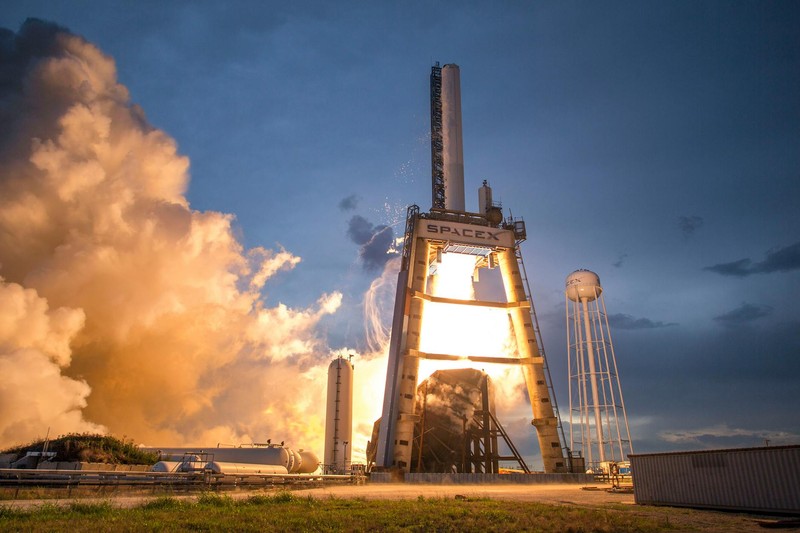
$75 billion. That is how much SpaceX plans to raise in its public debut — more than two and a half times the record set by Saudi Aramco’s 2019 listing. At a target valuation of roughly $1.75 trillion, Elon Musk’s conglomerate would list as one of the ten most valuable companies on Earth.
Regular investors can buy in for the first time. Musk is setting aside up to 30 percent of the offering for retail buyers — roughly three times the typical allocation for a large IPO — with access extended to investors in the UK, EU, Australia, Canada, Japan, and South Korea.
But the welcome mat has a catch. SpaceX’s prospectus details a dual-class share structure giving Musk and insiders 10 votes per share, while public investors get one. Musk holds approximately 42 percent of the equity but controls roughly 79 percent of the votes. He remains CEO, chief technical officer, and chairman of the nine-member board. Provisions in the filing also force shareholder disputes into arbitration and restrict where claims can be brought.
Former Fidelity fund manager George Noble called the arrangement “the most SHAMELESS structural manipulation of a major index,” arguing that retail investors become exit liquidity for insiders who bought in at far lower valuations. Donald Trump Jr. is among existing shareholders through the venture firm 1789 Capital.
What the Numbers Show
The prospectus offers the first public look at SpaceX’s finances — and the picture is more complicated than the mythology.
The core business works. Launch and Starlink satellite operations generated $15 billion to $16 billion in 2025 revenue with roughly $8 billion in profits, according to excerpts reviewed by Reuters. Starlink alone had 9.2 million subscribers and more than $10 billion in revenue, producing $4.42 billion in operating profit.
But those figures sit inside a much less profitable whole. SpaceX swung to a $4.94 billion consolidated loss in 2025 on $18.67 billion in revenue, driven by capital spending that surged to $20.74 billion — more than half on AI infrastructure.
The driver is xAI. Musk merged his AI startup and the social media platform X with SpaceX in February 2026, combining rockets, satellites, and chatbots under one roof. The all-stock deal valued xAI at roughly $250 billion. AI segment capital expenditure surged to $12.7 billion from $5.6 billion the prior year. Starlink’s profits are, in effect, subsidizing an AI buildout.
The company ended 2025 with $24.8 billion in cash, $92 billion in assets, and $50.8 billion in liabilities. A reasonable balance sheet — but not one that clearly justifies a $1.75 trillion valuation, which implies a revenue multiple of roughly 100x. The most consequential aerospace company on Earth is being priced like a tech stock. At least one large institutional investor has been benchmarking SpaceX against Palantir and AI infrastructure companies like GE Vernova and Vertiv rather than legacy aerospace and telecom companies like Boeing and AT&T.
The Case for Buying
SpaceX’s dominance in launch and satellite infrastructure is genuine. The company is vertically integrated in a way legacy aerospace competitors are not, controlling everything from rocket manufacturing to broadband delivery.
“The national security piece gives you sort of a floor below which it’s hard to imagine SpaceX falling,” said Harvard Business School professor Matthew Weinzierl. SpaceX’s Falcon 9 and Starlink are deeply intertwined with US defense operations, providing revenue regardless of commercial market conditions. SpaceX’s first-mover position in orbital slots and spectrum allocation adds a structural moat.
If the space economy grows, Weinzierl argued, SpaceX will “claim an enormous share of that pie” — in part because the company is building that market itself.
The Case for Caution
The commercial space economy beyond low Earth orbit remains largely hypothetical. Space tourism has not materialized as a revenue source. NASA acting associate administrator Joel Montalbano acknowledged the agency expected tourism to fund commercial space stations. It didn’t. NASA recently pivoted away from that plan.
“Short of some sort of technological or scientific breakthrough, in the next five to 10 years, I’m skeptical” about commercial space returns beyond existing services, said Wendy Whitman Cobb of the School of Advanced Air and Space Studies.
There is also the question of whether public markets will erode SpaceX’s risk-tolerant culture. Whitman Cobb pointed out that traditional US defense contractors have become “incredibly risk-averse” and openly questioned whether going public would cost SpaceX the innovative culture that distinguishes it.
The Pitch Begins
This week, SpaceX is hosting three days of closed-door briefings for Wall Street analysts. Tuesday and Wednesday bring tours and presentations at the company’s Starbase launch facility in Boca Chica, Texas. Thursday shifts to the Colossus data center in Memphis, Tennessee, where executives will present what SpaceX calls its “Macrohard” project. Attendees are expected to surrender electronic devices.
CFO Bret Johnsen has roughly two months to sell the $1.75 trillion story before a targeted late-June listing on the Nasdaq. A separate modeling day for analysts at the underwriting banks is planned for early May, followed by a roadshow beginning the week of June 8. Musk is personally hosting 1,500 retail investors for Starbase tours during the roadshow. Morgan Stanley, Bank of America, Goldman Sachs, JPMorgan, and Citigroup are leading the deal, with 16 additional banks spanning institutional, retail, and international channels.
Whether that timeline holds depends on market conditions. The Nasdaq has been volatile amid the US-Iran war and spiking oil prices, and even a highly anticipated offering can struggle if sentiment turns.
“I personally can’t wait for the IPO,” said Whitman Cobb. “Not to buy it, but just to get some more insight on what SpaceX looks like as an actual company.”
The prospectus will disclose what was previously opaque — revenue, costs, debt, margins. What it cannot settle is the fundamental wager underneath: whether $1.75 trillion is the price of a business or the price of a belief.
Sources
- The SpaceX IPO is a trillion-dollar gamble on the future of space — The Verge
- Musk and insiders to retain voting control of SpaceX after IPO, filing shows — RTÉ / Reuters
- SpaceX courts Wall Street with three-day analyst meeting this week — CNBC / Reuters
- SpaceX’s public IPO filing confirms Musk and insiders retain dominant voting control — The Next Web
Discussion (9)