 lop News
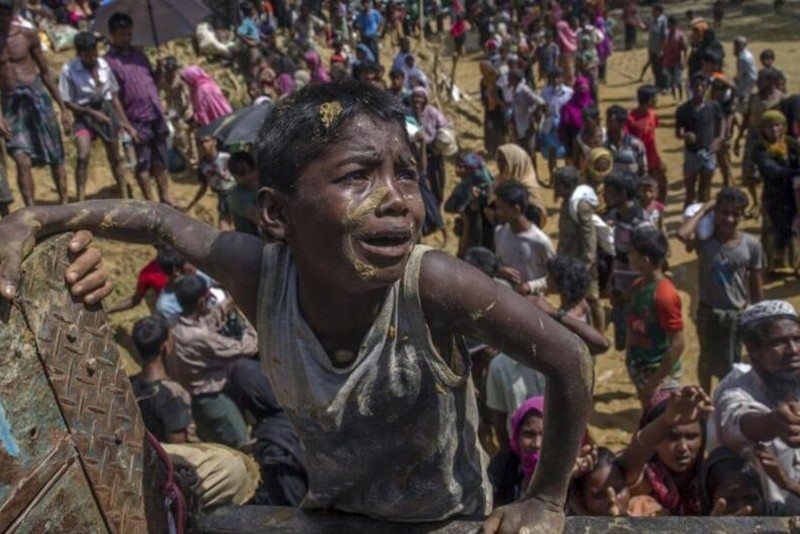
Rafiqul Islam clung to a two-litre water bottle for 36 hours. When a Bangladeshi cargo ship finally pulled him from the Andaman Sea on 9 April, he was one of nine survivors. The trawler that had carried an estimated 280 people — Rohingya refugees and Bangladeshi nationals — was gone.
About 250 people remain missing, according to the UN High Commissioner for Refugees (UNHCR) and the International Organization for Migration (IOM). The vessel, identified in Bangladeshi court documents as the Tanjina Sultana, departed from Teknaf in southern Bangladesh on 4 April, bound for Malaysia. It capsized in rough seas near the Andaman Islands four days later.
Suffocation Before the Sinking
The drownings may not have been the first deaths on the voyage. Islam, 40, told Agence France-Presse that traffickers had lured him aboard with promises of work in Malaysia. He was confined in a house in Teknaf before being transferred to the trawler near Myanmar waters, one of scores of passengers loaded aboard in stages.
When the weather worsened, traffickers forced passengers into four cramped storage compartments built for fish and nets. Between 25 and 30 people died from suffocation and overcrowding in those holds, Islam said. Traffickers allegedly threatened to sink the vessel if those on deck refused to go below.
“A number of us were kept in the holding area of the trawler; some died there. I was burned by oil that spilled from the trawler,” Islam told AFP. The vessel traveled for four days before it capsized.
Another survivor, Md Imran from the Kutupalong refugee camp, told Bangladesh’s Daily Star he had joined the voyage hoping to escape camp life. “I held onto a water tank and fought for my life for two days before being rescued by a Bangladeshi ship,” he said. “I still cannot process how many people died. Living with this memory is extremely painful.”
A Crisis Without Exit
More than one million Rohingya refugees live in sprawling camps around Cox’s Bazar in south-eastern Bangladesh. Most fled a 2017 military offensive in Myanmar’s Rakhine State that a UN fact-finding mission concluded included “genocidal acts.” Myanmar’s government has denied the finding and rejected the mission’s credibility.
Conditions in the camps have steadily deteriorated. Humanitarian funding has contracted. Access to education and livelihoods remains limited. Rakhine State itself is now a battlefield, with fierce fighting between Myanmar’s military and the Arakan Army, an ethnic armed group, that has dimmed any realistic prospect of safe return.
The UNHCR and IOM said this convergence — shrinking aid, harsh camp conditions, ongoing violence in Myanmar, and the absence of legal migration routes — has driven refugees toward smuggling networks that spread false promises of better wages abroad. Both Rohingya and Bangladeshi nationals are exploited on these routes.
Nine Rescued, Six Accused
The Bangladesh-flagged vessel MT Meghna Pride, en route from Chattogram to Indonesia, spotted survivors floating in the water using drums and logs on the afternoon of 9 April, according to Coast Guard spokesperson Lieutenant Commander Sabbir Alam Sujan. The nine rescued individuals were transferred to a coast guard patrol ship and brought to Teknaf.
Six of those rescued are Bangladeshi nationals and three are Rohingya, according to Officer-in-Charge Saiful Islam of Teknaf Model Police Station. Six have been accused of trafficking and sent to jail under the Prevention and Suppression of Human Trafficking Act, 2012. Three victims were released after questioning.
Investigators have yet to determine the exact number of passengers or confirm the fate of the missing. “The rescued persons are not clearly describing what happened to the trawler or how they survived at sea,” the officer told reporters.
A Route That Keeps Killing
Thousands of Rohingya attempt the sea crossing each year, drawn to Malaysia’s Muslim-majority society and established Rohingya diaspora. The Andaman Sea route is one of the deadliest migration corridors in the world.
“This tragedy highlights the devastating human cost of protracted displacement and the continued absence of durable solutions for the Rohingya,” the UNHCR and IOM said in a joint statement. The agencies called for increased international funding for refugee assistance in Bangladesh and, more fundamentally, action to address the root causes of displacement in Myanmar.
Their statement warned that without collective action, more lives would be lost at sea. About 250 people are counted among the missing. The Andaman Sea has not returned them.
Discussion (9)