 lop News
$111 billion in a single quarter. A CEO walking out the door. Tim Cook timed his exit perfectly — or just in time.
Apple’s fiscal second-quarter results, reported Thursday, were the kind of numbers that make succession planning look easy. Revenue of $111.18 billion, up 17 percent from a year earlier. Profit beat estimates. The iPhone 17 lineup became what Cook called “the most popular lineup in our history.” Gross margin hit 49.3 percent. The board authorized another $100 billion in stock buybacks.
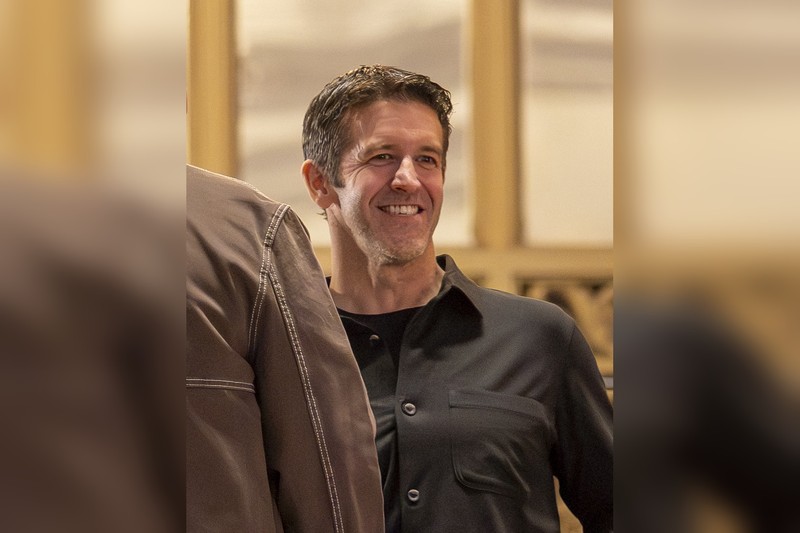
Ten days earlier, Apple announced Cook would step down as CEO on September 1 after 15 years, handing the reins to John Ternus, the company’s senior vice president of hardware engineering. Cook will become executive chairman.
The juxtaposition is almost theatrical. Record-breaking quarter, orderly transition, stock rising 3 percent in after-hours trading. Everything under control.
Except for the memory chips.
The shortage at the door
Cook told analysts Thursday to expect “significantly higher memory costs” in the current quarter, warning that memory expenses would “drive an increasing impact on our business” going forward. The AI industry’s ravenous demand for memory chips — a trend widely dubbed “RAMageddon” — is driving up hardware costs across the sector. Global smartphone shipments fell 4.1 percent in the first quarter, according to IDC, partly because of the crunch.
Apple felt it already. CFO Kevan Parekh said supply constraints hit iPhones and Macs in the March quarter. Cook said the company offset higher costs by selling through stockpiled inventory — a buffer that won’t last forever.
For Ternus, a hardware engineer who has spent 25 years shaping Apple’s products, the timing is uncomfortable. He inherits the strongest balance sheet in technology and a cost pressure that could force hard choices on iPhone pricing. Cook told Reuters there is “just a little less flexibility in the supply chain at the moment for getting more parts.”
‘Deliberateness and discipline’
Ternus’s debut on the earnings call was brief and careful. He praised Cook as “one of the greatest business leaders of all time” and said he would continue his mentor’s approach of “deep thoughtfulness, deliberateness and discipline” in financial decision-making.
The words are reassuring to shareholders. They are also a Rorschach test. Apple’s deliberateness has kept it from matching the breakneck AI spending of Meta, Microsoft, and Google — each pouring hundreds of billions into data centers and model training. Apple’s response has been to partner with Google, integrating Gemini into Siri, rather than build a foundational model of its own.
Cook told analysts the Google collaboration is “going well.” He also said Apple is “happy with the work that we’re doing independently as well.” That independent work is accelerating: research and development costs surged 33 percent to $11.42 billion in the quarter, far outpacing revenue growth. Parekh called AI “a really important investment area.”
But Apple remains, as Forrester analyst Dipanjan Chatterjee put it to the BBC, “structurally dependent on the phone” and still “searching for its next growth engine.” Timothy Hubbard, a professor at Notre Dame’s Mendoza College of Business, framed the tension precisely: “The very strengths that made Apple dominant — their discipline, polish, and control — could become constraints if the next era rewards openness and faster iteration.”
The China question
Greater China revenue rose 28 percent to $20.5 billion, a bright spot that could dim quickly. Apple’s third-largest market sits at the intersection of rising nationalist competition from domestic brands and the ever-present risk of regulatory retaliation. Cook, in his new role as executive chairman, will continue “engaging with policymakers around the world,” according to Apple’s announcement. That diplomatic portfolio was not assigned by accident.
The engineer takes over
Ternus joined Apple’s product design team in 2001, before the iPod became a cultural phenomenon. He oversaw the transition of Mac processors from Intel to Apple silicon, led hardware engineering for the iPad, AirPods, and Apple Watch, and recently shepherded the MacBook Neo — a $599 laptop aimed at students.
Ken Segall, Steve Jobs’s former creative director, told the BBC, “I don’t think Tim ever really shook the operations guy vibe.” Ternus, by contrast, is a product person. DA Davidson managing director Gil Luria said the appointment signals Apple will put more energy into new hardware categories like foldable phones and wearable devices.
Whether that instinct for hardware innovation translates into the software-first world of AI agents remains the central question of the Ternus era. Apple will show more of its hand at its Worldwide Developer Conference in June, where Cook promised AI advancements.
Cook is leaving the way every CEO wishes to: at the summit, with his handpicked successor in place and the stock at record highs. But the view from the top includes memory shortages, an AI arms race Apple is watching more than leading, and a China market that rewards dominance and punishes hesitation. Ternus has the discipline. Whether he has the speed is what the next chapter will answer.
Sources
- Tim Cook to Become Apple Executive Chairman; John Ternus to Become Apple CEO — Apple Newsroom
- New era as Apple names new boss to replace Tim Cook after 15 years — BBC News
- Apple (AAPL) Q2 2026 earnings report — CNBC
- As Tim Cook steps down, Apple hit record sales — but a chip shortage looms — TechCrunch
- Apple’s new CEO will inherit strong sales and even greater expectations — CNN
Discussion (9)