 lop News
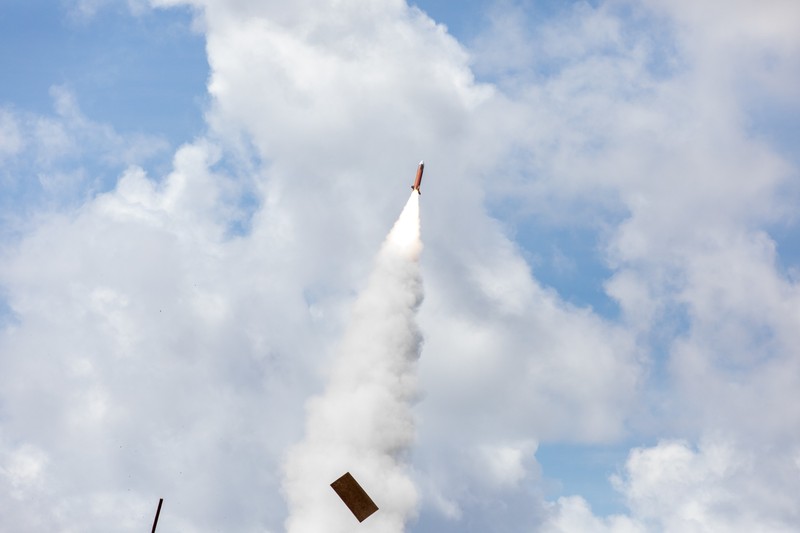
Baltic states that share a border with Russia are being told to wait for weapons they already paid for. The reason sits roughly 3,000 kilometers to the south: the US-led war against Iran is draining the same stockpiles those orders were meant to draw from.
On May 1, the Financial Times reported that Washington has warned European allies — including the UK, Poland, Lithuania, and Estonia — to expect lengthy delays on contracted weapons deliveries. The cause is straightforward: the Iran campaign is consuming munitions and air defense systems faster than American factories can replace them, and previously committed orders are being pushed back to fill the gap.
A Queue Forming Behind Two Prior Wars
The warnings have been building for weeks. Reuters first reported in mid-April that US officials had informed several European counterparts that Foreign Military Sales (FMS) deliveries would be delayed, with the initial impact concentrated on Baltic and Scandinavian countries. The Financial Times report indicates the problem has since widened to include some of Washington’s most significant European partners.
The FMS program allows foreign governments to purchase US-made weapons with Washington’s consent and logistical backing. The Trump administration has pushed European NATO members to buy more American equipment to shift conventional defense responsibilities toward Europe. Now those purchases are being deferred — and US officials have faulted European nations for not helping the U.S. and Israel open the Strait of Hormuz, according to Reuters.
A Pentagon spokesperson said: “We will ensure that U.S. forces and those of our allies and partners have what they need to fight and win.” The spokesperson declined to comment on specific allied requirements, citing operational security.
None of this started with Iran. Washington had already drawn down billions in artillery, ammunition, and anti-tank missiles for Ukraine and Israel since 2022, according to Reuters. The Iran war, launched with US-Israeli air strikes on February 28, is the third major commitment layered onto a production base already struggling to keep pace.
Measured Words in the Baltics
The public response from affected governments has been notably restrained, though European officials have privately complained the delays are putting them in a difficult position.
Estonian Prime Minister Kristen Michal told reporters in Tallinn on April 17 that “the US has informed us of the situation, and we understand the reasoning and the circumstances.” He emphasized that “the US remains our biggest ally.”
Lithuania’s Prime Minister Inga Ruginiene struck a similar note: “We don’t see a big problem so far, but we also understand that some of the deadlines are moving.”
Latvia, notably, said it had received no formal notification. Prime Minister Evika Siliņa told journalists her government had “not been officially informed yet” and added that “there is no information from the US that they will not fulfil delivery obligations.”
The Baltic states have ordered HIMARS rocket artillery, Javelin anti-tank missiles, and Raytheon naval strike missiles from the US, according to EFE. Reuters reported the delayed weaponry includes various ammunition types for both offensive and defensive purposes. While the Iran campaign has primarily consumed air defense and long-range strike systems — not the ground-based rocket artillery the Baltics ordered — the overall production strain means queues are lengthening across nearly every category.
The Ukraine Connection
The consequences reach well beyond the Baltics. Since the start of the Iran campaign, Tehran has fired hundreds of ballistic missiles and drones at Gulf countries, Reuters reported. Most have been intercepted — many using PAC-3 Patriot interceptors. Those are the same systems Ukraine relies on to defend its energy infrastructure and military sites from Russian ballistic missiles.
For Kyiv, the arithmetic is brutal. Patriot interceptors protecting Gulf allies cannot simultaneously shield Ukrainian cities. Ammunition consumed in the Middle East cannot be shipped to the eastern front. Ukraine has spent months warning that Russian attacks are outpacing its air defense supplies. The Iran war has made that math steeper.
Deferred deliveries may also affect systems relevant to Ukraine’s defense, though no specific reporting has confirmed this.
One Arsenal, Too Many Wars
The signal to allies is difficult to misread. When the arsenal runs thin, the queue forms behind whatever Washington considers the most urgent fight. Right now, that fight is Iran.
European frustration with FMS timelines predates this war. Deliveries are “often delayed,” Reuters noted, and some officials are already looking at European-made alternatives. The current shortfalls are accelerating that shift.
Whether the American defense industrial base can sustain simultaneous high-intensity commitments in the Middle East and Eastern Europe is no longer a theoretical question. It is being answered with every delayed shipment and redirected interceptor. European governments and Ukraine are left to calculate what that means.
Discussion (9)