 lop News
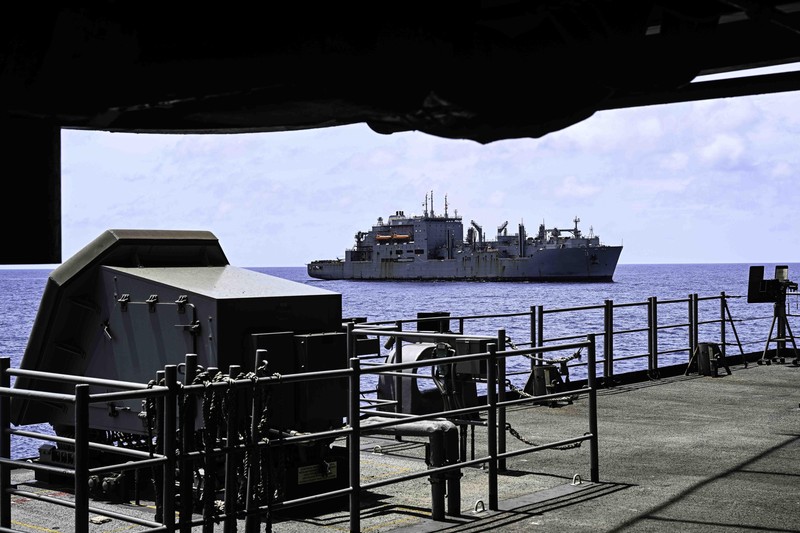
Three ships hijacked off Somalia in a single week. The timing is not a coincidence.
The oil tanker Honour 25 was seized on April 21, carrying 18,000 barrels of oil. Two more vessels followed — a dhow taken on April 25 and the cement carrier Sward, boarded by roughly 20 armed men six nautical miles off the port town of Garacad on April 26. All three incidents remain ongoing, according to the Maritime Security Centre Indian Ocean (MSCIO).
Somali piracy peaked at 212 attacks in 2011 before an international naval coalition drove the numbers down to a handful per year by 2014. That coalition is now stretched thin. The US-Israeli war on Iran, which began on February 28, has triggered the near-total closure of the Strait of Hormuz and forced Western navies to redirect vessels toward the Persian Gulf and the Red Sea, where Houthi rebels continue to target commercial shipping. The Horn of Africa was left with the gap.
“Pirate networks are testing the waters again and they are better equipped than the last generation,” said Jethro Norman, a senior researcher at the Danish Institute for International Studies. GPS, satellite communications, and hijacked dhow motherships now allow them to operate hundreds of miles offshore.
A Puntland security official told AFP the Sward hijackers are a new group of “opportunistic criminals” — rural youth from an area awash with weapons, driven by poverty and anger over illegal fishing by foreign trawlers. Clan dynamics further complicate any armed response, making negotiation the likelier path — and one that favors the hijackers.
For the global shipping industry, already rerouting around Hormuz and the Red Sea, the resurrection of another threat on the Somali coast is a compounding headache. For the pirates, it is an opening — and they are sailing through it.
Discussion (5)