 lop News
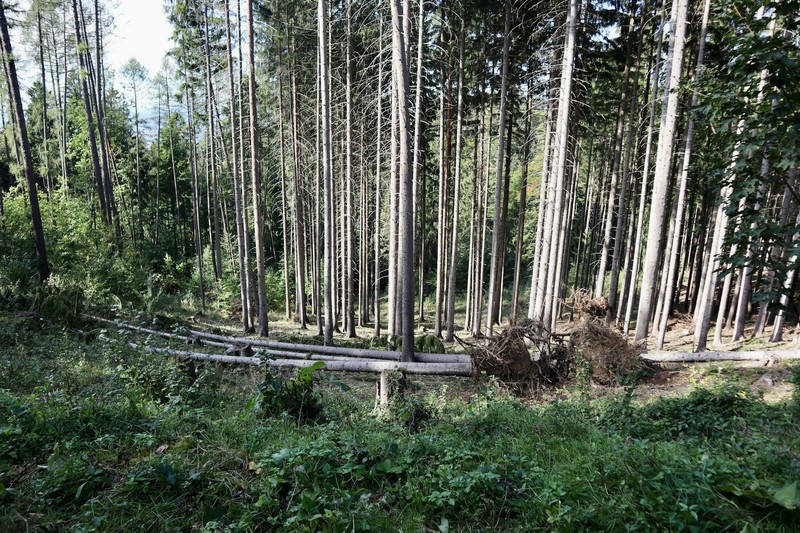
Fifty-seven research sites across 31 states. Experiments running since the early 1900s. Decades of continuous data on soil, water, wildfire, and forest health. On March 31, the US Forest Service announced it may shut almost all of them down.
The agency’s Research and Development branch is the world’s largest forestry-research organization, with roughly 1,000 employees at 77 sites. Its scientists identified the fungus that causes white-nose syndrome in bats and built a wildfire prediction model now used in multiple countries. The proposed closures would consolidate everything into a single hub in Fort Collins, Colorado.
“You can’t say, ‘Okay, I lost that one. I’m going to go start another 70-year study,’” a recently retired Forest Service scientist told Nature, speaking anonymously to protect ongoing collaborations.
What disappears
The sites under review include a Pacific Northwest station that led key research on climate-driven wildfire patterns and a Minnesota laboratory at the forefront of global peatland and carbon storage studies. In Hilo, Hawaii, the Institute of Pacific Islands Forestry — operating since 1957 — studies rapid ohia death, a fungal disease threatening roughly 90 percent of Hawaii’s tree canopy, along with invasive species and wildfire risk across the islands.
In Reno, Nevada, closure would sever a two-decade partnership between agency scientists and university researchers studying post-fire plant recovery. Elizabeth Leger, a biologist at the University of Nevada, Reno, said Forest Service scientists took her on field trips when she arrived in 2006, sharing decades of observations that shaped her own research. “They plant trees, and they monitor them for literally 100 years,” she told the Bulletin of the Atomic Scientists. “That’s not something that anyone else can step in and do. It has to be the federal government supporting that.”
The administration’s case
Forest Service Chief Tom Schultz has told Congress the reorganization targets underused facilities and a $3 billion deferred maintenance backlog across the entire agency, not just research sites. “The intent of the reorganization is to maintain the research,” he said in April.
A Forest Service fact sheet calls it a “myth” that research will stop if facilities close, saying staff and programs will be relocated. The agency has since reversed its initial closure announcement and now says it is evaluating the 57 sites, with decisions expected over the coming year.
But the Trump administration’s fiscal year 2027 budget request proposes zero funding for the R&D branch and seeks to eliminate roughly 800 of its 1,110 research scientist positions, according to Federal News Network. Congress has final say over spending and has not yet responded.
Alexander Friend, who led the R&D branch as deputy chief for four years, disputes the cost argument. “R&D deferred maintenance is a real drop in the bucket,” he said.
The gap nobody fills
Forest Service research is place-based — tied to specific ecosystems, experimental plots, and long-term records that depend on continuous physical presence. “If you close the location, that research will likely dry up,” Ann Bartuska, who led the R&D branch for seven years, told Nature.
The loss would not stop at US borders. The agency’s wildfire model is used internationally. University researchers rely on its longitudinal datasets and a wildfire model that is used in multiple countries. Rebecca Ostertag, a forest ecologist at the University of Hawaii at Hilo who has collaborated with the Institute of Pacific Islands Forestry for 25 years, said close to 90 percent of her work depended on that partnership.
Vicki Christiansen, who served as Forest Service chief during Trump’s first term, called the plan “very short-sighted.” If cuts are necessary, she argued, they should be done in a thoughtful way “that sustains some of the core pieces of what generations before us have collected.”
The evaluation period will stretch over the coming year. For studies that have run continuously since the early 1900s, that may be the interval in which they simply end.
Sources
- World’s largest forest research agency faces severe cutback by Trump administration — Nature
- ‘It’s just madness’: Trump administration to close three-quarters of Forest Service research stations — Bulletin of the Atomic Scientists
- Forest Service plans to carry out major reorganization with or without approval from Congress — Federal News Network
- Uprooting the Forest Service: A Trump Official With Deep Timber Industry Ties is Putting Public Lands and the Climate at Risk — Public Citizen
Discussion (9)