 lop News
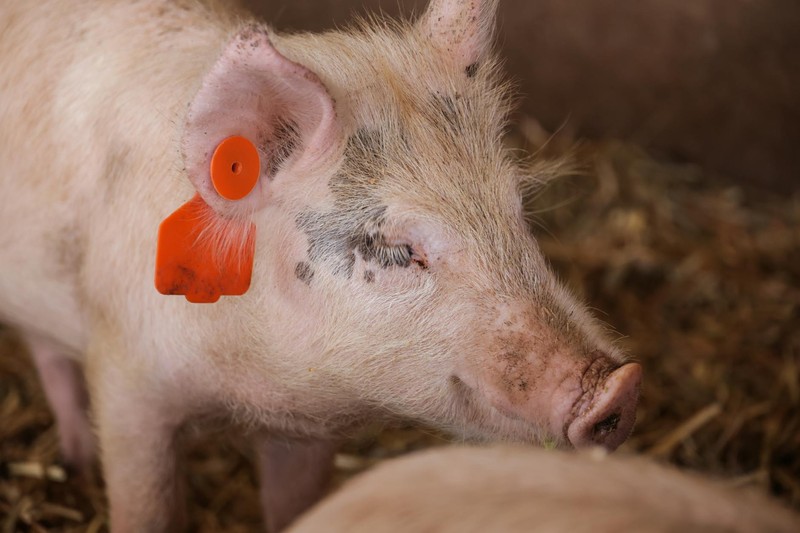
Three pig organs — a whole liver and two kidneys — kept a 53-year-old man’s body functioning for almost five days in what researchers describe as a first in xenotransplantation. Never before have multiple pig organs, including an entire liver, been transplanted into a person in a single procedure.
The operation, led by clinician scientist Xuyong Sun at the Second Affiliated Hospital of Guangxi Medical University in Nanning, China, used organs from a pig with six edits to its genome. Three human genes were added to reduce blood clotting problems; three pig genes were removed to prevent the immune system from recognizing the organs as foreign. The results were published today in the journal Med.
The recipient was clinically dead — brain function had ceased after a hemorrhage — and he had severe chronic kidney disease. His family consented. His own healthy liver was transplanted into a living recipient, and in its place, the pig organs went to work.
Within 19 hours, the pig liver was secreting bile. Creatinine and urea levels — waste products elevated by kidney disease — returned to normal after the pig kidneys were connected. For the first 24 hours, no rejection.
Then, at 36 hours, the picture shifted. Pig cells in the liver and kidneys were gradually being replaced by human cells, a sign the immune system had detected something foreign. Small areas of tissue death and blood clotting appeared in the liver.
Why the liver matters
Xenotransplantation — transplanting organs from one species to another — has been progressing for years, mostly one organ at a time. A handful of people have received pig hearts, kidneys, and partial livers. The liver is the hardest organ to replace. It has a dual blood supply and performs hundreds of functions: filtering toxins, producing bile, regulating blood sugar, synthesizing clotting proteins. Hearts pump. Kidneys filter. Livers do everything.
That’s why only partial pig livers had been attempted in humans until now. “Everyone always says, ‘oh, liver is too complicated to transplant, compared to the heart or kidney,’ but after this, in the future, I think people will think differently,” Beicheng Sun, president of the First Affiliated Hospital of Anhui Medical University, told CNN last October. His team had transplanted a pig liver into a living 71-year-old man who survived 171 days — 38 of them with the pig organ, a record for peer-reviewed liver xenotransplantation.
A race on two continents
Clinical trials are now underway in both China and the United States. NYU Langone Health recently launched the EXPAND trial, testing pig kidneys with 10 gene edits in patients with end-stage renal disease. The trial, sponsored by United Therapeutics, is designed as a combined phase 1/2/3 study that could support eventual FDA approval.
In Boston, Tim Andrews lived with a genetically modified pig kidney for a record 271 days before the organ was rejected last October. By January, he had received a human kidney — the first person to bridge from a pig organ to a human one. His doctor, Leonardo Riella of Mass General Brigham, described the pig organ as a “bridge” that kept Andrews off dialysis long enough to reach a permanent solution.
The organ shortage drives all of this. In the US alone, more than 100,000 people are waiting for an organ at any given time, roughly 80 percent of them for kidneys, according to CNN. Of the more than 800,000 Americans with kidney failure, nearly 70 percent are on dialysis — a treatment with a five-year survival rate around 40 percent.
“Dialysis is not able to reproduce what the body needs in terms of clearing the waste,” Riella said. “It has a huge burden on the patient, both in their quality of life but most importantly on their health.”
What comes next
The Nanning team identified elevated levels of a specific immune cell, S100A12+, in the transplanted organs. These cells are involved in inflammation and could potentially be targeted with drugs to reduce long-term rejection risk. If that finding holds, it could shape both gene-editing strategies and immunosuppressive regimens in future trials.
Robert Montgomery, director of the NYU Langone Transplant Institute, has said he believes xenotransplantation will be viable for patients within five years. His vision: patients cycling through animal and human organs across their lifetimes.
The ethical questions remain real. Zoonotic infection — animal viruses jumping to human hosts — is monitored for life in the NYU trial. The welfare of genetically modified animals bred for harvest is not a settled debate.
But the math is stark. People die on waitlists while a solution inches toward viability. The Nanning procedure showed that a pig liver can function in a human body and that multi-organ xenotransplantation is surgically possible. The question now is whether it can work for someone who needs to live past five days.
Sources
- First pig liver and kidneys transplanted into a person — could ease organ shortages — Nature News
- A man in China lived more than 170 days after transplant with pig liver — CNN
- Man who received experimental pig kidney transplant now has a human organ — CNN
- First Gene-Edited Pig Kidney Transplant Clinical Trial Begins at NYU Langone Health — NYU Langone Health
Discussion (10)