 lop News
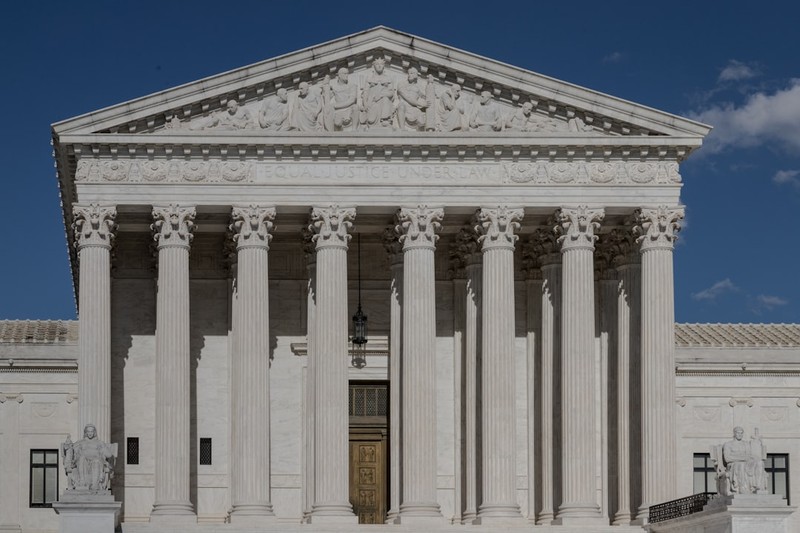
Three days. That’s how long millions of Americans can continue receiving abortion medication through telemedicine and the mail before the Supreme Court decides whether to upend that access nationwide.
On Monday, Justice Samuel Alito extended an earlier order by 72 hours, preserving the current rules for prescribing mifepristone — the first pill in the standard two-drug medication abortion regimen — through at least Thursday. The extension gives the Court more time to weigh a national ban on telemedicine access to the drug, but it also signals something else: the justices haven’t figured this out yet.
How We Got Here
The current turmoil traces back to May 1, when the US 5th Circuit Court of Appeals reinstated pre-pandemic prescribing rules requiring patients to receive mifepristone in person at a doctor’s office or clinic. The Food and Drug Administration had lifted that requirement in 2021, concluding it was medically unnecessary.
Louisiana sued last fall, arguing that telemedicine access undermines the state’s abortion ban. The 5th Circuit agreed, and the case landed at the Supreme Court.
Because FDA prescribing rules apply nationwide, the stakes extend far beyond Louisiana. A ruling restricting mifepristone access would affect patients in states with constitutionally protected abortion rights just as much as those in states with criminal bans.
What Telemedicine Abortion Actually Looks Like
The process is straightforward. A patient connects with a healthcare provider by phone or video. If eligible, the provider prescribes mifepristone and misoprostol — the two medications used in combination for a medication abortion. The patient picks them up at a pharmacy or receives them by mail.
According to NPR, most abortions in the US now use this medication combination, and roughly one quarter happen via telemedicine. The number of abortions nationally has actually increased since the Supreme Court overturned the constitutional right to abortion in 2022 — a trend driven largely by the expansion of medication access.
The Misoprostol Backup Plan
If the Court restricts mifepristone, providers won’t simply stop offering medication abortions. Several have said they would switch to a misoprostol-only protocol, using higher doses of the second drug.
Researchers say that method is just as safe and effective as the two-drug combination, but it comes with trade-offs: more pain, and more side effects like nausea and diarrhea. Misoprostol has been on the market longer than mifepristone and is used to treat gastric ulcers and hemorrhage, meaning it is likely to remain accessible regardless of how the Court rules. But for patients, the difference between the two protocols is not abstract — it is felt physically.
States vs. States
The case also raises questions about whose policy choices prevail. Nearly two dozen Democratic-led states filed an amicus brief arguing that the appeals court decision prioritizes the policy choices of states with abortion bans over states “that have made the different but equally sovereign determinations to promote access to abortion care.”
A group of former FDA leaders, who served under mainly Democratic and some Republican presidents, filed their own brief defending the agency’s drug-approval process. They warned that the 5th Circuit decision “would upend FDA’s gold-standard, science-based drug approval system.”
Notably, the Trump administration’s FDA did not respond to the Court’s request for briefs — a silence that underscores the political crosscurrents running through what is, nominally, a regulatory dispute.
A Global Watch
The case is not happening in isolation. Medication abortion is a contested frontier in reproductive health policy worldwide, and the Court’s handling of the issue has drawn international attention — even though the ruling will have no direct legal effect beyond US borders. The question of how democracies balance medical authority against political pressure on reproductive health is hardly unique to America, which is why advocates far from Washington are watching.
What Happens Thursday
The Supreme Court could keep the current access rules in place, roll them back entirely, or extend the pause again. What it cannot do is stop the clock: every day of uncertainty is a day patients and providers must navigate a legal landscape that could shift overnight.
For now, telemedicine abortion remains legal nationwide. The justices have given themselves until Thursday. Millions of patients are waiting.
Discussion (9)