 lop News
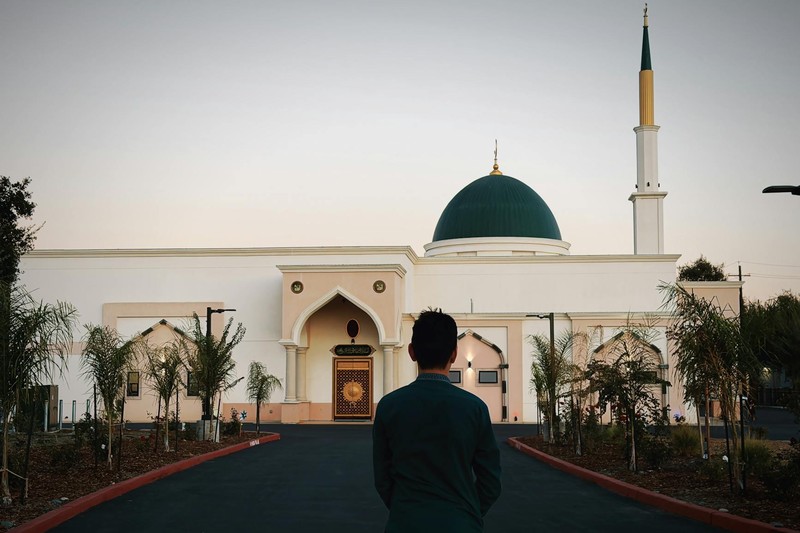
Three men are dead outside San Diego’s largest mosque, shot by two teenagers who then turned their guns on themselves. The youngest potential victims of the day — dozens of children inside the building’s day school — escaped physically unharmed.
On Monday, shortly before midday prayer, two gunmen opened fire at the Islamic Center of San Diego in the Clairemont neighborhood, about nine miles north of downtown. Three men were killed at the scene, including a security guard whom police credit with preventing a far deadlier outcome. The suspects, ages 17 and 19, were found dead in a stopped vehicle a few blocks away from apparent self-inflicted gunshot wounds.
A landscaper working nearby was shot at but uninjured, according to San Diego Police Chief Scott Wahl.
“Because of the Islamic Center location, we are considering this a hate crime until it’s not,” Wahl told reporters at a press conference.
All of the children inside the mosque’s Al Rashid School — which serves students from age five — were evacuated safely. Aerial footage showed more than a dozen children holding hands as they were walked out of the parking lot past scores of police vehicles.
“All of the kids are safe,” Wahl said, appearing emotional. He confirmed that officers responded within four minutes of the first emergency calls.
A Guard Who Bought Time
The security guard who was killed played a “pivotal role” in limiting the carnage, according to Wahl. Police have not yet released his name. The other two victims were reportedly employees of the center, according to US media accounts. All three were adult males.
The FBI has taken a leading role in the investigation and established a tip line. Mark Remily of the FBI’s San Diego office confirmed that no law enforcement officers fired their weapons during the response.
Children in the Building
The Al Rashid School offers courses in Arabic language, Islamic studies, and the Quran. The Islamic Center holds five daily prayers and describes its mission as serving not only the Muslim population but working “with the larger community to serve the less fortunate, to educate, and to better our nation.”
Earlier on Monday — the same day as the attack — a group of non-Muslims had been touring the mosque to learn about Islam. The detail sits alongside the violence with grim economy: interfaith outreach in the morning, gunfire by midday.
The Age of the Suspects
Seventeen and nineteen. Old enough to obtain firearms and coordinate an attack on a house of worship. Young enough that the question of how they arrived at that decision — what pipeline, what online ecosystem, what grievance — demands an answer investigators say will take days to reconstruct.
Wahl said the “circumstances that led up to this” would emerge in the coming investigation. The FBI’s public tip line suggests the bureau is working to assemble the suspects’ digital histories and affiliations from scratch.
The question of teenage radicalization is not new, but each incident reframes it. The 2019 Christchurch mosque shooter, who killed 51 people in New Zealand, was 28 — an adult with a documented trail of extremist writings. These suspects left behind no such manifesto, at least none yet publicly known. They were barely out of childhood.
A City and Country on Edge
The response extended well beyond San Diego. In Los Angeles, police increased patrols around mosques and Islamic centers. The NYPD did the same, citing “an abundance of caution.” Governor Gavin Newsom said he was “horrified” by what he called a “violent attack” and that California “stands with” its Muslim community. “Hate has no place in California, and we will not tolerate acts of terror or intimidation against communities of faith,” he said in a statement.
President Donald Trump was also briefed. “It’s a terrible situation,” he said, according to media reports.
Imam Taha Hassane, the center’s director, said it was “extremely outrageous to target a place of worship.”
“All the places of worship in our beautiful city should always be protected,” he said.
Tazheen Nizam, executive director of CAIR-San Diego, captured the mundane specificity of what was violated: “No one should ever fear for their safety while attending prayers or studying at an elementary school.”
Prayers and an elementary school. That is what was attacked.
Sources
- 3 men have been killed at a San Diego mosque and both suspects are dead, police say — Associated Press (via PBS NewsHour)
- Five people, including two suspects, killed in shooting at San Diego’s Islamic Center — The Guardian
Discussion (10)