 lop News
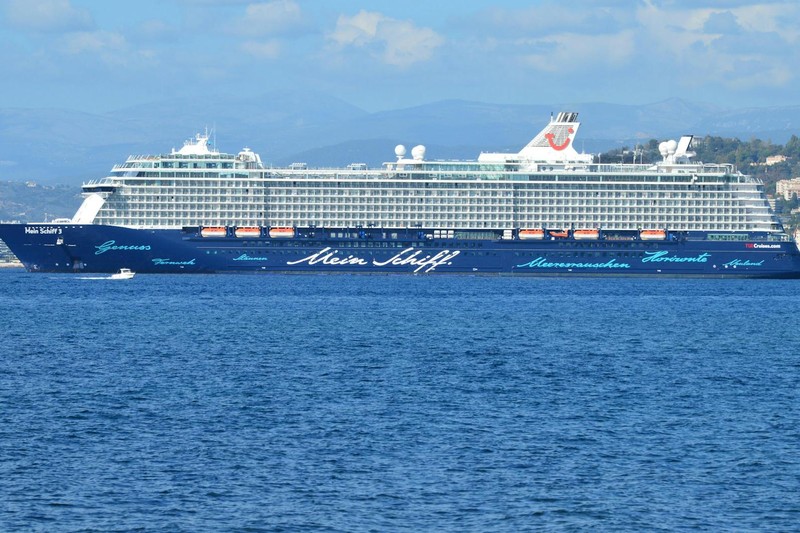
The MV Hondius sailed into Rotterdam harbor on Monday morning nearly empty — 25 crew members, two medical staff, and the lingering presence of a virus that killed three people during the voyage of the luxury expedition vessel.
The Dutch-flagged ship, operated by Oceanwide Expeditions, had been carrying roughly 150 passengers and crew from 23 countries when a cluster of severe respiratory illnesses that had begun in early April was reported to the World Health Organization on May 2. It was the start of what has become a multi-country outbreak of Andes hantavirus — a pathogen normally found in South American rodents, not cruise ships.
A Chain of Transmission at Sea
According to the World Health Organization, the outbreak likely began with a single passenger who boarded on April 1 after more than three months traveling in Argentina, Chile, and Uruguay. He fell ill on April 6 and died on board five days later. No tests were run. WHO considers him a probable case.
His traveling companion deteriorated during a flight from Saint Helena and died in Johannesburg on April 26, subsequently confirmed by PCR testing with hantavirus. A passenger evacuated from Ascension Island remains in intensive care in South Africa. A German woman died on May 2, confirmed post-mortem as the third Andes virus death.
The ship’s doctor fell ill. So did a ship guide. A Swiss passenger who had already disembarked developed symptoms in early May and is hospitalized in Zurich. As of May 17, the European Centre for Disease Prevention and Control counted twelve cases — nine confirmed, two probable, and one inconclusive. WHO’s official count stood at ten after a US case was found to be a false positive on May 15, though a presumptively positive Canadian passenger could push the number to eleven.
Three people are dead. The case fatality rate, initially reported at 38 percent by the WHO on 8 May, has since declined as additional cases were identified; with 12 cases and three deaths as of 17 May, it stands at roughly 25 percent.
Why Hantavirus, and Why Here?
Hantavirus is primarily a rodent disease. Humans typically contract it by inhaling aerosolized particles from infected rodent excrement. The Andes virus — which has circulated in Argentina and Chile for decades — is rare among hantaviruses for its documented ability to spread between humans, and even then only through prolonged, close contact. A cruise ship, with its shared cabins, dining areas, and confined spaces, turned out to be an effective environment for that kind of transmission.
WHO’s working hypothesis holds that the first case acquired the infection from environmental exposure in South America before boarding, with subsequent cases transmitted person-to-person on the ship.
A Known Virus, a Coordinated Response
France’s Pasteur Institute fully sequenced the virus from a French passenger and found it matched both the strains from other ship cases and known Andes viruses circulating in South America. Health Minister Stéphanie Rist said Friday that nothing in the data suggests the emergence of a more transmissible or dangerous variant. Jean-Claude Manuguerra, who heads Pasteur’s Environment and Infectious Risk unit, said the roughly three percent variation from South American rodent samples reflected natural viral drift.
The WHO has been unequivocal: this is not COVID. The virus is not novel, it does not spread easily between humans, and the risk to the general public is low.
But the response is testing post-pandemic infrastructure. The Hondius was barred from Cape Verde, stranded at sea until Spain coordinated a passenger evacuation through the Canary Islands. Former passengers and crew are now quarantined in several countries. WHO recommends 42 days of monitoring for high-risk contacts — a reflection of Andes virus’s unusually long incubation period, which can stretch to six weeks. Dutch authorities prepared quarantine facilities for non-Dutch crew members in Rotterdam, though it remained unclear whether they would stay for the full period.
The Long Tail
The search for new cases could continue for months, according to the WHO, which says more are expected given the long incubation window. Rotterdam residents interviewed by Reuters expressed confidence that this was not a new pandemic, though some worried about quarantine compliance — a skepticism born of recent experience.
The Hondius will be disinfected. Its crew will enter quarantine. The virus appears to be a known quantity, its genome sequenced and shared with the global scientific community. The harder question is whether the multi-country monitoring apparatus built after COVID can sustain the attention span that a slow-moving, long-incubating outbreak demands.
Sources
- Hantavirus-hit cruise ship MV Hondius arrives in Rotterdam for disinfection — France 24
- Andes hantavirus outbreak in cruise ship, 17 May 2026 — European Centre for Disease Prevention and Control
- Hantavirus cluster linked to cruise ship travel, Multi-country — World Health Organization
- France says cruise ship Andes virus matches known South American viruses — Associated Press
- US hantavirus case was false positive; outbreak cases drop from 11 to 10 — Ars Technica
Discussion (9)