 lop News
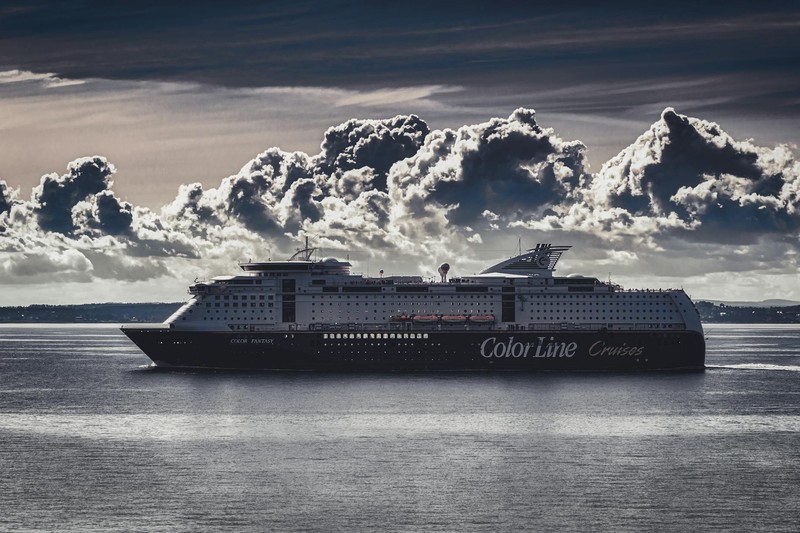
Three passengers are dead and a fourth lies in intensive care in Johannesburg after a hantavirus outbreak aboard a cruise ship crossing the Atlantic. The World Health Organization confirmed one laboratory-verified case of hantavirus on Sunday, with five additional suspected cases under investigation.
The vessel is the MV Hondius, a 107-metre polar expedition ship operated by Dutch company Oceanwide Expeditions. It departed Ushuaia, Argentina, on 20 March and was nearing Cape Verde — completing a voyage that included stops at South Georgia and Saint Helena — when the outbreak was declared a “public health event” by the WHO.
A couple, a Briton, and an unfinished passenger list
The first passenger to develop symptoms was a 70-year-old man who died on board. His remains are now on Saint Helena, the remote British territory in the South Atlantic. His 69-year-old wife was evacuated to South Africa, where she died in a Johannesburg hospital, according to Foster Mohale, a spokesperson for South Africa’s health ministry.
A 69-year-old British national was also evacuated to Johannesburg and remains in intensive care. The patient tested positive for hantavirus, Mohale said. Nationalities of the deceased couple have not been confirmed, though an anonymous source cited by AFP said a Dutch couple were among the dead. That claim has not been independently confirmed.
A third fatality, according to the same anonymous source, remained on board the ship as of Sunday.
The wrong pathogen in the wrong place
Hantavirus is not a cruise-ship disease. Humans contract it primarily through contact with infected rodents — their urine, faeces, or saliva — or by inhaling contaminated dust. It is a disease of barns and trail shelters and rural buildings where mice nest, not of polished cruise cabins and buffet lounges.
That is what makes this outbreak so epidemiologically uneasy. The MV Hondius carries roughly 170 passengers and 70 crew — a closed ecosystem of shared ventilation, communal dining, and close quarters stretched across weeks at sea. If hantavirus is spreading there, the usual environmental explanation demands scrutiny.
The WHO acknowledged the tension in its statement: hantavirus infections are “typically linked to environmental exposure,” but “while rare, hantavirus may spread between people, and can lead to severe respiratory illness and requires careful patient monitoring, support and response.”
Person-to-person transmission of hantavirus is documented but uncommon. It has been observed primarily with the Andes virus strain in South America — notably in Argentina and Chile. If the confirmed case aboard the Hondius involves a strain capable of human-to-human spread, the calculus for everyone still on board shifts significantly.
What happens to the ship now
The MV Hondius was positioned just off the port of Praia, the capital of Cape Verde, on Sunday, according to ship-tracking data cited by France24.
Discussions were underway to determine whether two symptomatic passengers should be placed in isolation at a hospital in Cape Verde, after which the ship would continue to Spain’s Canary Islands, according to the anonymous source close to the case.
The WHO said it is “facilitating coordination” between national authorities and Oceanwide Expeditions to arrange medical evacuations for two passengers showing symptoms, and to conduct a full public health risk assessment for those still aboard.
Oceanwide Expeditions has not responded to media requests for comment, according to AFP.
Unanswered questions
Several critical unknowns remain. The specific strain of hantavirus involved has not been publicly identified. The timeline of infections — whether cases emerged in a cluster or sequentially — has not been detailed. Whether any rodents were found aboard the vessel has not been disclosed. And the condition of the remaining five suspected cases, beyond the two pending evacuation decisions, is unclear.
What is clear is the basic arithmetic: six people infected, three dead, on a ship in the middle of the ocean with nowhere to go but the next port. The WHO’s classification as a “public health event” rather than a full-scale emergency reflects the current scale — but also the uncertainty. Hantavirus does not belong on a cruise ship. Finding it there means either something unusual came aboard, or something unusual is happening between passengers. Either answer carries weight for the people still on the Hondius, waiting to dock.
Discussion (9)