 lop News
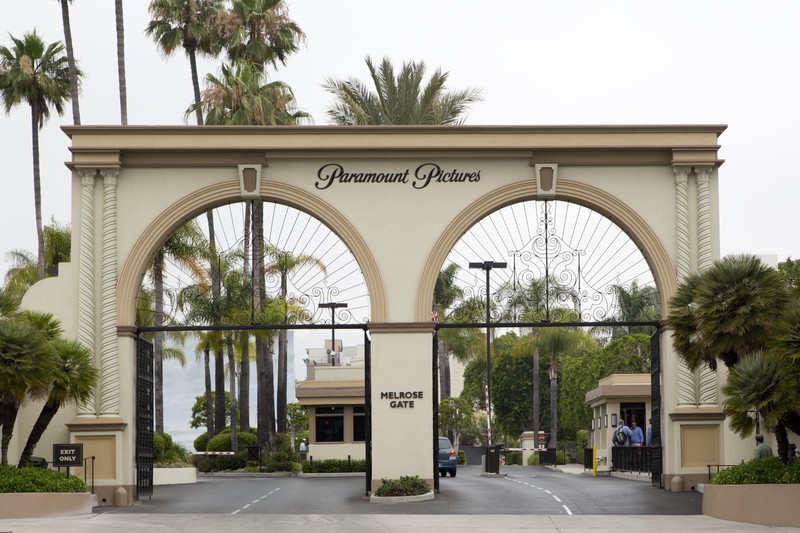
$111 billion. Two legacy studios. Four major film studios left in America if this deal closes. On Monday, more than 1,000 of the people who actually make the movies said: enough.
An open letter published Monday opposes Paramount Skydance’s planned acquisition of Warner Bros. Discovery, organized by advocacy groups including the Committee for the First Amendment and the Future Film Coalition. The signatories are not outside agitators. Joaquin Phoenix won his Oscar for Warner Bros’ Joker. Ben Stiller’s Zoolander and Madagascar films were distributed by Paramount. Mark Ruffalo, David Fincher, Denis Villeneuve, JJ Abrams, Jane Fonda, Lin-Manuel Miranda, Kristen Stewart — the list reads like a Cannes jury crossed with a picket line.
Many are, in a very real sense, writing to their own bosses.
Paramount CEO David Ellison announced the $111 billion acquisition in February after outbidding Netflix. The combined entity would control two of Hollywood’s most storied studios, their content libraries, streaming platforms, and the infrastructure that turns scripts into screen entertainment. The signatories warn the deal would reduce major US film studios to just four — handing enormous power over what stories get told, and on what terms, to an even smaller group of executives.
The Blue-Collar Argument
The most striking case for signing came from Damon Lindelof, the Watchmen and Lost creator currently under an overall deal with Warner Bros. Discovery’s HBO. In an Instagram post Monday, Lindelof — who described Ellison as “bright, ambitious and passionate” — explained himself in terms that had nothing to do with artistic vision.
“Hollywood, believe it or not, is a blue-collar town,” Lindelof wrote. “It’s thousands and thousands of Grips and Gaffers. Drivers and Decorators. Builders and Boom operators. Camera teams and Caterers. And they’re all about to get fucked.”
“Hollywood mergers mean fewer movies and fewer TV shows and that means fewer jobs,” he continued. “When two storied backlots are owned by the same company, the outcome is intuitive — one becomes a Ghost Town.”
This framing cuts against the easy narrative of millionaire celebrities signaling. The letter’s concerns — disappearing mid-budget films, eroding independent distribution, collapsing international sales markets — describe the hollowing out of an industry’s middle class. The people with the most to lose aren’t the ones signing letters.
The Corporate Counterargument
Paramount issued a statement Monday defending the deal and insisting the combined company would “greenlight more projects, back bold ideas, support talent across multiple stages of their careers.” The company reiterated a pledge to release a minimum of 30 feature films annually with full theatrical releases.
Ellison has argued that the alternative — a Netflix deal — would have created a subscription streaming behemoth twice the size of its nearest competitor. Representatives for Warner Bros. Discovery did not respond to requests for comment.
The industry isn’t buying it. Warner Bros. films won a record 11 Oscars in March; Paramount scored zero nominations. Cinema United CEO Michael O’Leary, whose trade group represents 30,000 US movie screens, warned that decreased production could accelerate theater closures.
The Regulatory Battlefield
California Attorney General Rob Bonta said the deal is “not a done deal” and expressed skepticism about the rigor of federal review. Democratic senators Elizabeth Warren, Cory Booker, and Chris Murphy have raised concerns. The UK’s Competition and Markets Authority expects to launch a phase 1 investigation “in the coming weeks,” with an April 27 deadline for public comment.
The signatories are urging state attorneys general to file preliminary injunctions — a strategy that worked when state AGs blocked the Albertsons-Kroger grocery merger. The deal is expected to close later this year pending shareholder and regulatory approval.
Whether this fight succeeds may depend on whether regulators grasp what Lindelof already sees: a town about to hand control of its culture to fewer boardrooms, with fewer jobs to sustain the people who build it. The people who signed this letter will be fine. The people they’re fighting for won’t.
Sources
- Hollywood Signs Open Letter Protesting Paramount-Warner Bros Deal — Variety
- Hollywood Heavyweights Sign Letter Opposing Paramount’s Deal for Warner Bros. — The New York Times
- Damon Lindelof Reveals Blue-Collar Reason He Signed Anti-Paramount-WBD Merger Missive — Deadline
- Mark Ruffalo and Emma Thompson among 1,000+ signatories on open letter opposing Paramount’s Warner buyout — The Guardian
- UK to probe Paramount-Warner Bros deal in coming weeks, competition watchdog says — Channel News Asia
- Block the WBD-PSKY Merger — Future Film Coalition
Discussion (9)