 lop News
Thirty-two days of war. Thirteen American service members killed. Oil above $110 a barrel. And a Strait of Hormuz that Emmanuel Macron — normally careful with his phrasing — calls “unrealistic” to reopen by force.
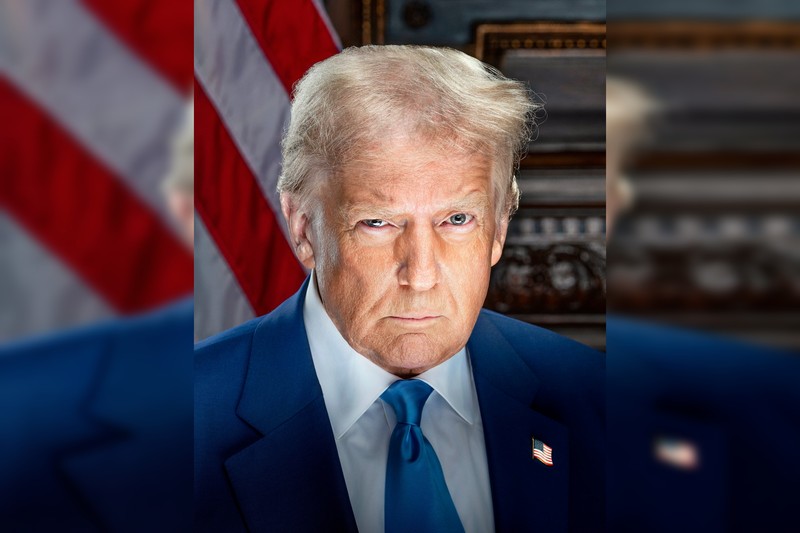
President Donald Trump used his first primetime address on the Iran war Wednesday evening to declare that Operation Epic Fury had brought the Islamic Republic to its knees. What he did not provide was any indication of when, or how, it ends.
The address, delivered April 1 from the White House, was framed as a progress report on what Trump called a military campaign without historical parallel. Iran’s navy and air force are destroyed, its missile stockpiles depleted, its leadership decapitated. “They are decimated both militarily and economically and in every other way,” Trump said.
Then came the threats that moved markets. The United States would continue striking Iran “extremely hard over the next two to three weeks,” Trump said. If no deal is reached, “we are going to hit each and every one of their electric generating plants very hard and probably simultaneously.” Iran’s oil — “the easiest target of all” — could follow.
Legal experts have warned that destroying civilian power infrastructure would constitute a war crime, according to Channel News Asia. The president did not address that concern.
Markets Render Their Verdict
Oil prices surged immediately after the speech. Brent crude, the international benchmark, jumped more than 6 percent to top $107 per barrel. US crude soared above $110.
The markets had been hoping for an off-ramp. They got the opposite.
“The speech was a disaster,” John Kilduff, founding partner at Again Capital, told CNBC. The market is now pricing in a prolonged war and an indefinite closure of the Strait of Hormuz, through which roughly one-fifth of global oil supply passed before the conflict.
The barrel math is stark. TD Securities estimates that nearly one billion barrels of oil and refined products will be lost by the end of April — approximately 600 million barrels of crude and 350 million of jet fuel, diesel, and gasoline. Each additional month of fighting adds another 450 million barrels to the deficit.
Shell CEO Wael Sawan has warned that fuel shortages are already rippling outward — from South Asia into Southeast Asia, Northeast Asia, and now Europe. Jet fuel goes first, then diesel, then gasoline.
Trump acknowledged rising domestic gasoline prices but dismissed them as a “short-term increase.” Analysts are less sanguine: Patrick De Haan of GasBuddy projects US retail gasoline could reach $4.25 to $4.45 per gallon within two weeks. Diesel could surge to between $5.80 and $6.05.
The Strait Nobody Can Open
Nowhere was the absence of a strategy more evident than on Hormuz itself.
Iran has effectively shut the waterway, attacking commercial tankers and vowing to keep it closed to its enemies. Trump’s response was to tell other nations to handle it.
“The countries of the world that do receive oil through the Hormuz Strait must take care of that passage,” he said. “They must cherish it. They must grab it and cherish it.” He added that the US would be “helpful” but told dependent nations to “build up some delayed courage.”
Macron, speaking Thursday in South Korea, was blunt about what a forceful reopening would require: significant time and exposure to coastal threats from Iran’s Revolutionary Guards, “who possess significant resources as well as ballistic missiles.” He concluded: “This can only be done in concert with Iran.”
The French president then delivered a line that will likely be quoted for some time: “You have to be serious. When you want to be serious, you don’t say the opposite every day of what you said the day before. And perhaps you shouldn’t talk every day.”
At the United Nations, a parallel effort to authorize force to reopen the strait ran into a wall. A Security Council resolution drafted by Bahrain with Gulf-state backing would have permitted member states to use “all necessary means” to secure transit passage. Russia, China, and France — three of the five veto-holding permanent members — opposed any language authorizing force, according to the New York Times, effectively stalling the measure.
Bob McNally, president of Rapidan Energy, put the strategic failure plainly: “I can’t believe the US military didn’t start degrading Hormuz interdiction capabilities on day one. Just as you wouldn’t imagine a parachutist diving out of a plane without putting on the parachute.”
Regime Change, Whether Stated or Not
Trump insisted Wednesday that “regime change was not our goal” — then noted that it had effectively happened because Iran’s original leaders “are all dead.” He described a “new group” as “less radical and much more reasonable.”
Who that group might include remains unclear. But the question of succession is already drawing geopolitical calculation. Exiled crown prince Reza Pahlavi, 65, has positioned himself as a central figure in Iran’s political future, with allies signalling a potential reset in Tehran’s ties with China and Russia, according to the South China Morning Post. The calculation in Beijing and Moscow appears to be shifting: if the Islamic Republic falls, maintaining influence with whoever replaces it becomes the new priority.
The Gulf states, meanwhile, are pushing Trump to finish the fight — arguing, according to AP, that Tehran has not been weakened enough. Iran has retaliated against those same states with thousands of attacks, killing at least 18 civilians and damaging energy infrastructure across the Arabian Peninsula.
A Deadline With No Name
The address was notable for what it omitted. Trump, who for days had insisted negotiations with Iran were underway, made no mention of diplomacy. Iran has consistently denied any talks are occurring. He offered no plan for ground operations to secure Iran’s enriched uranium. He gave no conditions for what would constitute victory, beyond saying objectives were “nearing completion.”
He is fast approaching the 60-day mark under the War Powers Act, after which he must seek congressional authorization to continue military operations. He did not address this.
And there is a clock running that the president did not mention. On March 26, Trump issued a 10-day ultimatum to Iran: reopen the Strait of Hormuz or risk having energy infrastructure placed in American crosshairs. That deadline expires early on April 7. What happens when it passes is anyone’s guess.
Carl Skadian, deputy director of the Middle East Institute at the National University of Singapore, summarized the speech’s core problem in a commentary for Channel News Asia: 19 minutes, no off-ramp. “All we got was more of the same.”
The war Trump launched on February 28 has already cost 13 American lives. He has twice traveled to Dover Air Force Base to receive the fallen. “Every single one of the people, their loved ones said, ‘Please, sir, please finish the job,’” he recounted.
The world is now watching to discover what finishing looks like — and what it will cost everyone else.
Sources
- Read the complete transcript of Trump’s address to the nation — AP News
- Takeaways from Trump’s address: No end date for Iran war and few details on strategy ahead — AP News
- Trump’s Iran war speech paints a grim picture for oil markets with more than 600 million barrels at risk — CNBC
- Commentary: More bluster, some concessions but still no real plan for Iran war — Channel News Asia
- Macron says military operation to liberate Strait of Hormuz ‘unrealistic’ — Le Monde
- A Bid to Use Force to Open Strait of Hormuz Hits U.N. Roadblocks — The New York Times
Discussion (13)