 lop News
The book is thick. At Emergency Hospital in Kabul on Wednesday morning, dozens of people crowded around it, running their fingers down columns of handwritten names — the dead, the wounded, the still missing. Abdul Basir Watan was looking for his cousin Zamarek, who had been four months into addiction treatment at the Omid hospital when it was destroyed. Zamarek was not on the list of the wounded. He was not on the list of the dead. Watan said he would go to the mass graves next and pray.
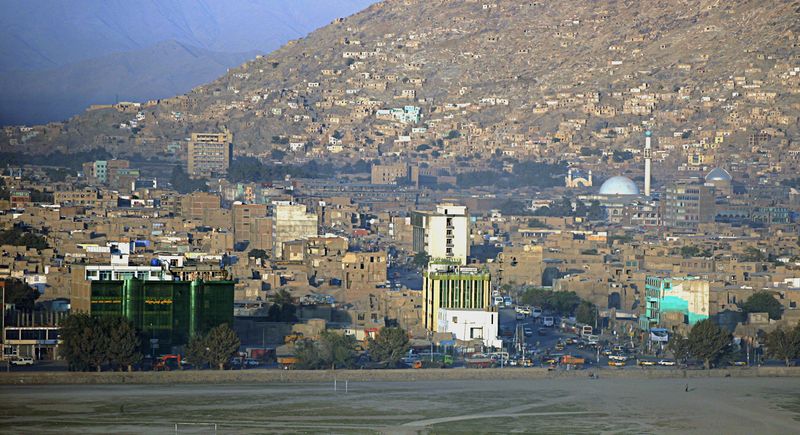
Two days earlier, at approximately 9 PM on Tuesday night, an airstrike leveled much of the Omid Addiction Treatment Hospital in central Kabul — a 2,000-bed facility with roughly 3,000 patients at the time of the strike. Afghanistan’s Taliban government says Pakistan’s air force carried out the attack, killing 408 people and wounding 265. Pakistan has “strongly rejected” responsibility, insisting its military targeted only “military and terrorist infrastructure.”
The United Nations, conducting its own assessment, has recorded 143 dead and 119 wounded — lower than the Taliban’s figures but staggering for a single strike on what Georgette Gagnon, the UN’s officer-in-charge in Afghanistan, described as “a well-known rehabilitation center” operated by the Taliban’s interior ministry. Gagnon reported “complete destruction of one block” that had housed adolescent patients.
“It Was Like Doomsday”
Ahmad, a 50-year-old patient who survived the strike, described the immediate aftermath to Al Jazeera. “The whole place caught fire. It was like doomsday. My friends were burning in the fire.”
Haji Fahim, an ambulance driver who arrived shortly after, confirmed the scene: “When I arrived, I saw that everything was burning, people were burning.” Rescue teams worked through the night with flashlights and cranes, pulling bodies from rubble. Allah Mohammad Farooq, a rescue worker, said most of the people he found were already dead, with many still trapped beneath the debris.
At hospitals across Kabul, families conducted the same grim search. Baryalai Amiri, a 38-year-old mechanic, went ward to ward looking for his brother, admitted 25 days earlier. “We are not given the proper information,” he said. “So far, we don’t know where he is.” Another man, Sahil, searched three hospitals for his brother Mohammad Yahya, unable to identify him among charred remains.
Afghan authorities published a list of 500 patients confirmed safe — a fraction of the roughly 3,000 people the facility was treating.
An Uneasy Pause
On Wednesday — the same day families were still lining up at Emergency Hospital — Pakistan and Afghanistan announced a five-day ceasefire for Eid al-Fitr, running from midnight Thursday through midnight Tuesday. Saudi Arabia, Qatar, and Turkey had brokered the pause. Pakistani Information Minister Attaullah Tarar said Pakistan was offering “this gesture in good faith and in keeping with the Islamic norms.”
The conditional language was telling. Pakistan warned that operations would “immediately resume with renewed intensity” in the event of any cross-border attack or terrorist incident. The Taliban agreed to suspend operations for the same period.
This is a pause, not a peace. The underlying conflict — Pakistan accuses the Taliban of harboring the Tehrik-i-Taliban Pakistan and the Balochistan Liberation Army, charges Kabul denies — remains entirely unresolved.
The Numbers Behind the Silence
Since fighting erupted in late February, the civilian toll has mounted largely outside the global spotlight, overshadowed by the escalating conflict involving Iran. The UN Office of the High Commissioner for Human Rights reports 289 Afghan civilians killed or injured since hostilities began, including 104 children and 59 women. At least 115,000 people have been displaced from their homes. More than 20 health facilities have suspended services; five have been damaged by airstrikes and shelling.
The World Food Programme has mobilized emergency supplies for over 20,000 displaced families.
The Omid hospital strike was the deadliest single incident in three weeks of fighting. It was also, until the truce announcement briefly pushed it into international headlines, among the least covered. Abdul Basir Watan, still searching for his cousin, had no interest in the ceasefire news. He was heading to the graves.
Sources
- As Pakistan and Afghanistan declare truce, civilians in Kabul count the cost of war — NPR
- Pakistan and Afghanistan agree to temporary Eid al-Fitr ‘pause’ in conflict — Al Jazeera
- Families search for loved ones after deadly Pakistan strike on Kabul rehab — Al Jazeera
- UN revises Kabul rehab strike toll as Pakistan denies targeting civilians — Al Jazeera
- Rescue crews dig bodies from ruins of Kabul hospital hit by airstrike — PBS NewsHour
- Türk says Pakistan-Afghanistan conflict piles ‘misery on misery’ — OHCHR