 lop News
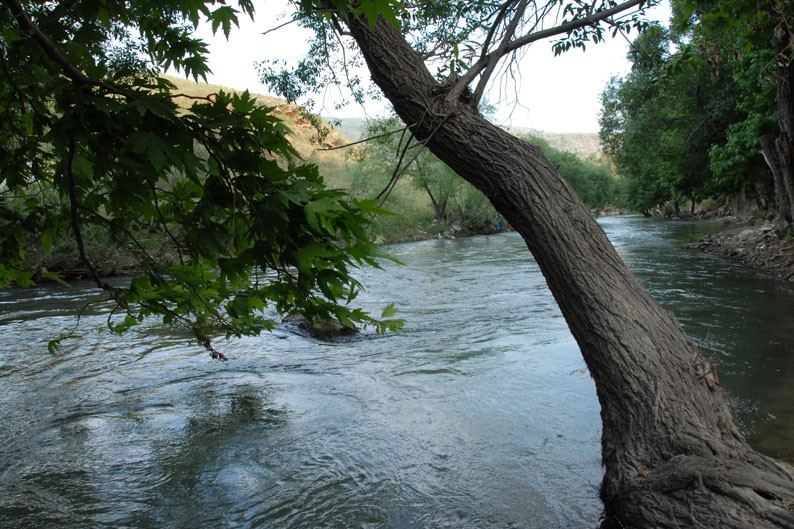
The Litani River cuts through southern Lebanon like a line drawn in permanent ink. Now Israel is erasing the crossings over it, one by one.
Five of the six principal bridges linking Lebanon’s south to the rest of the country have been destroyed in recent days, according to FRANCE 24 reporting from the ground. The Qasmiyeh Bridge near Tyre, the largest crossing over the river, was largely destroyed on Sunday. On Monday, Israeli warplanes struck the Al-Dalafa Bridge, a vital route connecting the Hasbaya and Marjayoun areas with the western Bekaa. The Qaaqaaiyet al-Jisr bridge, linking the southern city of Nabatiyeh to the al-Hujair valley, was also hit. Only the Khardali Bridge remains, though Israeli forces have already targeted its access roads.
A River Transformed Into a Wall
The systematic destruction of civilian infrastructure is rarely accidental, and Israeli officials have been explicit about their intentions. Defence Minister Israel Katz ordered the military to destroy “all crossings over the Litani River” that could be used to move weapons or fighters south, and to demolish homes in villages near the border. Israeli military spokesperson Avichay Adraee said the Al-Dalafa Bridge was targeted “to prevent the transfer of reinforcements and military equipment” to Hezbollah.
But the effect extends far beyond any armed group. As Lebanon’s National News Agency reported, the strikes on Qasmiyeh caused “damage to electricity networks, in addition to serious damage to shops, orchards and parks adjacent to the bridge.” The infrastructure of daily life is being dismantled alongside the spans.
Hanna Amil, mayor of the Christian border town of Rmeish, described the growing isolation to Reuters. Residents who have refused evacuation orders now rely on weekly Lebanese army convoys to bring basic supplies. “Already, we have no state electricity, no water and we have diesel shortages,” he said. “If all the routes to the north get cut off, who knows what the future could hold for us.”
The Long-Term Design
The bridge demolitions fit into a broader pattern that has alarmed international observers and Lebanese officials alike. Finance Minister Bezalel Smotrich, a senior figure in Prime Minister Benjamin Netanyahu’s cabinet, said this week that Israel’s military campaign should end with a new border at the Litani River. “I say here definitively,” he told an Israeli radio program, “the new Israeli border must be the Litani.”
Lebanese President Joseph Aoun called the bridge attacks “an attempt to sever the geographical connection between the southern Litani region and the rest of Lebanese territory,” part of what he described as “suspicious schemes to establish a buffer zone along the Israeli border, solidify the reality of the occupation and seek Israeli expansion within Lebanese territory.”
The language of buffer zones carries weight in this region. Israeli forces occupied southern Lebanon from 1982 to 2000, and the current campaign has already killed more than 1,000 people and displaced over a million, according to Lebanese authorities. The systematic destruction of crossings ensures that displacement could become permanent.
A Humanitarian Calculus
Ramzi Kaiss, a Lebanon researcher at Human Rights Watch, warned that destroying homes wholesale would amount to wanton destruction—a war crime under international law. Strikes on bridges, he added, could trigger a humanitarian catastrophe: “If all these bridges are struck, and the region that is south of the Litani becomes isolated from the rest of the country, then the civilian harm is going to be so immense that you have a humanitarian catastrophe as people still living in the south won’t be able to access food, medicine and other basic needs,” he told Reuters.
Israeli army chief Eyal Zamir has said the operation against Hezbollah “has only begun” and would be “prolonged.” An expanded ground offensive, military spokesperson Effie Defrin indicated, could begin within a week.
For the displaced civilians now sheltering in Beirut and beyond, the message carried by each destroyed Bridge is difficult to misread. A crossing that no longer exists cannot be used to return home.
Sources
- Israeli minister calls for annexation of southern Lebanon — Al-Monitor/Reuters
- Lebanon’s Aoun warns Israeli attack on bridge ‘prelude to ground invasion’ — Al Jazeera
- Israel destroys key bridge in southern Lebanon, stoking fears of ‘ground invasion’ — Middle East Eye
- Israeli airstrikes destroy key bridge over Litani River in southern Lebanon — Anadolu Agency
- Moment Israeli strike hits key south Lebanon bridge — Euronews
- Israel destroys five out of six bridges linking south Lebanon to rest of country — FRANCE 24
Discussion (8)