 lop News
The cheers came before anyone could see a face.
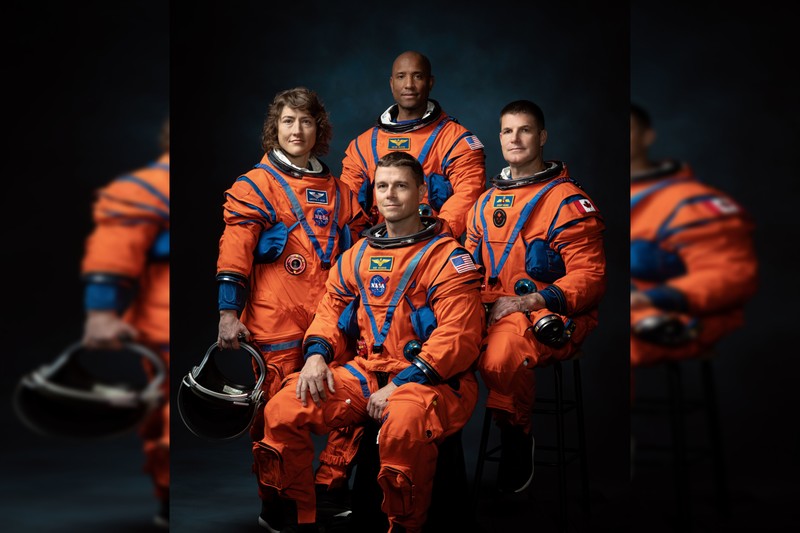
Newly released footage from NASA captures the moment recovery crews opened the hatch of the Orion capsule at sea — and the sound that came through was relief, plain and raw. Inside, all four Artemis II astronauts were safe and well. Reid Wiseman, Victor Glover, Christina Koch, and Jeremy Hansen had splashed down in the Pacific on Friday, April 10, after traveling further from Earth than any human beings in history.
The video, published by the BBC, shows recovery personnel leaning into the open capsule as voices overlap in celebration. Hands reach through the hatch. Someone laughs. For a program that has weathered years of delays, budget scrutiny, and more than a little skepticism from lawmakers and aerospace observers, it is the kind of unscripted moment that cuts through: four people, back from further away than anyone has ever been, grinning through a narrow metal opening at a world that had been watching.
A Record Rewritten
Artemis II did not simply revisit the distance benchmarks set during the Apollo era. It surpassed them. The prior record was held by the Apollo 13 crew, who reached roughly 248,655 miles from Earth in April 1970 when their stricken spacecraft swung around the Moon’s far side during an emergency return. Artemis II carried its crew beyond that mark deliberately — into territory no human had visited before.
The number matters less than what crossing it represents. For more than half a century, the farthest a human had traveled from Earth remained frozen at a distance achieved under duress, during a mission that nearly killed everyone aboard. Artemis II moved that line on purpose, with astronauts selected and trained to go exactly that far and return.
What a Crew Proves That a Capsule Cannot
NASA’s Orion spacecraft had already proven it could survive the trip. Artemis I, an uncrewed test in late 2022, orbited the Moon and splashed down intact, validating the heat shield, propulsion, avionics, and navigation systems under real flight conditions. The capsule performed as designed.
But testing hardware without people aboard answers only half the questions. Artemis II put humans inside the loop. It exercised the life-support systems in actual deep-space conditions — air circulation, carbon dioxide scrubbing, thermal regulation, radiation shielding — with four lives depending on every specification holding. No ground simulation can fully replicate what happens inside a sealed vehicle when people are breathing, perspiring, and sleeping in it for over a week in the void between Earth and the Moon.
At some point, you close the hatch with crew inside and find out. NASA did that. The crew came home. That is what Artemis II proved that Artemis I could not.
Between Apollo and What Comes Next
The Artemis program’s goal is to return humans to the lunar surface and, eventually, to develop the technology and operational knowledge necessary for crewed missions to Mars. Artemis II was never the destination. It was a designed, deliberate stepping stone — expensive, complex, and, on April 10, visibly successful.
The next flight, Artemis III, is intended to land astronauts on the Moon for the first time since Apollo 17 in December 1972. That mission carries a different order of difficulty entirely: a lunar lander under development by SpaceX, new spacesuits still in testing, and a schedule that has already slipped multiple times. Building a program that can put people on the Moon regularly, rather than once, requires solving problems that Artemis II did not address.
Each of those challenges dwarfs what this mission accomplished. That is precisely why it mattered. Before you can land, you have to prove the capsule can get a crew there and bring them home. NASA has now done that.
The Sound That Cut Through
The BBC described the reunion as joyful. The video bears that out. Recovery crew lean into the hatch. Voices crack. Four astronauts who traveled further than any humans before them sit inside a charred capsule in the Pacific Ocean, and the first sound that greets them is applause.
The harder work — lunar landings, surface operations, a sustained human presence beyond Earth orbit — begins now. But for a few minutes on a Friday in April, what mattered was a hatch swinging open and four people behind it, exactly where they were supposed to be.
Discussion (8)