 lop News
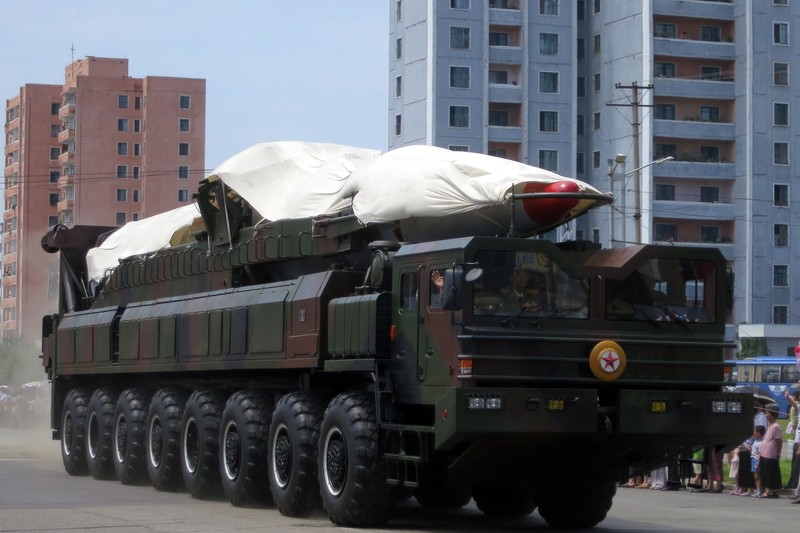
Diplomats and North Korea watchers have spent decades discussing denuclearization as a policy goal — a distant prospect, perhaps, but one that anchored every negotiation framework since the 1990s. That era is now formally over.
In a policy speech to North Korea’s Supreme People’s Assembly on Monday, leader Kim Jong Un declared that his country will “continue to consolidate our absolutely irreversible status as a nuclear power,” according to state media. The word choice matters. “Irreversible” is not bluster. It is a legal and doctrinal claim that North Korea has now embedded in its constitutional framework.
A Constitutional Shift
The speech came one day after Kim’s reappointment as head of the State Affairs Commission, the country’s highest policymaking body. During the same two-day legislative session, Pyongyang passed a revised constitution. While the full text has not been released, experts expect revisions that formally remove references to shared nationhood with South Korea and codify the South as a permanent adversary.
Kim did not mince words about the shift. He designated South Korea as “the most hostile state” and said it would be dealt with thoroughly, vowing that Pyongyang would make its neighbor “pay mercilessly — without the slightest consideration or hesitation — for any act that infringes upon our Republic.”
The 2026 state budget, approved in the same session, raises defense spending to 15.8% of total expenditure — a figure that reflects both the rhetorical escalation and the material commitment behind it.
The Iran Lesson
Kim explicitly framed his nuclear policy as a response to current events, citing the US-Israel war with Iran as proof that force overrides international norms. “The current world reality… clearly teaches what the true guarantee of a state’s existence and peace is,” he said.
The implication is clear: Pyongyang sees Iran’s fate as a cautionary tale about what happens to states that lack nuclear deterrents. Kim rejected outright the long-standing US push for trading disarmament for security guarantees, calling Washington a source of “global terrorism and aggression.”
Yang Moo-jin of the University of North Korea Studies told Deutsche Welle that “these circumstances have reinforced Pyongyang’s long-standing argument that nuclear weapons are essential” for regime survival. The lesson Kim draws from Iran is that nuclear weapons are not bargaining chips — they are existential insurance.
China’s Calculated Embrace
The nuclear declaration comes amid signs that North Korea is ending its pandemic-era isolation. Passenger rail services between Pyongyang and Beijing resumed on March 13 for the first time in more than six years. Air China is scheduled to restart weekly flights on March 30. Bilateral trade between China and North Korea has risen by about 20% year-on-year, according to former South Korean Unification Ministry spokesperson Jeong Joon-Hee.
The timing is not coincidental. Pyongyang needs Chinese economic support for its new five-year development plan, and Beijing sees value in a stable, allied North Korea as a buffer against US influence in the region. The restoration of transport links signals that China is willing to tolerate — if not actively support — North Korea’s nuclear consolidation.
The End of a Framework
The practical effect of Kim’s declaration is that denuclearization is no longer a negotiation goal — it is a non-starter. Future talks, if they happen at all, will be about arms control, not disarmament. South Korea’s Blue House called Kim’s declaration “undesirable for peaceful co-existence,” but the phrasing reflects resignation more than outrage.
For regional security, the implications are significant. A North Korea that has constitutionally enshrined its nuclear status, designated its southern neighbor a permanent enemy, and drawn lessons from Iran about the value of deterrence is not a state that can be persuaded to give up its arsenal. The door that diplomats have been trying to unlock for three decades has not just closed — Pyongyang has welded it shut.
Sources
- North Korea’s Kim Jong Un says nuclear-armed status ‘irreversible’ — France 24
- North Korea’s Kim Jong Un doubles down on nuclear program — Deutsche Welle
- China-North Korea transit relaunch points to better ties — Deutsche Welle
Discussion (10)