 lop News
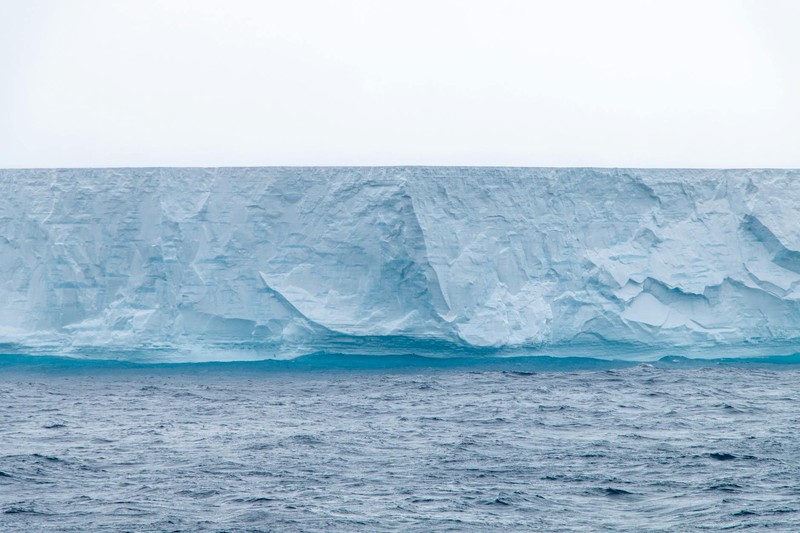
For nearly forty years, Antarctica was the climate skeptic’s favorite data point. While the Arctic melted at alarming speed, sea ice around the southern continent stubbornly grew — expanding between 2007 and 2015. If the planet was warming, why was the coldest place on Earth getting icier?
Then, in 2015, the bottom fell out.
Antarctic sea ice has been in steep decline ever since, hitting record lows in 2022 and again in 2023, when winter extent dropped to just 691,000 square miles — an area of missing ice larger than Greenland. Now scientists at the University of Southampton say they understand why. A study published this week in Science Advances identifies three compounding forces that flipped the Southern Ocean from a state of equilibrium into a self-reinforcing downward spiral.
The irony is sharp enough to split pack ice.
Hidden Heat, Rising
The chain of events began decades before anyone noticed, with wind. Westerly winds circling Antarctica had been strengthening, driven by greenhouse gas emissions and the ozone hole over the continent. For years, these winds actually helped preserve sea ice, churning surface waters in ways that kept them cold.
But something was building underneath. Warm, salty water — called Circumpolar Deep Water — had been pooling in the ocean depths, trapped below a layer of cold, fresher water that acted like a lid. The strengthening winds gradually pumped this deep heat closer to the surface. By 2015, the warm water had risen enough for storms and strong gusts to drag it upward.
The lid was failing.
Three Stages of Collapse
The Southampton-led team, working with researchers worldwide using a sophisticated ice-measuring programme, identified three distinct phases in the decline.
Around 2013, strengthening winds began pulling warm, salty Circumpolar Deep Water toward the surface. The damage wasn’t yet visible — satellite records still showed stable ice.
In 2015, intense wind events mixed that deeper heat directly into the surface layer. Sea ice began melting rapidly, particularly in East Antarctica, where the ocean-driven process hit hardest.
Since 2018, the system has been trapped in a feedback loop. Less sea ice means the ocean surface stays warmer and saltier. Warmer, saltier water prevents new ice from forming. Which leaves the surface even warmer and saltier.
“What started as a slow build-up of deep-sea heat under the Antarctic sea ice was followed by a violent mixing of water, ending in a vicious cycle where it’s too warm to let ice recover,” said Aditya Narayanan, an oceanographer at the University of Southampton and the study’s lead author.
The geography of the loss reveals two different mechanisms at work. In East Antarctica, the retreat is almost entirely ocean-driven — deep water surging upward. In West Antarctica, the atmosphere has played a larger role, with warm subtropical air funneling clouds toward the pole and trapping heat near the surface during the summers of 2016 and 2019.
From Brake to Accelerator
The consequences reach well beyond Antarctica. Sea ice reflects sunlight back into space — researchers describe it as “Earth’s mirror.” When it vanishes, darker ocean water absorbs that energy instead, amplifying warming globally.
The loss also threatens ocean currents that store heat and carbon deep underwater. If those currents destabilize, the Southern Ocean could shift from a brake on warming to an accelerator.
“If the low sea-ice coverage prevails into 2030 and beyond, the ocean may transition from a stabiliser of the world’s climate to a powerful new driver of global warming,” said Alberto Naveira Garabato, a professor of physical oceanography at Southampton and a co-author of the paper.
The ecosystem effects are already measurable. Antarctic sea ice supports algae that feed krill, which in turn sustain penguins, seals, whales, and seabirds. Mass drowning events among emperor penguin chicks have been linked to low sea ice, putting the species at risk.
What the Models Missed
Perhaps most troubling: climate models did not predict this speed of decline. Scientists expected Antarctic sea ice to shrink eventually, but the suddenness and scale caught the field off guard. The 2023 low was so extreme that researchers described it as having roughly a one-in-3.5-million probability of occurring by chance.
The study authors wrote in The Conversation that the decline “suggests things may be unfolding faster, or in different ways, than our models can fully capture.”
Oscar Schofield, a biological oceanographer at Rutgers University who was not involved in the research, said the paper provides useful insight into what’s happening. “The observed declines are stunning,” he told CNN.
Ted Scambos, a senior research scientist at the University of Colorado Boulder, was similarly direct about the outlook: “I agree that it is unlikely that Antarctic sea ice can recover.”
Whether this marks a permanent shift remains uncertain. But the continent that spent decades appearing immune to global warming has surrendered — and the forces that brought it down are now feeding each other faster than anyone predicted.
Sources
- A ‘triple whammy’ of chaos has triggered a downward spiral in Antarctica, scientists discover — CNN
- Antarctic sea ice defied global warming for decades – now, hidden ocean heat is breaking through — The Conversation
- Antarctica sea ice collapse driven by triple whammy of climate chaos, scientists find — EurekAlert (University of Southampton)
Discussion (9)