 lop News
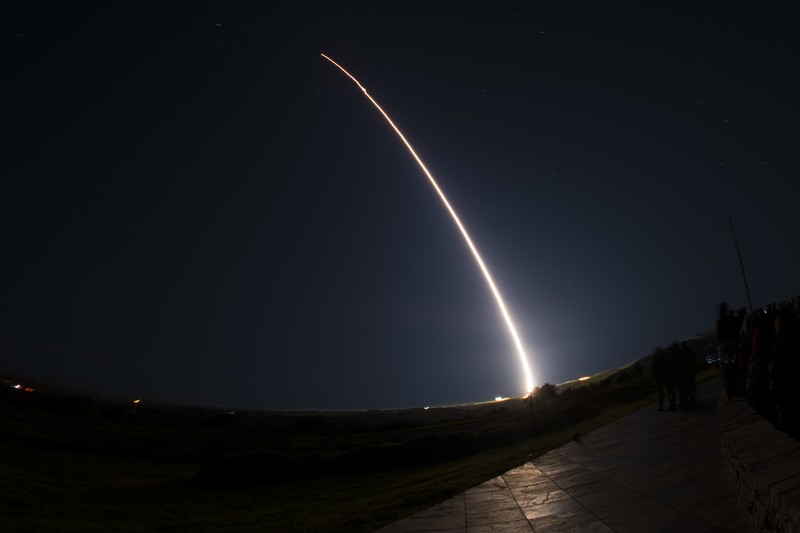
Three weeks into the US-Israel war with Iran, Kim Jong Un delivered what amounted to a victory speech. Standing before the Supreme People’s Assembly in Pyongyang on March 23, the North Korean leader declared that his country’s “nuclear shield” had vindicated decades of sanctions and isolation. It was as close as he could get to saying I told you so.
The message was not intended for North Koreans alone. From Warsaw to Tokyo, governments are drawing their own lessons from the flames over Iran — and the lesson is that nuclear weapons are the only reliable guarantee of sovereignty in the twenty-first century.
The Pyongyang Precedent
North Korea’s diplomats have for years pointed to Iraq, Afghanistan, and Libya as evidence of what happens to states without nuclear weapons. Iran, which stopped short of weaponisation despite advancing its enrichment programme, now joins that list. The lesson, as then-US director of national intelligence Dan Coats acknowledged in 2017, was blunt: “If you had nukes, never give them up. If you don’t have them, get them.”
“From the North Korean perspective, what’s happening in Iran reflects their worldview,” said Ankit Panda, a senior fellow at the Carnegie Endowment for International Peace. The cumulative effect of the US-Israeli strikes, he told the New Statesman, “will increase interest globally in the possession of nuclear weapons.”
Tehran’s Threshold Moment
Iran itself appears to be absorbing that lesson. Iranian politicians are pushing legislation to withdraw from the Treaty on the Non-Proliferation of Nuclear Weapons (NPT), with parliament member Malek Shariati confirming a priority bill has been filed.
“The nuclear fatwa is dead,” said Trita Parsi of the Quincy Institute for Responsible Statecraft, referring to the late Ayatollah Ali Khamenei’s religious ruling banning nuclear weapons. “Elite opinion as well as public opinion has shifted dramatically on this.”
Iran possesses more than 400 kilograms of highly enriched uranium, enough for several nuclear weapons, according to CNN. Sina Azodi, author of Iran and the Bomb, noted that Iran’s reasons for restraint have evaporated: “One of the reasons they exercised nuclear forbearance was the fear attacks by Israel and the US. But at this point where they attacked anyways all bets are off for them.”
Europe Rethinks Deterrence
The cascade extends well beyond the Middle East. Polish prime minister Donald Tusk announced on March 2 that Warsaw had entered talks with France on “advanced nuclear deterrence.” Germany plans to join French nuclear exercises later this year. French president Emmanuel Macron declared that France would expand its nuclear warhead arsenal for the first time in decades, adopting a doctrine of “forward deterrence.”
“In this dangerous and uncertain world,” Macron said, “you have to be feared if you want to be free.”
Last July, Macron and British prime minister Keir Starmer signed the Northwood Declaration, committing their arsenals to defend European allies in the event of an extreme threat — widely interpreted as complementary and supplementary reassurance, though not an alternative, to Nato’s Article 5.
Asia’s Quiet Recalibration
In East Asia, the Pentagon’s decision to redeploy THAAD missile defence systems and Patriot batteries from South Korea to the Middle East has sharpened debate about the reliability of American protection.
South Korean president Lee Jae Myung insisted on March 10 that the removal of some US weapons “does not hinder deterrence strategy towards North Korea.” But military analysts noted the symbolic risk. “There is a risk that North Korea could miscalculate the relocation of some of these weapons as a pretext for low-level provocations to test the allies’ defence posture,” said Choi Gi-il, a military studies professor at Sangji University.
The Italian Institute for International Political Studies notes that both South Korea and Japan possess the capacity to build nuclear weapons and are engaging in “increasingly explicit reflections” about deterrent options.
The Architecture Cracks
The post-Cold War non-proliferation system is fracturing. New START, the last remaining US-Russia arms control agreement, expired in February. China, with over 500 warheads and plans for 1,000 by the end of the decade, is bound by no limits. The Bulletin of the Atomic Scientists set its Doomsday Clock to 85 seconds to midnight in January — the closest it has ever been.
Kelsey Davenport of the Arms Control Association describes a “perfect storm.” The five recognised nuclear weapons states are more divided than at any point in decades. “For decades they were relatively united in prioritizing non-proliferation, but that unity has now almost completely shattered,” she told the New Statesman.
Saudi Crown Prince Mohammed bin Salman spelled out the stakes plainly in 2018: “Without a doubt, if Iran developed a nuclear bomb, we would follow suit as soon as possible.”
As Panda put it: “When it comes to the global nuclear order, there is no turning the clock back.” The question is no longer whether the post-Cold War nuclear consensus survives. It is how many countries will arm themselves before it finishes collapsing.
Sources
- The Iran war will provoke a new nuclear age — New Statesman
- As war rages, Iranian politicians push for exit from nuclear weapons treaty — Al Jazeera
- Cornered and wounded, will Iran now go for a nuclear bomb? — CNN
- 2026 Doomsday Clock Statement — Bulletin of the Atomic Scientists
- Nuclear Weapons: In High Demand — ISPI
- South Korea says can deter threats if US weapons redeployed to Middle East — Reuters
Discussion (9)