 lop News
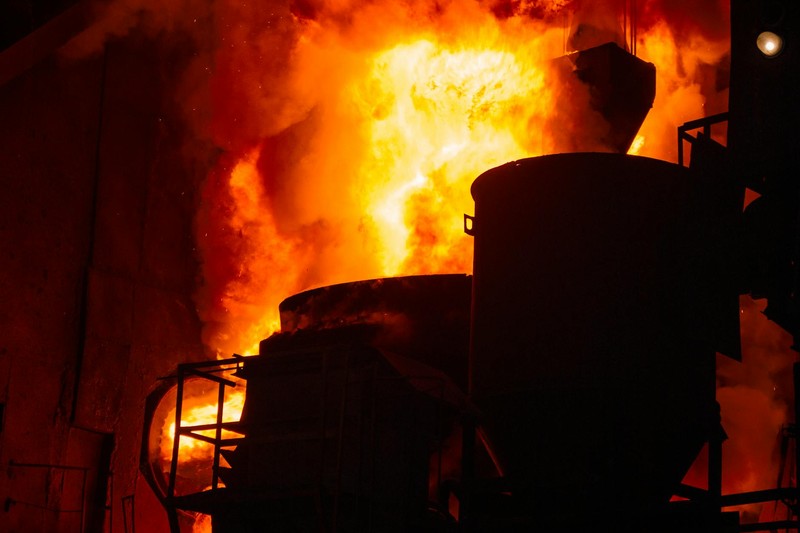
£1 million a day. That is roughly what the British government has been spending to keep a single steel plant in northern England running — one it seized from its Chinese owners last year during a national security panic. On Monday, Prime Minister Keir Starmer confirmed the obvious: London plans to stay.
Starmer announced that legislation would be introduced this week — via the King’s Speech on Wednesday — granting the government powers to take “full ownership of British Steel,” subject to a public interest test. The move would bring the Scunthorpe steelworks, Britain’s last remaining primary steelmaking facility, into public hands for the first time since privatisation in 1988.
The Emergency That Never Ended
The story begins in April 2025, when ministers used the Steel Industry (Special Measures) Act to seize operational control of Scunthorpe from its owner, Jingye, a Chinese conglomerate. The government acted amid fears that Jingye planned to shut down the plant’s blast furnaces — the only ones in Britain capable of producing so-called virgin steel, made from raw iron ore rather than scrap.
Once blast furnaces go cold, restarting them is enormously expensive and technically uncertain. Had the furnaces been starved of fuel, the UK would have permanently lost its ability to make steel from scratch — a capability critical for rail infrastructure, construction, and national security.
Jingye maintained that Scunthorpe was losing £700,000 a day and was no longer financially viable. The government disagreed with the proposed solution.
From Crisis Management to Permanent Ownership
Since last year’s emergency intervention, ministers had been seeking a private buyer willing to take on the loss-making operation. Those talks collapsed. Business Secretary Peter Kyle said on Monday that no acceptable commercial deal could be reached with Jingye on terms that delivered value for taxpayers.
The government’s fallback is full nationalisation. The National Audit Office reported in March that the current supervision regime had already cost £377m in operational funding, raw materials, and worker salaries. At current rates, spending could exceed £1.5bn by 2028. An independent valuation will determine what compensation, if any, is owed to Jingye — a detail that carries its own diplomatic weight, given the already fraught state of UK-China relations.
Industrial Policy Meets Geopolitics
Starmer framed the decision in expansive terms: “This is what an activist state looks like — taking decisions in the national interest.” The rhetoric signals something broader than one plant in Lincolnshire.
The nationalisation fits within Labour’s wider Steel Strategy, launched in March, which aims to meet up to 50 percent of UK steel demand from domestic manufacturers. The plan includes building a new electric arc furnace at Scunthorpe to produce greener steel — a pressing need, given that multiple Whitehall departments now mandate green steel for schools, prisons, and major infrastructure projects that British Steel, in its current configuration, cannot supply. The government also plans to impose new tariffs on imported steel from 1 July.
Oxford Economics analysis found that British Steel directly and indirectly supports £1.1bn in GDP and more than 20,000 jobs across the UK. Its products underpin a further £9.8bn of economic activity across construction, rail, and manufacturing. In northern England alone, the plant supports £680m in GDP and 13,700 jobs.
A Signal Beyond Britain
The significance of this move extends well past Scunthorpe. A G7 government has effectively concluded that a key piece of strategic infrastructure is too important to leave in private hands — let alone Chinese ones. The initial seizure last year was striking enough; the decision to formalise it as public ownership sends a deliberate message about how far London is willing to go to keep critical industrial capacity out of rival hands.
Whether other governments follow suit remains an open question. Across Europe and North America, steel industries face the same pressures: high energy costs, competition from cheaper Chinese exports, and the enormous capital demands of decarbonisation. The British model — emergency seizure followed by nationalisation — is blunt, expensive, and politically risky. But it exists now as a precedent.
The Hard Part Starts Here
Industry body UK Steel welcomed the announcement as providing “vital certainty” for the 2,700-strong workforce but warned that nationalisation was “not an end goal.” The Community and Unite unions offered full support, while calling on the government to ensure publicly funded projects use British-made steel.
The hard truth is that owning a steel plant and running a competitive one are different propositions. The blast furnaces are old, the losses are staggering, and the transition to electric arc technology requires capital on a scale that has already strained Treasury patience. Starmer has bet that strategic sovereignty is worth the price. Now his government has to prove it.
Sources
- British Steel nationalisation plans announced by Starmer — BBC News
- New legislation gives Government power to bring British Steel into public ownership — UK Government
- Starmer confirms plan to nationalise British Steel — Construction Enquirer
Discussion (9)