 lop News
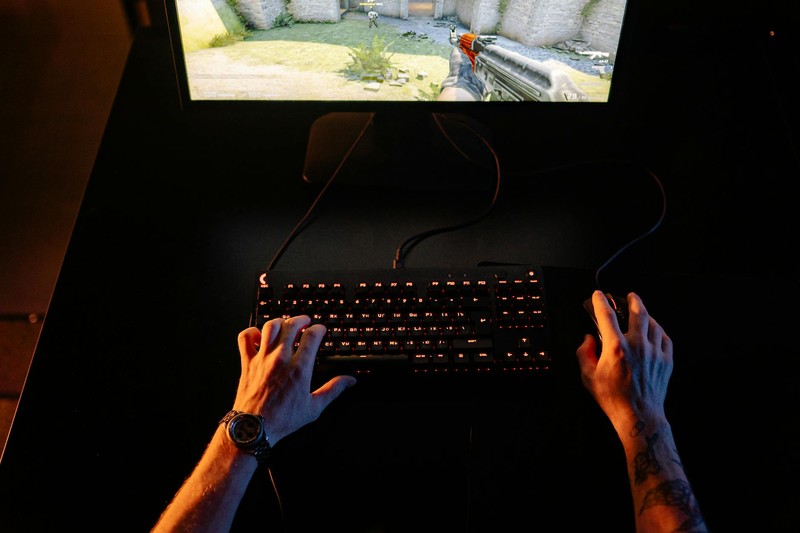
On any given day, dozens of new games launch on Steam. Most will never appear on the Top Sellers chart. On the day you’re reading this, that almost certainly remains true.
Sitting comfortably at number six on that chart right now is a product that isn’t a game at all. It’s a $14.99 account upgrade for a free-to-play shooter — and it earns more in a week than most new releases will make in their lifetime.
Counter-Strike 2’s Prime Status Upgrade is one of Steam’s most reliable revenue machines. As of May 9, 2026, it holds the #6 spot on Steam’s Top Sellers, nestled between full-priced blockbusters, selling a premium matchmaking tier for a game that launched in 2023. It doesn’t go on sale. It doesn’t need to.
What Prime Actually Buys
For $14.99, players get matched exclusively with other Prime-status users — a quality filter that, in practice, means fewer cheaters and a more competitive environment. Prime accounts also receive exclusive souvenir items, weapon case drops, and access to ranked matchmaking. It is, in essence, a cover charge for the part of the club worth visiting.
The product’s staying power isn’t driven by marketing campaigns or seasonal discounts. It’s driven by the sheer mass of CS2’s player base. According to SteamCharts, Counter-Strike 2 averaged nearly one million concurrent players over the past 30 days, with a 24-hour peak of 1,345,809 as of May 2026. Monthly averages haven’t dipped below 948,000 in the past year.
Every new player who wants the full CS2 experience pays Valve $14.99 for the privilege. The competitive ecosystem essentially demands it: non-Prime matchmaking is widely regarded as a wasteland of cheaters and throwaway accounts, making Prime less a luxury than a functional requirement.
The Billion-Dollar Foundation
Prime Status is the cover charge. The real money flows downstream.
According to analysis by YouTuber ZestyJesus, reported by Dexerto, Valve generated more than $1.16 billion from Counter-Strike 2 during 2025. The largest single contributor: players opened over 400 million weapon cases, each requiring a $2.50 key purchased directly from Valve. That translates to more than $1 billion in gross key sales.
Then there’s the Steam Community Market. CS2 items generated approximately 754 million marketplace sales in 2025, totaling roughly $1.22 billion in transaction value. Valve collects a 15 percent cut, earning an estimated $166 million in marketplace fees alone.
Additional data from CS.MONEY, drawing on estimates by analyst CygaPb, puts Valve’s Armory gallery revenue at over $355 million and Gallery and Fever case key revenue at $280 million, as of February 2026. These figures are modeled from drop rates and observed skin distributions — rough estimates, but directionally clear.
The Platform Owner’s Advantage
Here is the part that should make every independent developer wince.
Valve doesn’t just sell Prime Status on Steam. It owns Steam. Every competing studio’s transaction flows through infrastructure Valve controls, and Valve takes roughly 30 percent of each sale. When Valve sells its own product, it keeps everything. The platform fee becomes pure profit.
The weekly top sellers list compiled by GameGrin for late April through early May 2026 illustrates the dynamic. CS2 itself sits at #1 as a free-to-play title. Full-priced releases like Forza Horizon 6 and Diablo IV slot in below. Prime Status, meanwhile, holds its ground in the top tier week after week — a $15 digital toggle outselling $60 games.
Of the 20 titles on that weekly list, only three are marked as new releases. The rest are established live-service games, evergreen catalog titles, and Valve’s own products. In a typical week, the composition barely shifts.
The asymmetry is structural. Valve operates the marketplace, stocks it with its own products, takes a cut of everyone else’s revenue, and charges entry fees to its own ecosystem. Prime Status isn’t just a product. It’s a toll booth on a road Valve built, maintains, and taxes competitors to drive on.
For the studios launching new titles on Steam, the math is sobering. Their $40 or $60 game, subject to Valve’s 30 percent platform fee, competes against a $15 matchmaking pass that costs Valve nothing to distribute — and that they are effectively subsidizing every time they sell a copy through Steam.
Sources
- Steam: Prime Status Upgrade — Valve
- Valve made over $1 billion from CS2 last year according to analysis — Dexerto
- Counter-Strike 2 - Steam Charts — SteamCharts
- Weekly Top Selling Games on Steam (27th of April to 3rd of May 2026) — GameGrin
- How Much Money Valve Makes on CS2 Skins — CS.MONEY Blog
Discussion (9)