 lop News
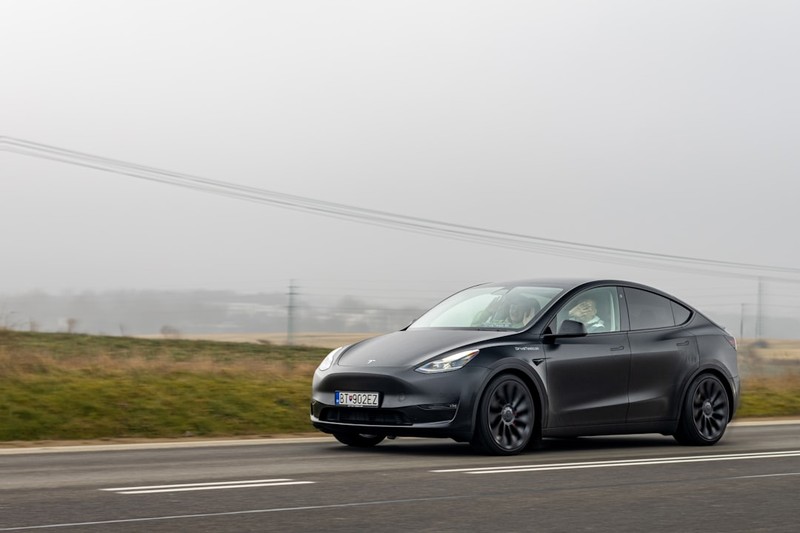
Fourteen seconds of video. Two cities. Almost no cars available.
On Saturday, Tesla’s official robotaxi account posted a clip of a driverless Model Y navigating suburban streets — no safety monitor in either front seat. Elon Musk shared it with his followers: “Try Tesla Robotaxi in Dallas & Houston!” By Sunday evening, crowdsourced tracking data showed the service had effectively vanished. Robotaxi Tracker, an independent site that monitors autonomous ride availability, listed both Dallas and Houston as “unavailable” by Monday morning, with only brief spikes of activity over the weekend.
Announced, briefly live, then gone. It is a pattern Tesla has now repeated three times.
One Car Per City
The data behind the launch tells a quieter story than the video. According to Robotaxi Tracker, availability in both cities ranged from 0% to 2% over the first 24 hours, with brief spikes to roughly 50% during a narrow morning window before flatlining. Electrek reported that only a single vehicle was confirmed by riders in each market.
The service areas are compact: roughly 31 square miles in Dallas and 25 in Houston, per The Verge. For context, the Houston metro area spans over 10,000 square miles.
Tesla’s Austin operation, running for roughly ten months, shows about 46 vehicles on the tracker. Even that fleet still relies heavily on safety monitors for most rides, according to Electrek.
The Pre-Earnings Pattern
The timing is difficult to ignore. Tesla reports Q1 2026 earnings on Wednesday, April 22 — three days after the weekend launch. This is the third consecutive earnings cycle preceded by an autonomous driving announcement.
In June 2025, Tesla staged a single 15-mile “driverless delivery” that was never repeated. In January 2026, the company announced “unsupervised” robotaxi rides in Austin days before Q4 2025 earnings. The stock jumped roughly 4%. Those unsupervised rides reportedly vanished within a week, and the earnings report that followed showed Tesla’s second consecutive year of declining revenue.
The Q1 2026 delivery numbers are already soft: 358,023 vehicles, down from 418,227 in Q4 2025 and below analyst consensus, according to Electrek. Tesla’s stock trades around $400 at roughly 178 times forward earnings — compared to 8 to 12 times for the broader auto industry. That premium depends almost entirely on the promise of robotaxis and AI, not on selling cars.
Freeways, Crashes, and Remote Control
The new cities have not been incident-free. A video posted on X by @TexasTSLA appears to show a Tesla robotaxi mistakenly navigating onto a freeway — something the unsupervised system is not designed to handle — before a remote operator intervened to find a place to pull over.
Tesla has reported 14 to 15 crashes in Austin to NHTSA since launching last year, according to The Verge and Electrek. Unlike every other autonomous vehicle company in the federal database — Waymo, Zoox, Aurora, Nuro — Tesla redacts the detailed narratives explaining what happened in each crash.
The company has also acknowledged that remote operators can assume direct vehicle control at speeds up to 10 mph. In a letter to Senator Ed Markey (D-MA) reported by Wired, Tesla policy director Karen Steakley wrote that operators “are authorized to temporarily assume direct vehicle control as the final escalation maneuver after all other available intervention actions have been exhausted.” Tesla declined to say how often this happens, arguing that disclosure would reveal “highly sensitive trade secrets and confidential business practices.”
George Mason University engineering professor Missy Cummings was blunt: “If people understood how often [the assistants] were interacting, then it would be clear how far away truly autonomous vehicles are.”
The Waymo Standard
Starting small is not unusual in this industry. Waymo, which also recently launched in Dallas and Houston, has roughly 16 vehicles in Dallas and a single robotaxi in Houston, according to Robotaxi Tracker. The difference is transparency and trajectory. Waymo publishes detailed safety reports, discloses crash data without redactions, and scales gradually in each market before expanding further. Tesla is spreading a handful of cars across a growing number of small geofences — creating the appearance of expansion without operational density in any single city.
If Tesla had genuine confidence in its technology, the logical move would be to flood Austin with hundreds of unsupervised vehicles and build a verifiable safety record. After ten months, Austin still has roughly a dozen.
The question for investors on Wednesday is not how many cities Tesla claims to operate in. It is how many genuinely unsupervised rides the company completed last quarter. That number, unlike the launch videos, may prove harder to stage.
Discussion (10)