 lop News
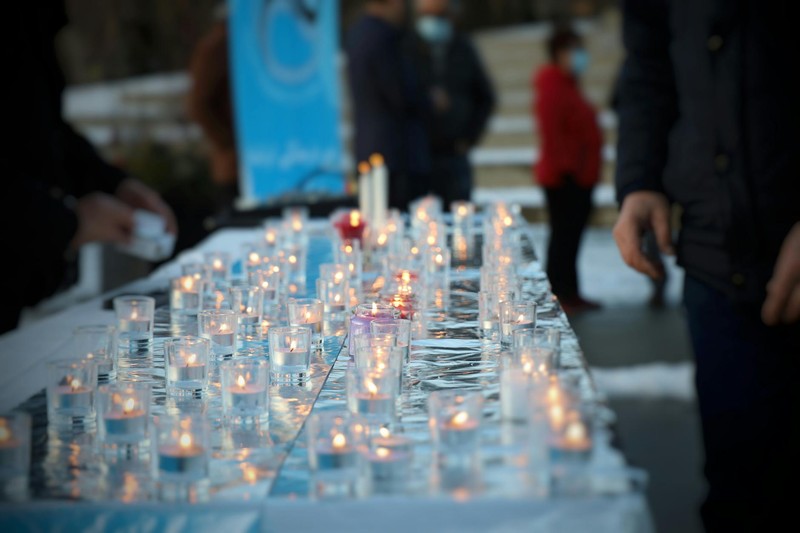
Almina Agaoglu was eleven years old. For more than two weeks, she lay in a hospital in southern Türkiye, holding on after a boy walked into her school carrying five firearms and shot her and her classmates. On Monday, she died, according to the private Turkish broadcaster NTV. Her death brings the toll from the April 15 shooting in Kahramanmaras province to ten.
Nine students between the ages of ten and eleven, along with one teacher, are now dead. The attacker, a 14-year-old boy, died at the scene. Authorities said he brought five firearms to the school and was the son of a former police inspector. His father has been arrested.
The Kahramanmaras shooting was not the only school attack Türkiye endured that week. A day earlier, on April 14, a former student walked into his old high school in the southeastern province of Sanliurfa and opened fire, wounding sixteen people. He took his own life when police arrived.
Two school shootings. Two consecutive days. Two provinces. For a country where this kind of violence in schools is not a recurring feature of public life, the events have forced a confrontation with something unfamiliar and terrifying.
A child with five firearms
The details have sharpened public anger. A 14-year-old boy did not simply find a gun. He brought five of them to a school. They came from the home of his father, a former police inspector — a man trained to understand exactly how dangerous unsecured weapons can be.
How a teenager assembled that arsenal, transported it, and entered a school without detection are now central questions. The father’s arrest suggests authorities see negligence at minimum. Whether anyone beyond the family will be held responsible remains unclear.
The Sanliurfa shooting raises its own set of questions. A former student returning to a school he once attended, armed and intent on harm, suggests gaps in building security and in monitoring individuals who may pose a threat. That the two attacks occurred on consecutive days — though apparently unconnected — has compounded the sense that something fundamental has broken.
Political fallout
The attacks have provoked sustained public outrage, and the political response has begun. President Recep Tayyip Erdogan dismissed a deputy education minister — a signal that the government holds the education system partly responsible for security failures at schools.
Erdogan also announced that the government would introduce new measures including restrictions on gun ownership, though no specific legislation has been detailed. The promise of tighter gun laws, if kept, could represent a meaningful shift. The gap between announcement and action, however, is where policy commitments often stall.
A grief without precedent
Türkiye has no established pattern for responding to this kind of violence in its schools. Countries that have experienced repeated school shootings have, over time, developed familiar responses — the vigils, the political fights, the arguments about causes and solutions. Türkiye has no such template. The grief is raw, in part, because there is no ritual for it.
The victims were ten and eleven years old. Nine students and their teacher, shot on an ordinary school day. A girl who survived for three weeks before dying in a hospital bed. In Sanliurfa, sixteen wounded teenagers. The scale is staggering in any context. In a country that has not lived through this kind of violence in its schools, it has shaken assumptions about where safety begins and ends.
What comes next
No motive has been publicly disclosed in either shooting. Investigations are ongoing.
Almina Agaoglu’s death means the Kahramanmaras toll may still not be final — other injured victims could yet succumb. The number will settle eventually. The questions it has raised — about guns, about security, about institutional failure — will take far longer to answer.
Türkiye is now a country that has experienced school shootings. That fact cannot be undone, and it cannot be explained away as something that happens elsewhere. What the nation does with this recognition — whether it leads to tighter gun laws, better school security, or something else entirely — is the story that follows.
Sources
- Death toll from Türkiye school shooting rises to 10 — Channel News Asia
Discussion (9)