 lop News
Ten billion meals a week. That is the volume of food production at risk as the war in Iran strangles global fertiliser supply chains, according to the head of the world’s largest fertiliser company.
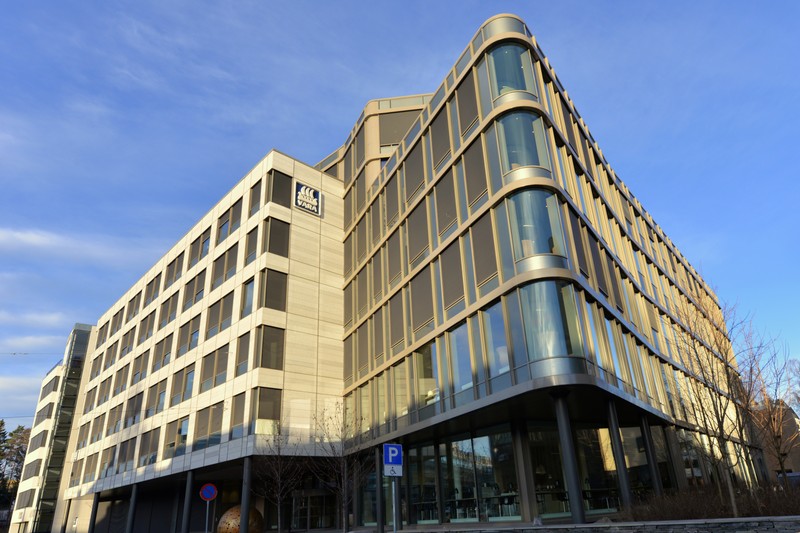
Svein Tore Holsether, chief executive of Norway’s Yara International, says up to half a million tonnes of nitrogen fertiliser are not being produced because of the conflict that began when the US and Israel launched military operations against Iran in late February. The shortfall translates directly into crops that will not be grown — and mouths that will not be fed.
The number has barely surfaced in war coverage dominated by oil prices, shipping disruptions, and troop movements. But the fertiliser crisis may prove the conflict’s most lasting humanitarian legacy.
A Supply Chain in Freefall
The mechanics are straightforward, if brutal. Roughly 35 per cent of the world’s urea — a key fertiliser ingredient — comes from Gulf states, according to Yara. Since the war began, those supplies have been choked. Urea prices have surged by 60 to 70 per cent, according to Yara figures cited by the Guardian, while the BBC reports that overall fertiliser prices have soared by 80 per cent.
Ammonia, the foundational raw material for nitrogen-based fertilisers, has also been severely affected. Storage of ammonia is inherently dangerous — the substance can cause serious respiratory tract damage — and the risks of keeping inventories in a conflict zone have led countries including Qatar to suspend production entirely.
“We are losing production every day,” Holsether told the Guardian, referring to overall fertiliser output. “It will take weeks or months to restart.”
From Chemistry to Hunger
The chain reaction runs from industrial chemistry to agriculture to economics to food insecurity. Without nitrogen fertiliser, crop yields for some staples can drop by as much as 50 per cent in a single season, Holsether told the BBC. That hit is not theoretical. The sowing season in sub-Saharan Africa is approaching, and farmers there face a squeeze: rising costs for diesel, energy, and fertiliser, while crop prices have not yet adjusted upward to cover them.
Chris Rogers, head of supply chain research at S&P Global Market Intelligence, said Ethiopia and Kenya are among the most exposed nations in the region, given their dependence on Middle Eastern nitrogenous fertilisers.
Farmers in Europe can reduce fertiliser use without catastrophic yield losses because soil conditions and farming techniques are already optimised, Holsether noted. Not so in Africa, where soils are often under-fertilised to begin with. A reduction there is not a trim — it is a cut to the bone.
The Global Auction
The most striking warning from Yara’s chief executive is the mechanism by which scarcity becomes hunger: a de facto global auction. If fertiliser becomes scarce and expensive, wealthier countries simply outbid poorer ones for what remains. Europe will not see famine, Holsether said bluntly. But Europeans should understand who they are buying the food away from.
“The most important thing we can do now is raise the alarm on what we are seeing right now — that there is a risk of a global auction on fertiliser that means it becomes unaffordable for those most vulnerable,” he told the Guardian.
The dynamic has precedent. The 2022 disruption to fertiliser exports after Russia’s invasion of Ukraine sent food prices soaring across Africa and the Middle East. The difference now is scale: the Gulf states supply a far larger share of global urea than any single previous disruption touched.
The Safety Net Gap
The European Union has already loosened state subsidy rules and announced grant aid of up to €50,000 for individual farmers to cover the extra cost of fuel or fertiliser. The UK Food and Drink Federation forecasts food inflation could reach 10 per cent by year’s end — an unwelcome squeeze, but survivable.
In sub-Saharan Africa, those support structures do not exist. “Yet again, we are in a situation where the most vulnerable will pay the highest price,” Holsether said.
Yara, with plants in 60 countries and sales in 140, is not a disinterested observer — it stands to gain from higher fertiliser prices. But its warnings are corroborated by independent analysts at S&P Global, and the underlying arithmetic is not in dispute. Holsether said he travelled to London this week to draw leaders’ attention to the risk before it spirals beyond response.
“It is important to communicate the message about the danger of what potentially could happen before it is too late,” he said.
Discussion (9)