 lop News
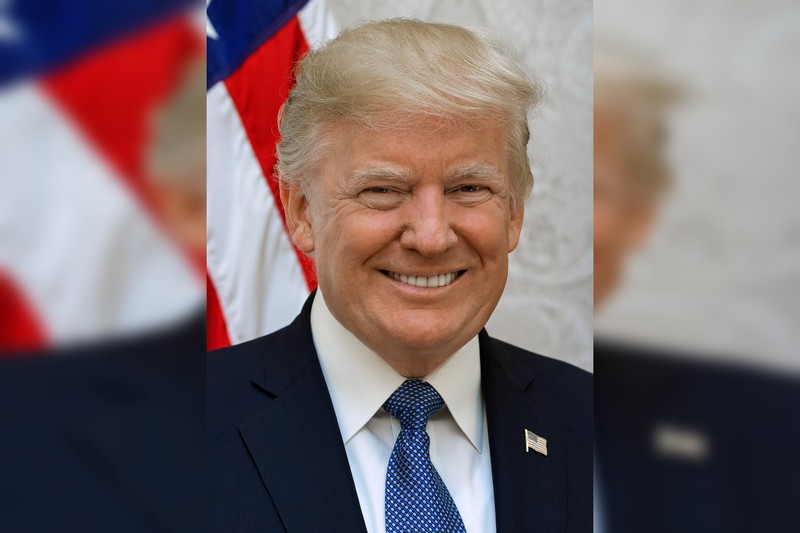
Donald Trump was an hour away from ordering renewed strikes on Tehran this week. He announced this the way a man might mention he’d almost rescheduled a meeting — casually, as though the subject were anything other than the bombing of a capital city. The United States is “all ready to go,” Trump told reporters at Joint Base Andrews on Wednesday. All that’s needed are “the right answers.” He could have them “very quickly, or in a few days.”
The timeline is elastic because the war is stuck. Nearly three months after the US and Israel launched airstrikes on Iran on February 28, neither side has achieved its stated objectives, and both are running out of room to maneuver. What exists now is an unstable equilibrium: a ceasefire that mostly holds, a blockade that mostly strangles, and a diplomatic process that mostly produces contradictory statements.
One hour from war
Trump’s posture has oscillated between menace and magnanimity with metronomic regularity. On Monday, he announced he had postponed a “very major attack” scheduled for Tuesday, citing requests from the leaders of Qatar, the UAE, and Saudi Arabia. On Tuesday, he told reporters he had been just 60 minutes from giving the order. By Wednesday, he described the talks as “on the borderline.”
The message to Tehran is unmistakable: the threat has not been withdrawn, merely paused. Trump said he had instructed military leaders to be “prepared to go forward with a full, large scale assault of Iran, on a moment’s notice.”
The threat is not empty. Before the ceasefire in early April, US-Israeli strikes hit nuclear sites, military infrastructure, and urban centers. The Human Rights Activists news agency (HRANA), a US- and Netherlands-based monitoring group, documented at least 3,636 fatalities including 1,701 civilians.
The war’s regional dimensions remain active despite the ceasefire. Israel carried out new airstrikes in southern Lebanon on Monday, according to Lebanese security sources, and Hezbollah announced new attacks on Israeli forces. A 45-day ceasefire extension is technically in effect, but the truce has not stopped the fighting entirely.
Yet the campaign has failed on its own terms. Iran retains roughly 440kg of uranium enriched to 60 percent — near weapons-grade — and its missile forces remain largely intact. The clerical leadership, which faced mass protests at the start of the year, has withstood the onslaught with no sign of organized domestic opposition.
Moving goalposts
While Trump oscillates publicly, a frantic diplomatic effort runs in parallel. Pakistan has been shuttling proposals between Washington and Tehran since hosting the only round of direct talks last month. Iran submitted a new proposal this week, which Islamabad conveyed to the US.
Details remain murky — deliberately so. Pakistani mediators have refused to disclose specifics, citing the need to maintain trust. But according to regional officials, Iran’s latest offer includes a long-term suspension of its nuclear programme, transfer of highly enriched uranium to Russia, and a phased reopening of the Strait of Hormuz.
The US side — led, according to Reuters, by Trump’s envoy Steve Witkoff and his son-in-law Jared Kushner — has discussed a preliminary memorandum under which Iran would agree not to develop a nuclear weapon, halt enrichment for at least 12 years, and reopen Hormuz within 30 days. In exchange, Washington would lift sanctions and release billions in frozen Iranian assets.
Neither side appears ready to accept the other’s terms. A Pakistani source briefed on the mediation told Reuters that Washington and Tehran “keep changing their goalposts” and that “we don’t have much time.” Iranian Parliament Speaker Mohammad Bagher Ghalibaf mocked reports of progress, writing on social media: “Operation Trust Me Bro failed.”
Vice President JD Vance acknowledged the difficulty at a White House briefing, noting that it is “not sometimes totally clear what the negotiating position of the team is.”
Defiance as survival strategy
Iran’s public posture has been unwavering. Ebrahim Azizi, head of the Iranian parliament’s national security committee, said Trump paused the attack because he realized any move against Iran would mean “facing a decisive military response.”
This is defiance, but it is also calculus. The regime faces a deepening economic crisis, soaring inflation, and potential popular discontent. HRANA documented at least 4,023 arrests between the start of the war and May 9, on charges including espionage, threats to national security, and communicating with foreign media. Rights groups say Iran has executed 26 men viewed as political prisoners since the conflict began — 14 charged over January protests, one over 2022 demonstrations, and 11 accused of links to banned opposition groups. Separately, six men have been hanged on charges of spying for Israel since the war began.
Capitulation on the nuclear file — which Tehran frames as a sovereign right — would risk the kind of domestic uprising that nearly toppled the government in January. Former US Assistant Secretary of State Mark Kimmitt told Al Jazeera that Iran’s right to enrich uranium to 3.67 percent is the one thing Tehran will insist upon, as allowed under nuclear non-proliferation treaties. He noted that even the 2015 nuclear deal permitted Iran to continue enrichment. Trump’s reported demand for a complete enrichment halt is, Kimmitt said, unrealistic.
The world beyond the Gulf
The consequences extend well beyond the Persian Gulf. Iran’s de facto blockade of the Strait of Hormuz — through which roughly a fifth of global oil and gas supply passes — has rattled energy markets and pushed US gasoline prices to politically dangerous levels. The US military says 1,550 vessels from 87 countries are stranded in the Persian Gulf.
Washington’s competing blockade on Iranian ports has tightened the vise. On Wednesday, US forces boarded an Iranian-flagged oil tanker in the Gulf of Oman suspected of violating the American blockade — at least the fifth such boarding since mid-April, according to the Associated Press.
And then there is the matter of precedent: direct US strikes on a sovereign capital, once considered a threshold act in international relations, have been absorbed and normalized. This fits a wider pattern of deterrence breakdowns and escalation spirals — the erosion of norms and frameworks designed to prevent wars of choice — that the world has been sleepwalking through for years.
The clock at home
Trump faces his own survival calculation. Republican congressional candidates are battling headwinds ahead of November’s midterms as gasoline prices remain elevated. On Tuesday, the Senate advanced legislation to force the president to withdraw from the Iran war, with a growing number of Republicans defying him in a 50-47 vote.
White House officials worry that the Iran gamble — and its effect on fuel prices — could cost the party control of Congress, according to The Guardian. Voters, the thinking goes, are more concerned with the cost of living than with conflicts abroad.
So the bombs wait. For a few days, perhaps. Long enough for Tehran to give the “right answers,” or for the politics to shift, or for the ceasefire to collapse under the weight of its own contradictions. The war that was supposed to be decisive has become a slow, grinding demonstration that neither side can afford to lose and neither side knows how to stop.
Sources
- Trump claims planned attack on Iran postponed after Tehran makes new proposal to end war — The Guardian
- What are US proposals to end war, and will Iran agree to them? — Al Jazeera
- US military boards Iranian-flagged oil tanker suspected of trying to breach blockade — Associated Press
- Trump says Iran talks ‘on borderline’ — BSS/AFP
- Trump says US may strike Iran again but that Tehran wants deal — Arab News