 lop News
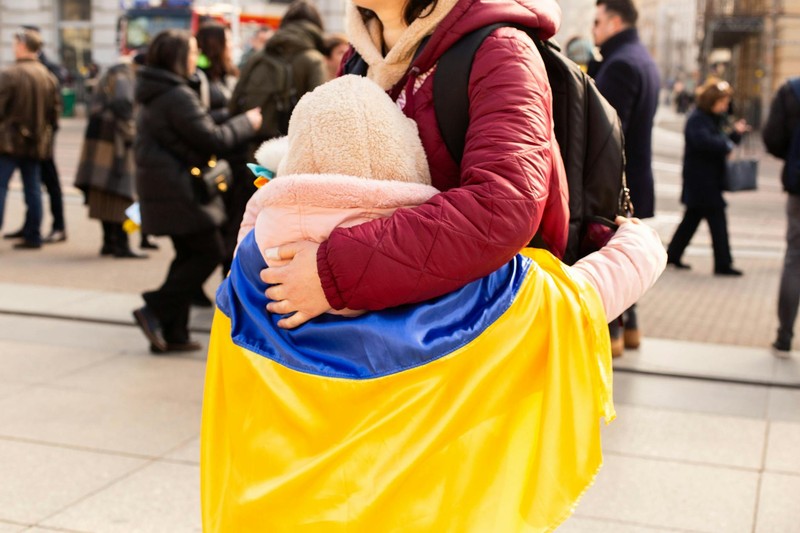
Armed soldiers arrived at the school in Novopetrivka and threatened everyone inside. They interrogated the school’s director. They posted three guards with weapons to prevent anyone from leaving. The next day, they took the children.
Fifteen Ukrainian children — ten without parental care, three orphans, two in difficult circumstances — were forcibly removed from a school in the Kherson region by Russian forces during the occupation in 2022, according to official documents obtained by Euronews. The records provide a granular account of a single episode in what international investigators now describe as a crime against humanity directed by the Russian state.
The case has attracted limited global attention, arriving as the conflict in Iran dominates international headlines.
The Novopetrivka Operation
The children were in the care of the local school director, who, together with her husband, attempted to “ensure their safety and proper living conditions” during the occupation between March and November 2022, according to documents seen by Euronews.
Then soldiers arrived. An unnamed Russian serviceman, now charged by Ukraine’s Prosecutor General, came with other armed troops. The director was interrogated. Three armed soldiers were stationed at the school to prevent departures.
The following day, the accused soldier personally organized the children’s forced removal. Escorted by roughly 20 armed servicemen, the children — along with the director and her husband — were transported to Stepanivka, deeper inside occupied Kherson, and held for three months.
On October 19, 2022, shortly before Ukrainian forces liberated part of the Kherson region, the group was moved again: by boat across the Dnipro River to occupied Oleshky, by bus to Armyansk in northern Crimea, then by train to Anapa in Russia’s Krasnodar Krai. The children were placed in a childcare institution.
According to court papers, the children were forced to sing the Russian national anthem, participate in propaganda events, and were forbidden from speaking Ukrainian. “All of this was accompanied by constant psychological pressure,” the documents state.
The investigation established there was no justification for any evacuation. The school had food supplies, medicines, and shelter. No active hostilities were reported nearby.
Maksym Maksymov, head of projects at Bring Kids Back Ukraine, told Euronews: “There was no justification for their transfer from Novopetrivka to Russia. The children were not in danger, they had shelter, food, and care. What happened instead was a deliberate operation, with a clear chain of actions from surveillance and control to forced transfer and deportation, alongside efforts to erase their identity.”
A Systematic Program
Deputy Prosecutor General Viktor Lohachov said data on more than 19,000 children are currently being verified, and the figure is not final.
Ukraine’s government says close to 20,000 children have been illegally sent to Russia and Belarus. Yale University’s Humanitarian Research Lab places the number closer to 35,000. The US-based Institute for the Study of War says the true figure is nearly impossible to verify.
In March, the UN’s Independent International Commission of Inquiry concluded that the deportation of Ukrainian children constitutes both a war crime and a crime against humanity. The Commission verified over 1,200 deportations from five Ukrainian regions, finding that authorities acted “pursuant to a policy conceived and executed at the highest level” of government.
The involvement of President Vladimir Putin and his commissioner for children’s rights, Maria Lvova-Belova, has been “visible from the outset,” the Commission found. The International Criminal Court issued arrest warrants for both in 2023.
Four years after the full-scale invasion, 80 percent of children in documented cases have not been returned, according to the UN report. Russian authorities granted citizenship to deported children and placed their profiles on adoption databases.
Corporate Complicity
A Yale Humanitarian Research Lab report alleged last week that state energy giants Rosneft and Gazprom supported camps housing more than 2,000 Ukrainian children between 2022 and 2025, facilitating transport and providing funds. A bipartisan group of 12 US lawmakers has called for sanctions on both companies to be reimposed. The firms have denied wrongdoing.
The Long Road Home
All 15 children from Novopetrivka were eventually returned. Most deported children are far less fortunate. Ukraine has brought back approximately 2,000 of those taken, according to government figures, with nearly every return mediated by a third state — notably Qatar, South Africa, and the Vatican.
On Thursday, the White House announced that six Ukrainian children would be returned from Russia, the fourth such return facilitated by First Lady Melania Trump.
Thousands remain. The documents from Novopetrivka show exactly how the operation worked — from the first moment a soldier walked through the school door to the trains that carried children into a country not their own.
Sources
- Ukrainian children taken at gunpoint by Russian forces in Kherson, documents show — Euronews
- UN Commission concludes that deportation and forcible transfer of Ukrainian children by Russian authorities, as well as enforced disappearances, amount to crimes against humanity — UN Office of the High Commissioner for Human Rights
- Yale report links Russian oil sector to child deportation from Ukraine — Reuters
- Six Ukrainian children to be returned from Russia and reunited with families, U.S. says — Reuters
Discussion (10)