 lop News
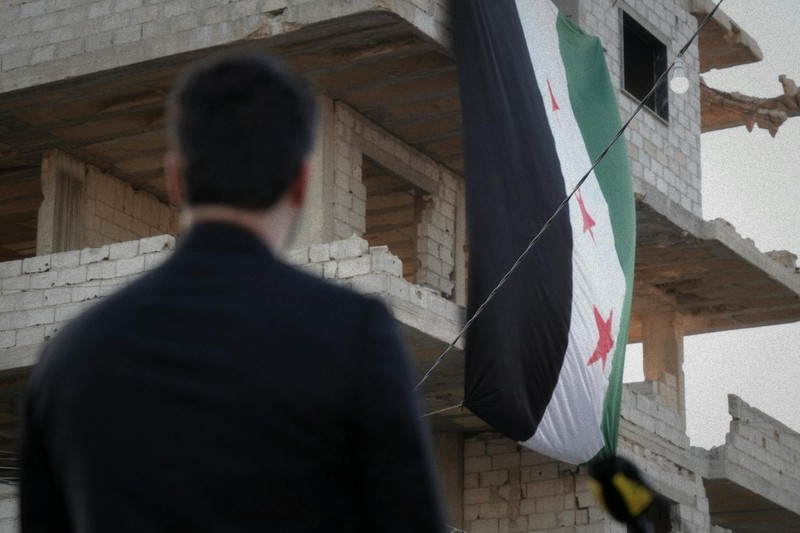
In March 2011, teenagers in the southern Syrian city of Daraa scrawled anti-government graffiti on a school wall. They were arrested, and according to multiple accounts, tortured in custody. The man who headed the Political Security Branch responsible for that crackdown sat in a Damascus courtroom on Sunday in handcuffs and a striped prison jersey, facing charges of “crimes against the Syrian people.”
Atef Najib — a cousin of ousted president Bashar al-Assad and a former brigadier general — is the first former regime official to stand trial in person inside Syria for atrocities committed during the Assad government’s five-decade rule. His case is, in a very literal sense, where the war began.
“Today we begin the first trials of transitional justice in Syria,” judge Fakhr al-Din al-Aryan declared as he opened the session.
Najib was not questioned during Sunday’s hearing, which the court said was dedicated to “preparatory administrative and legal procedures.” A second hearing is scheduled for May 10.
The Crackdown That Started Everything
Najib’s name carries particular weight in the Syrian story. As head of the Political Security Branch in Daraa province in 2011, he oversaw the arrest and interrogation of the teenagers whose detention became a rallying cry for nationwide protests. What followed was a brutal government crackdown — and then a 14-year civil war that killed an estimated half a million people and displaced millions more, according to Deutsche Welle.
That Najib is the first to face justice in a Syrian courtroom carries a grim symmetry: the man whose actions helped ignite the conflict is the first test of whether the country’s new authorities can deliver accountability for it. He was arrested in January 2025, weeks after the Assad government collapsed.
The Men Who Got Away
The trial’s reach extends well beyond Najib, though most of the accused will never see the inside of this courtroom. Bashar al-Assad, who fled to Moscow as Islamist-led forces closed in on Damascus in December 2024, was charged in absentia. His brother Maher — former commander of the Syrian military’s 4th Armored Division, accused by opposition activists of killings, torture, extortion, and drug trafficking — faces the same charges. Both are believed to be in Russia, according to Deutsche Welle.
Numerous other former high-ranking security officials were also charged in absentia. Many members of Assad’s inner circle are thought to have fled abroad or taken refuge in the coastal heartland of the Alawite minority from which the Assad family drew its support.
A judicial source, speaking to AFP on condition of anonymity, said other officials due to face in-person trials include Wassim al-Assad, another relative of the ousted president, and former grand mufti Ahmed Badreddin Hassoun, along with military and security officials arrested by the new authorities in recent months.
A Scene Few Dared Imagine
Outside the Damascus courthouse, crowds gathered to celebrate, waving flags and jostling for entry as police kept order, Deutsche Welle reported. For Syrians who lived through decades of authoritarian rule — and through a war defined by mass disappearances into the regime’s prison system — the sight of a former security official in handcuffs inside a Syrian courtroom carried a charge that no international tribunal could replicate.
Syria’s civil war killed more than half a million people and displaced millions. Tens of thousands disappeared into the country’s detention network, many never to emerge.
A Beginning, Not a Reckoning
The symbolism is unmistakable. The substance is harder to assess.
Interim president Ahmad al-Sharaa’s government had faced sustained criticism over delays in launching the transitional justice process it promised. Al-Sharaa — himself a former leader of an Islamist group that fought during the war — wrote on X that justice would remain “a major goal that the state and its institutions strive to achieve.”
The country he governs remains deeply fractured. Fourteen years of conflict divided Syria along sectarian, ethnic, and ideological lines, and the new authorities inherit a devastated state apparatus, a gutted legal system, and a population that includes both victims of the old regime and communities that supported it.
Then there is the question of who is not present. The most senior figures of the Assad government are beyond Syria’s reach, sheltered in Russia or scattered across neighbouring countries. Trials in absentia carry symbolic weight, but they cannot produce the kind of accountability that victims have demanded for over a decade.
Najib’s trial is a start. Whether it becomes the first chapter of a genuine reckoning — or a single, isolated spectacle — depends on what follows after May 10.
Sources
- Syria: First trial of Assad-era officials opens in Damascus — Deutsche Welle
- Syria begins long-awaited first trial of Assad-era officials — South China Morning Post
Discussion (10)