 lop News
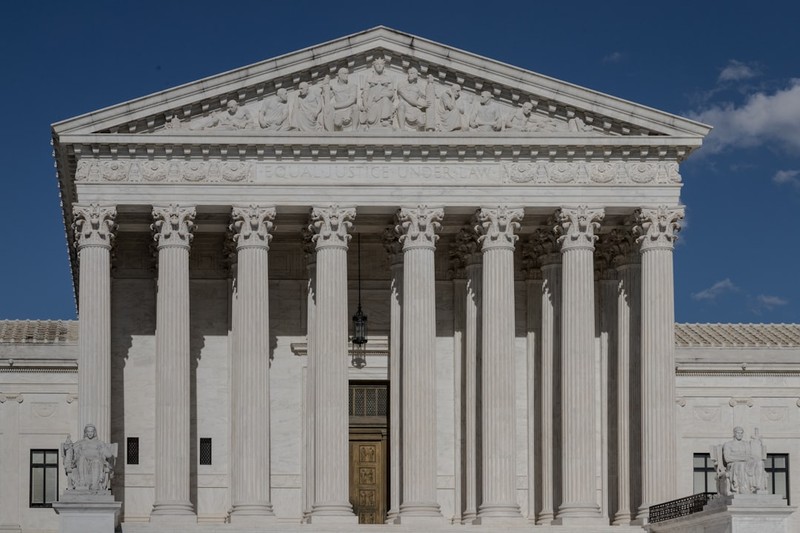
The Voting Rights Act of 1965 still exists. On paper, Section 2 — its core prohibition against racial discrimination in voting — remains good law. The Supreme Court said so explicitly on Wednesday.
Then the court made it nearly impossible to enforce.
In a 6-3 ruling along ideological lines, the justices struck down Louisiana’s congressional map, which had created a second majority-Black district in a state where roughly one-third of residents are African American. Writing for the conservative majority, Justice Samuel Alito called the map “an unconstitutional racial gerrymander” and raised the legal bar for future challenges so high that voting rights attorneys may struggle to clear it for a generation.
The paradox is the point. The court did not repeal Section 2. It reinterpreted the statute into practical irrelevance.
A Standard Built to Fail
At the center of the case, Louisiana v. Callais, was a straightforward question: could Louisiana draw a second majority-Black congressional district to comply with the Voting Rights Act, given the state’s demographics and its history of racially polarized voting?
A lower court had said yes. The state legislature eventually agreed, adopting a new map in 2024 that elected two Black representatives — Democrat Cleo Fields among them — out of six congressional seats.
Alito’s majority opinion did not merely reject this specific map. He rewrote the legal test for proving vote dilution under Section 2. Plaintiffs, he wrote, must now show a “strong inference” that a state “intentionally drew its districts to afford minority voters less opportunity because of its race” — and must produce an alternative map demonstrating the same partisan outcomes.
The practical difficulty is staggering. As Justice Elena Kagan noted in her dissent, this effectively resurrects the very standard Congress rejected in 1982, when it amended the VRA to create an “effects” test precisely because proving discriminatory intent is, in her words, “well-nigh impossible.” Officials rarely announce racial motivations on the record.
Kagan, joined by Justices Sonia Sotomayor and Ketanji Brown Jackson, took the rare step of reading her dissent from the bench — a gesture reserved for profound disagreement. She accused the majority of “eviscerat[ing]” the law and rendering Section 2 “all but a dead letter.”
“Under the Court’s new view of Section 2, a State can, without legal consequence, systematically dilute minority citizens’ voting power,” Kagan wrote.
The Wider Map
The immediate consequences are uncertain. Louisiana’s party primaries are scheduled for May 16, with early voting beginning this Saturday. Whether the state can or will redraw its map before November’s midterms remains unclear.
The broader fallout is not. Election law expert Nicholas Stephanopoulos has estimated that nearly 70 of the 435 congressional districts nationwide are protected by Section 2 challenges. The new standard puts all of them in legal jeopardy.
A wave of mid-decade redistricting is already underway in Texas, California, North Carolina, Virginia, and Missouri — much of it driven by partisan calculation. Wednesday’s ruling gives those efforts fresh legal cover. States that previously drew majority-minority districts to comply with the VRA now face a different calculus: the cost of keeping those districts may be a constitutional lawsuit, while the cost of dismantling them has dropped to nearly zero.
The decision also marks an abrupt reversal. In 2023, the same court upheld Section 2’s protections in an Alabama case, prompting Louisiana and other states to add majority-minority districts. Less than three years later, the court has now effectively overruled itself by reframing the legal framework rather than overturning the precedent outright.
Justice Clarence Thomas, in a concurrence, went further than the majority. He reiterated his longstanding position that Section 2 should never apply to redistricting at all — that racial groups have no entitlement to “roughly proportional representation.” His view, once fringe, is now one justice away from becoming the law of the land.
The Global Signal
The United States has long held itself up as a benchmark for democratic governance, even as its institutions have often fallen short of that claim. Wednesday’s ruling feeds a narrative that is neither new nor uniquely American: the slow, legalistic erosion of minority protections by the very institutions designed to safeguard them.
International democracy monitors have tracked a pattern across continents — courts and legislatures in Hungary, India, and Turkey have used formally legal mechanisms to concentrate power and marginalize opposition communities. The mechanism differs; the trajectory looks familiar.
The White House celebrated the ruling. Spokeswoman Abigail Jackson called it a “complete and total victory” and said “the color of one’s skin should not dictate which congressional district you belong in.” The phrasing is deliberately neutral. The consequence is not: in a state where Black voters are concentrated but politically dispersed, removing the second district returns the congressional map to a 5-1 Republican advantage.
The law survives. Its teeth do not.
Sources
- Supreme Court calls Louisiana’s House map an ‘unconstitutional racial gerrymander’ — NPR
- Supreme Court voids majority Black congressional district in Louisiana, boosting Republican chances — Associated Press via PBS NewsHour
- Supreme Court limits Voting Rights Act — POLITICO
- Supreme Court invalidates Louisiana congressional map over race — Roll Call
- Supreme Court weakens Voting Rights Act in major redistricting case, voiding Louisiana’s congressional map — CBS News
Discussion (9)