 lop News
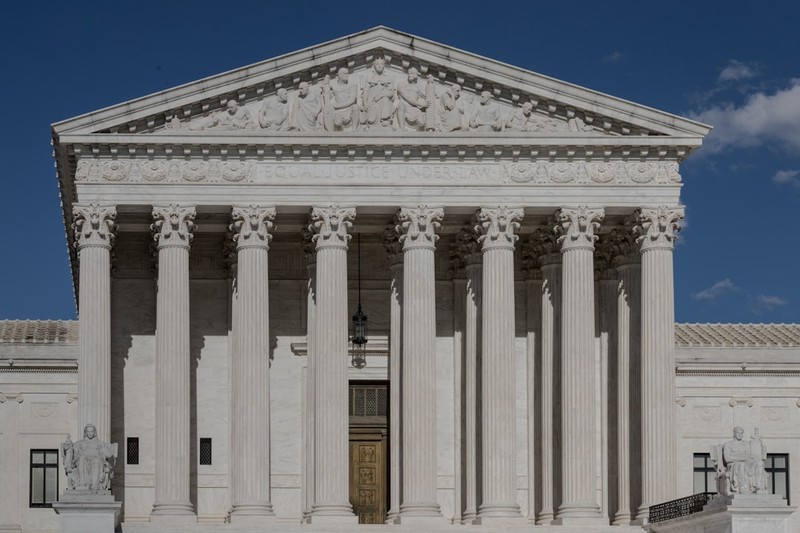
Eight justices, one dissenter, and roughly two dozen state laws suddenly on shaky ground.
In an 8-1 decision in Chiles v. Salazar, the US Supreme Court ruled Tuesday that Colorado’s 2019 ban on conversion therapy for minors discriminates based on viewpoint, violating the First Amendment. Writing for the majority, Justice Neil Gorsuch said the law “censors speech based on viewpoint” and that “the First Amendment stands as a shield against any effort to enforce orthodoxy in thought or speech in this country.”
The court stopped short of striking the law down entirely. Instead, it sent the case back to the 10th US Circuit Court of Appeals with instructions to apply strict scrutiny — the highest standard of constitutional review, and one that few laws survive. The lower court had previously upheld the ban using the far more deferential “rational basis” test. That approach, Gorsuch wrote, was wrong.
The ruling’s reach extends well beyond Colorado. Twenty-three states have enacted bans on conversion therapy for minors, with another four imposing some restrictions, according to the Movement Advancement Project. The decision is expected to eventually make those laws unenforceable, according to AP News.
The Counselor at the Center
The case was brought by Kaley Chiles, a licensed counselor and practicing Christian in Colorado Springs. Chiles, represented by the conservative legal group Alliance Defending Freedom, said she does not practice the discredited physical interventions sometimes associated with conversion therapy. Her sessions involve talk therapy with clients who, she said, want to “reduce or eliminate unwanted sexual attractions” or “grow in the experience of harmony with one’s physical body.”
The Trump administration backed Chiles, urging the court to declare that Colorado’s ban violated free speech rights. No one has ever been sanctioned under the 2019 law, which carried penalties of fines and license suspension.
An Unusual Coalition
The majority included not just the court’s conservative bloc but liberal Justices Elena Kagan and Sonia Sotomayor. Kagan noted that a state could similarly not ban talk therapy designed to affirm a minor’s sexual orientation or gender identity. “Once again, because the State has suppressed one side of a debate, while aiding the other, the constitutional issue is straightforward,” she wrote.
Kagan’s concurrence contained a pointed caveat: a “content-based but viewpoint-neutral law” might survive scrutiny. The problem with Colorado’s ban, she argued, was that it allowed some approaches to discussing sexual orientation and gender identity while prohibiting others. “It does not matter what the State’s preferred side is,” she wrote — a warning that upholding the ban could bless efforts by conservative states to prohibit gender-affirming talk therapy.
The lone dissenter, Justice Ketanji Brown Jackson, warned that the ruling “opens a dangerous can of worms” and “threatens to impair States’ ability to regulate the provision of medical care in any respect.” Jackson emphasized that Chiles was “not speaking in the ether” but “providing therapy to minors as a licensed healthcare professional.”
Gorsuch countered that “medical consensus, too, is not static; it evolves and always has,” noting that major medical groups once classified homosexuality as a mental illness. “A prevailing standard of care may reflect what most practitioners believe today, but it cannot mark the outer boundary of what they may say tomorrow,” he wrote.
The Evidence on Harm
Every major US medical association — including the American Medical Association, the American Psychological Association, and the American Academy of Pediatrics — has condemned conversion therapy as both ineffective and harmful. The AMA rejects the premise that same-sex attraction or nonconforming gender identity are mental disorders, calling the claim unsupported by evidence.
Critics say the practice can cause depression, anxiety, and increased suicide risk, particularly among young people. A 2023 Trevor Project report identified more than 1,300 practitioners still offering conversion therapy across the US. The Trevor Project’s leader, Jaymes Black, called the decision “painful,” warning it “will put young lives at risk.”
Polly Crozier, director of family policy at GLAD Law, struck a defiant note: “This is a dangerous practice that has been condemned by every major medical association in the country. Today’s decision does not change the science, and it does not change the fact that conversion therapists who harm patients will still face legal consequences.”
Colorado Attorney General Phil Weiser called the ruling “wrong” in a social media post, noting that conversion therapy is “condemned by all medical associations.” “That’s not about speech,” he wrote.
What Comes Next
The case returns to the 10th Circuit for strict scrutiny review. Legal observers broadly expect the ban will not survive. Similar challenges in other states are likely to follow.
The ruling also sets the stage for further legal fights. Last year, in a 6-3 decision in a Tennessee case, the same court upheld state bans on gender-affirming medical care for transgender minors. The justices have also heard arguments on whether states can bar transgender athletes from girls’ sports teams, with decisions expected by late June.
The court is drawing a line between what states can regulate as medical conduct and what they cannot suppress as speech. Tuesday’s ruling makes clear where that line falls — at least for talk.
Sources
- Supreme Court rules against Colorado ban on ‘conversion therapy’ for LGBTQ+ kids — AP News
- Supreme Court sides with therapist in challenge to Colorado’s ban on ‘conversion therapy’ — SCOTUSblog
- US Supreme Court strikes down Colorado’s ban on conversion therapy — BBC News
- Supreme Court strikes down conversion therapy ban — Politico
Discussion (9)