 lop News
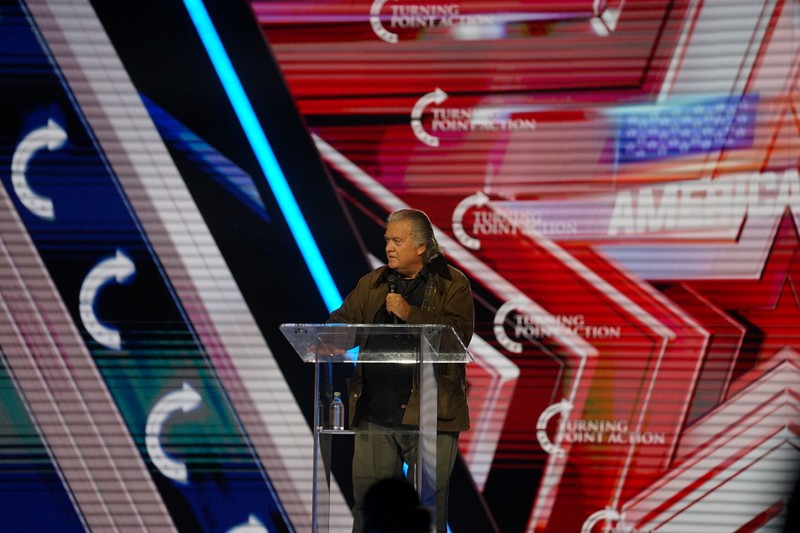
Steve Bannon spent four months in federal prison for refusing to testify before Congress about the January 6 attack on the US Capitol. On Monday, the Supreme Court cleared the way to wipe that conviction off the books — not because new evidence exonerated him, but because the Justice Department asked.
The court, acting without comment, vacated the appeals court ruling that had upheld Bannon’s 2022 conviction for contempt of Congress. The unsigned order sends the case back to the trial court, where the Trump administration has already filed a motion to dismiss the indictment “in the interests of justice.”
The dismissal would be largely symbolic. Bannon, 72, completed his sentence in 2024. But the precedent the case leaves behind — and the manner in which it was achieved — carries consequences well beyond one man’s criminal record.
The Legal Path to Dismissal
Bannon was convicted on two counts of contempt of Congress under a federal statute that criminalizes the “willful” failure to comply with a congressional subpoena. The House Select Committee investigating the January 6 attack had demanded his testimony and documents. Bannon refused both, citing executive privilege — a claim the committee and, at the time, the Justice Department considered dubious, since Trump had fired Bannon from the White House in 2017 and he was a private citizen during the period in question.
The US Court of Appeals for the DC Circuit upheld the conviction. Judge Bradley Garcia, writing for the panel, held that “willfully” under the statute means only that the defendant “deliberately and intentionally refused to comply,” and that Bannon’s “advice of counsel” defense — the argument that he was following his lawyer’s guidance on executive privilege — was, as the court had previously ruled, “no defense at all,” according to SCOTUSblog.
Bannon appealed to the Supreme Court in October 2025. Then the landscape shifted. On February 9, the Trump administration filed a motion to dismiss the indictment at the district court level and, in a brief to the Supreme Court, urged the justices to vacate the DC Circuit’s ruling so the lower court could grant that motion. On Monday, the court did exactly that.
Evan Corcoran, a lawyer for Bannon, welcomed the decision. “It has been one battle after another for five years, but today the Supreme Court vacated an unjust conviction, and in doing so validated a fundamental rule — like oil and water, politics and prosecution don’t mix,” Corcoran said, according to Al Jazeera.
A Pattern of Protection
The Bannon case does not stand alone. The Supreme Court issued a similar order Monday in the case of former Cincinnati city council member P.G. Sittenfeld, convicted of bribery and extortion in 2022, whom Trump pardoned last year. The Justice Department had likewise asked the court to send that case back for dismissal.
The pattern is broader still. Al Jazeera reported that the department’s request to drop Bannon’s case was “one of multiple actions it has taken that have benefited allies and supporters of the Republican president since Trump returned to office last year.” Trump has also pardoned people convicted in connection with the January 6 Capitol riot, as well as political allies facing criminal charges related to efforts to overturn the 2020 election.
The Justice Department brought the original case against Bannon under President Joe Biden. It changed course after Trump returned to the White House in January 2025.
Stakes Beyond Bannon
The mechanism matters more than the man. The executive branch — which originally brought the contempt charges — has now used its prosecutorial discretion to retroactively neutralize a congressional enforcement action. The Supreme Court facilitated this not by ruling on the merits, but by vacating the appellate decision at the administration’s request, removing it as binding precedent.
Contempt of Congress is among the few tools lawmakers have to compel testimony from reluctant witnesses, particularly those tied to the executive branch. The DC Circuit’s ruling had affirmed that “advice of counsel” cannot shield a witness who deliberately ignores a subpoena — a holding that strengthened Congress’s investigative hand.
That precedent is now gone. Not overturned on legal grounds, but erased through a procedural maneuver driven by the party that originally benefited from the subpoena’s defiance.
For future congressional investigations — whether into an insurrection, government spending, or executive misconduct — the calculus has shifted. A subpoena’s force now depends partly on whether the sitting president’s Justice Department wants it enforced. The legislature’s ability to compel information from the executive branch has been a cornerstone of congressional oversight. Monday’s order leaves it thinner.
Discussion (9)