 lop News
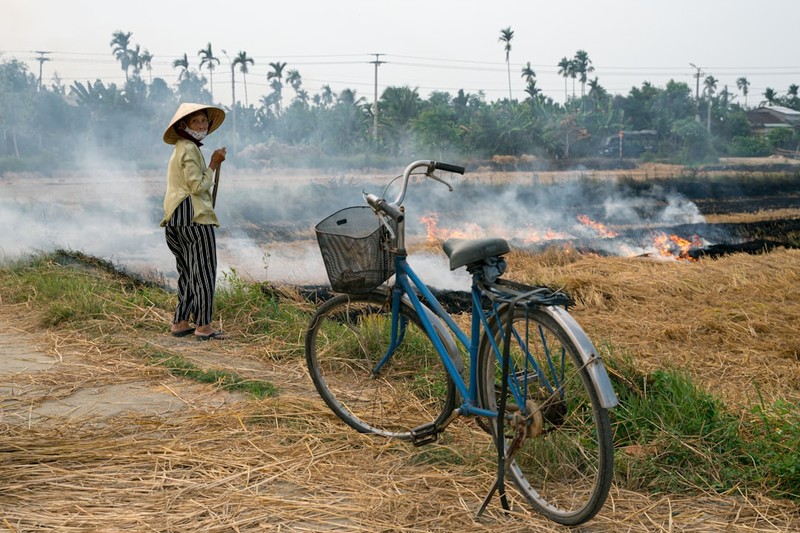
The forecast says less rain. The market says more expensive fertilizer. The farmers who feed billions cannot afford to plant what the world needs to eat.
Climate scientists put the chance of a rare “super El Niño” at one in four — an event where Pacific temperatures surge at least 2°C above normal, suppressing rainfall across South and Southeast Asia. The India Meteorological Department has already forecast a below-normal monsoon for 2026: 92% of the long-period average, which would make it the first below-normal monsoon since 2023. The IMD puts a 35% probability on outright deficient rainfall.
At the same time, the virtual closure of the Strait of Hormuz — now in its seventh week — has cut off a trade route carrying roughly one-third of global seaborne fertilizer. Countries affected by the Iran war account for nearly 49% of global urea exports and 30% of ammonia exports. An American Farm Bureau Federation survey released April 14 found that at least 70% of farmers cannot afford all the fertilizer they need.
Two separate crises, arriving at once. The result is a compound threat to food production that neither would produce alone.
A Monsoon Out of Sync
The southwest monsoon delivers more than 70% of India’s annual precipitation. The IMD’s April 13 forecast, with a margin of error of ±5%, implies roughly 80 centimetres of rainfall against a long-period average of 87 centimetres.
Below-normal rainfall does not guarantee crop failure — past data shows well-distributed rain can sustain output. But pulses and oilseeds, grown largely in rainfed areas, are acutely exposed. Reduced harvests could swell India’s import bill and push food inflation higher, according to Outlook Business. The Reserve Bank of India flagged El Niño as an inflation risk earlier this month.
“It is very concerning because this year is supposed to be a super El Niño, and you are getting into the planting season,” said Gnanasekar Thiagarajan, founder of Commtrendz Research, a commodity futures advisory firm. “This is going to be widespread across South and Southeast Asia. There will be dryness everywhere.”
Thiagarajan said dry conditions were already visible in Kerala, where land is typically prepared during the pre-monsoon months of March through May.
The mechanism is well understood: warm water built up in the western Pacific sloshes east, replacing cold water. In a super event, the eastern Pacific’s cold tongue is essentially erased, pushing temperatures 2 to 3°C above normal, according to Paul Roundy, professor of atmospheric sciences at the University at Albany. NOAA has assessed a 61% chance of El Niño developing by summer. Only five strong events have occurred since 1950 — the last in 2015-16.
Australia Pulls Back
Australia, one of the world’s largest wheat exporters, is already contracting. A Bloomberg survey of nine grains traders projected wheat planting for the 2026/27 crop would fall 7.5% to 11.5 million hectares — the smallest area since 2019. Persistent dryness and shortages of fertilizer and fuel are driving the pullback. Winter-crop sowing has begun nationwide, and farmers are planting less because they cannot secure the inputs they need.
The Fertilizer Squeeze
The fertilizer crisis flows through a single choke point. The Strait of Hormuz carries Persian Gulf exports of urea, ammonia, phosphate fertilizers, and petroleum from major producers including Iran, Qatar, Saudi Arabia, and Egypt. Roughly a third of global seaborne fertilizer trade passes through the strait, according to the United Nations Conference on Trade and Development.
Farm diesel prices in the US have climbed 46% since late February. In the American South, only 19% of farmers managed to prebook fertilizer for the current season. In the Midwest, 67% prebooked — leaving one-third of Corn Belt growers without secured supplies. The same supply constraints are flowing through to Asian and Australian growers at precisely the moment they need inputs most.
Wheat markets are responding. Chicago wheat contracts were on track for their biggest weekly gain since February, up roughly 5%, with hard red winter wheat near its highest since June 2024, according to the Economic Times. The USDA reported 68% of US winter wheat area remains in drought. Dry weather is also stressing the Black Sea region and parts of Europe.
What Convergence Looks Like
A super El Niño would be damaging in any year. The 2015-16 event contributed to crop failures, forest fires, and coral bleaching across the tropics — but it arrived when fertilizer was affordable, energy markets were stable, and the Strait of Hormuz was open.
This time, major wheat-producing regions in Australia and the Black Sea are simultaneously stressed by drought. The countries most dependent on monsoon rainfall face their weakest forecast in three years. And the inputs that might compensate — fertilizer, diesel, irrigation fuel — are being priced beyond reach by a conflict an ocean away from the fields that need them.
President Trump has spoken positively about a permanent ceasefire with Iran. The strait remains closed. The planting window narrows.
Sources
- Asia braces for food shortages as ‘super El Nino’, Iran war effects collide — South China Morning Post
- Is a Super El Niño Coming in 2026? Here’s What Scientists Are Saying — Time
- Iran war is driving up fertilizer costs. Will you pay more for food? — USA Today
- Australia Wheat Plantings Seen at Seven-Year Low on War, Weather — Bloomberg
- IMD forecasts 2026 monsoon at 92% of LPA, below normal levels — Outlook Business
- Wheat Rallies on Weather Woes and Iran-Linked Fertilizer Crunch — Economic Times
Discussion (9)