 lop News
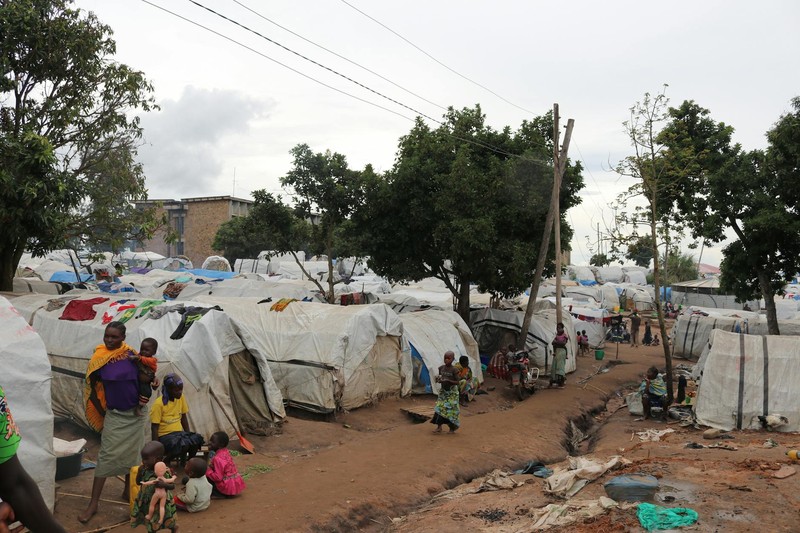
In a Berlin conference room on Wednesday, diplomats announced €1.3 billion in fresh pledges for Sudan — a country where, going into the conference, just 16 percent of this year’s humanitarian funding need had been met.
Three years after fighting erupted between the Sudanese Armed Forces and the paramilitary Rapid Support Forces, the scale of Sudan’s catastrophe almost defies comprehension. At least 59,000 killed, according to ACLED data. Roughly 14 million driven from their homes. An economy so thoroughly dismantled that average incomes have fallen to levels last seen in 1992.
“This grim and chastening anniversary marks another year when the world has failed to meet the test of Sudan,” said Tom Fletcher, the UN’s humanitarian chief.
A Pledge Against the Scale
German Foreign Minister Johann Wadephul announced the final Berlin tally: €1.3 billion ($1.53 billion), exceeding last year’s $1 billion raised at a London donor conference. Germany contributed €212 million, the UK pledged £146 million, and Norway added €42 million. Wadephul said Berlin was attempting to fill the gap left by cuts to US foreign aid under the Trump administration.
Britain’s Yvette Cooper doubled UK aid to £15 million for frontline responders and called for an international effort to stem weapons flows into Sudan and push for a ceasefire. “Countries from across the world are coming together here in Berlin to discuss the way, frankly, the international community has failed the people of Sudan,” she said.
The gap remains enormous. The wars in Iran and Ukraine continue to dominate diplomatic attention while Sudan — home to one of the world’s largest displacement crises — has become what Germany’s foreign minister described as a crisis that “must not be forgotten.”
Sexual Violence as a Weapon of War
Behind the statistics is a systematic campaign of sexual violence that UN Women describes as embedded in “the blueprint of Sudan’s war.” The number of women and girls needing support after gender-based violence has quadrupled since the conflict began, according to a new Gender Alert drawing on evidence from 85 women-led organizations across the country.
Two-thirds of women frontline responders reported a significant increase in sexual violence in 2025. Half reported further escalation in 2026.
The UN Fact-Finding Mission found that the RSF committed crimes against humanity including widespread rape and sexual violence, persecution, and extermination through deprivation of food and humanitarian assistance. After the RSF captured El Fasher in October 2025, investigators documented an “egregious pattern” of identity-based targeting against Zaghawa and Fur communities — a pattern bearing what the mission called “the hallmarks of genocide.”
Testimonies gathered by RFI from refugees in South Sudan are graphic. Insaf Oumar Barakat, a nurse who fled El Fasher, said she witnessed paramilitaries gang-raping women and mutilating victims. “Sometimes there were 10 soldiers on one victim,” she said. “I even saw them cut off a woman’s breasts.”
The Economics of Destruction
The UNDP and the Institute for Security Studies estimate Sudan lost $6.4 billion in GDP in 2023 alone — roughly a quarter of its economy. Industrial activity in key hubs has collapsed by 90 percent. The Sudanese pound has plunged from 570 to the dollar to between 3,500 and 3,600. Up to 40 percent of power generation capacity has been lost.
Even under the most optimistic scenario — peace achieved this year — Sudan would still lose $18.8 billion in GDP by 2043. If fighting continues to 2030, extreme poverty would rise above 60 percent.
“We are not just facing a crisis — we are witnessing the systematic erosion of a country’s future,” said Luca Renda, the UNDP’s resident representative in Sudan.
No Diplomatic Track
There is little reason to expect the war to end soon. Talks between the so-called Quad nations — the US, Egypt, Saudi Arabia, and the UAE — have yielded no meaningful progress. The UAE denies supporting the RSF despite mounting evidence to the contrary.
Paul Byars, Sudan director of the Danish Refugee Council, predicts a worsening of the conflict in Kordofan. “Neither side will give up, which means they’ll keep taking and retaking territory.” The growing use of drones means the traditional lull during the rainy season may not materialize. Nearly 700 civilians have been reported killed in drone strikes since January, according to the UN.
In three years, no Sudanese woman has participated meaningfully in peace talks as a negotiator, according to UN Women. Women-led organizations reaching nearly 20 million people report that 85 percent experienced funding cuts in 2025. One in five women working for these organizations has received threats.
The €1.3 billion pledged in Berlin is not nothing. Against what Sudan has become, it is nowhere near enough.
Sources
- Sudan’s war on women: The number of people in need of sexual violence support quadruples as abuse of women and girls becomes the blueprint of war, three years on — UN Women
- Sudan: On third anniversary of conflict, UN and ACHPR-AU Fact-Finding Missions jointly warn of escalating violence and heightened risk of further atrocity crimes — OHCHR
- Women victims of Sudan’s war bear scars of ‘indescribable’ violence — RFI
- Germany: Sudan aid conference in Berlin raises €1.3B — Deutsche Welle
- UK to call for end to Sudan bloodshed at Berlin talks on third anniversary of war — The Guardian
- ‘Erosion of a country’s future’: What has the war cost Sudan? — Al Jazeera
Discussion (10)