 lop News
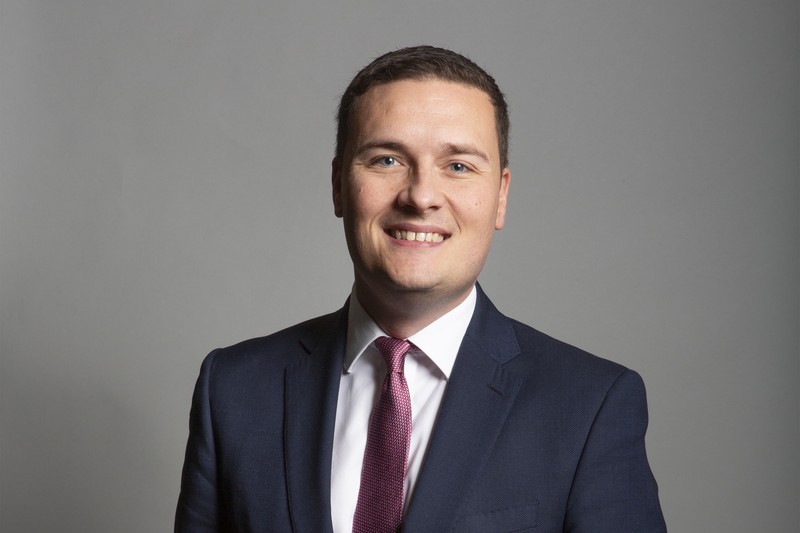
Two diagnoses, one wounded party. Wes Streeting wants a “proper contest.” Andy Burnham wants to save Labour “from where it’s been.” Between those two sentences lies the fault line running through British politics this weekend.
The contest to replace Keir Starmer as Labour leader — and potentially as prime minister — is not yet official. But as of Saturday, it has two declared contenders offering fundamentally different prescriptions for what ails their party and the country.
Streeting, who resigned as health secretary on Thursday, confirmed at a Labour-aligned Progress conference that he would stand. “We need a proper contest with the best candidates on the field, and I will be standing,” he said. The phrasing was deliberate: a “proper contest” implies process, order, a managed transition of the kind the Blairite wing has always favoured. He explicitly argued that a rushed contest excluding Burnham would produce a leader lacking “legitimacy,” extending the party’s “instability and uncertainty.”
This is the language of institutional competence — the safe pair of hands keeping the Starmer project’s essential framework intact. Streeting even praised the prime minister as “someone of enormous decency,” despite having told him days earlier he had “lost confidence” in him.
Burnham’s pitch could hardly differ more. The Greater Manchester mayor, cleared on Friday by Labour’s National Executive Committee to stand in the Makerfield by-election — likely on 18 June — told the BBC the moment must be one to “reclaim the Labour party, to save it from where it’s been.” He said Britain had been “on the wrong path for 40 years,” a charge reaching well beyond Starmer to encompass the entire neoliberal consensus, including the New Labour era that produced Streeting’s politics.
Where Streeting speaks party management, Burnham speaks class and community. “I think Britain has been on the wrong path for 40 years, it started de-industrialisation, de-regulation of the buses, privatisation of life’s essentials,” he said. “We’re going to get Labour closer to these communities again.”
The factional map
Streeting sits on the Blairite right. Burnham occupies the soft left. Their rivalry compresses Labour’s spectrum into a binary choice: continuity with competence, or rupture with populism.
The race may not stay binary. According to The Guardian, allies of Ed Miliband believe the former leader also has the 81 MP nominations needed to stand, and Angela Rayner has not ruled out a bid. The left’s immediate priority, according to one Burnham-allied MP, is blunt: “Stopping Wes is the top priority.”
The parliamentary party serves as gatekeeper — candidates need 20% of Labour MPs, or 81 nominations, to enter. But the eventual leader is chosen by party members and affiliated unions, a constituency that historically favours candidates further from the Blairite centre. Burnham’s populist pitch would likely resonate with that selectorate more than Streeting’s managed-transition framing.
The Makerfield gamble
Burnham’s path runs through Makerfield, a Greater Manchester constituency where the by-election is expected on 18 June. The sitting MP, Josh Simons, is vacating the seat for the mayor — a move critics have already labelled a vanity project.
It is not safe ground. Reform UK placed a competitive second there in 2024 and won 24 seats on Wigan Council in last week’s local elections, including wards within Ashton-in-Makerfield. According to the BBC, Farage’s party is “flush with cash and still leading in the polls.” A Burnham loss would scramble the entire leadership picture and likely extend Starmer’s tenure by default.
A prime minister who won’t leave
Starmer is not going quietly. He has told his cabinet he will “get on with governing” and warned that a contest would bring “chaos.” Nearly 90 Labour MPs have called on him to resign or set a timetable, while more than 150 have expressed support or opposition to an immediate contest, according to BBC reporting.
The core failing identified by his own side is telling. One minister told the BBC the party’s problem was “lacking a clarity of conviction and belief in our project” — a struggle with “making good quality decisions at speed.”
Starmer’s approval ratings have plumbed Liz Truss territory. YouGov reported in January that 75% viewed him unfavourably. Labour’s projected national vote share from the 7 May local elections: 17%, roughly half its 2024 general election showing.
The likeliest timetable, per the BBC, would see a contest over the summer and a new leader by the party conference in late September. But that presumes Burnham wins in Makerfield, Starmer stands aside, and the parliamentary party coalesces around a single process.
None of those outcomes is guaranteed. What is certain is that two visions of Labour’s future are now in open competition — at a moment when the UK is simultaneously building a coalition to reopen the Strait of Hormuz, preparing for a NATO summit on defence spending, and negotiating closer ties with the EU.
Streeting has already staked his position on that last point: Brexit was a “catastrophic mistake,” he said Saturday, and Britain’s future lies “one day, back in the European Union.” Whether the country is ready for that argument is a question neither candidate can answer until the party decides which diagnosis it believes.
Sources
- Streeting says he would join leadership race as Burnham vows to ‘save’ Labour — BBC News
- The race to replace Starmer is on - but he still faces a momentous choice — BBC News
- What next for Starmer? Five scenarios in Labour leadership crisis — BBC News
- Wes Streeting prepares to launch leadership challenge against Keir Starmer — The Guardian
- 2026 United Kingdom government crisis — Wikipedia
Discussion (9)