 lop News
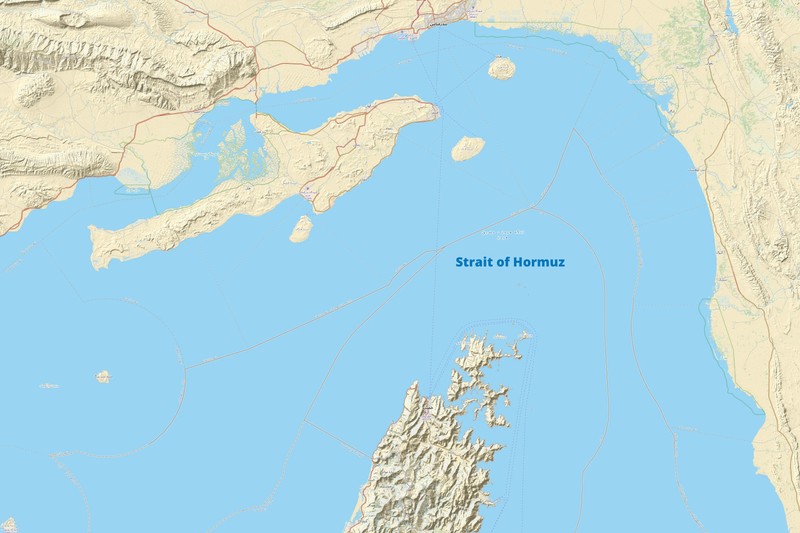
The Strait of Hormuz is famous for oil tankers. Less well known: a handful of fiber-optic cables on its seabed carry the internet between Europe and Asia.
Roughly 99 percent of global internet traffic travels through subsea cables, according to the International Telecommunication Union. Several of the most important routes pass through Hormuz, including the Asia-Africa-Europe 1 (AAE-1), which links Southeast Asia to Europe via the Gulf states and Egypt; the FALCON network, connecting India to the Gulf and Africa; and the Gulf Bridge International system, linking all Gulf countries including Iran.
Iran warned last week that these cables are vulnerable. After nearly two months of war with the US and Israel, the warning carries weight.
So far, no cables in the strait have been severed. But the risks are compounding. Around 150 to 200 cable faults occur globally each year, according to the International Cable Protection Committee, and 70 to 80 percent stem from accidental human activity — fishing nets, ship anchors. Active military operations raise the odds considerably. In 2024, a commercial vessel attacked by Iran-aligned Houthi forces drifted through the Red Sea and cut cables with its anchor.
“Damaged cables mean the internet slowing down or outages, e-commerce disruptions, delayed financial transactions … and economic fallout from all of these disruptions,” said geopolitical and energy analyst Masha Kotkin.
The stakes are especially high for the UAE and Saudi Arabia, which have poured billions into AI and digital infrastructure to diversify away from oil. Their national AI companies serve customers across the region — all dependent on cables running through a war zone.
If cables are cut, repairs won’t be quick. Vessel owners and insurers may balk at entering active conflict zones. Permitting alone can become a bottleneck. “Often one of the biggest problems with doing repairs is you have to get permits into the waters where the damage is. That can take a long time sometimes and can be the biggest source of problems,” said Alan Mauldin, research director at telecom research firm TeleGeography.
And there is no fallback. Satellite networks, including low-Earth-orbit systems like Starlink, cannot handle comparable data volumes. “It’s not as though you could just switch to satellite. That’s not an alternative,” Mauldin said.
The global economy learned to think of Hormuz in barrels. It may be about to learn to think of it in terabits.
Discussion (5)